Some mice do carry hantavirus, and the way you clean up their droppings matters more than most people think.
In California, the hantavirus that causes illness is spread by deer mice, which the California Department of Public Health says are found throughout the state, with about 3 infections reported each year. The numbers are small, but the illness is serious: the CDC reports that 38 percent of people who develop respiratory symptoms may die from the disease.
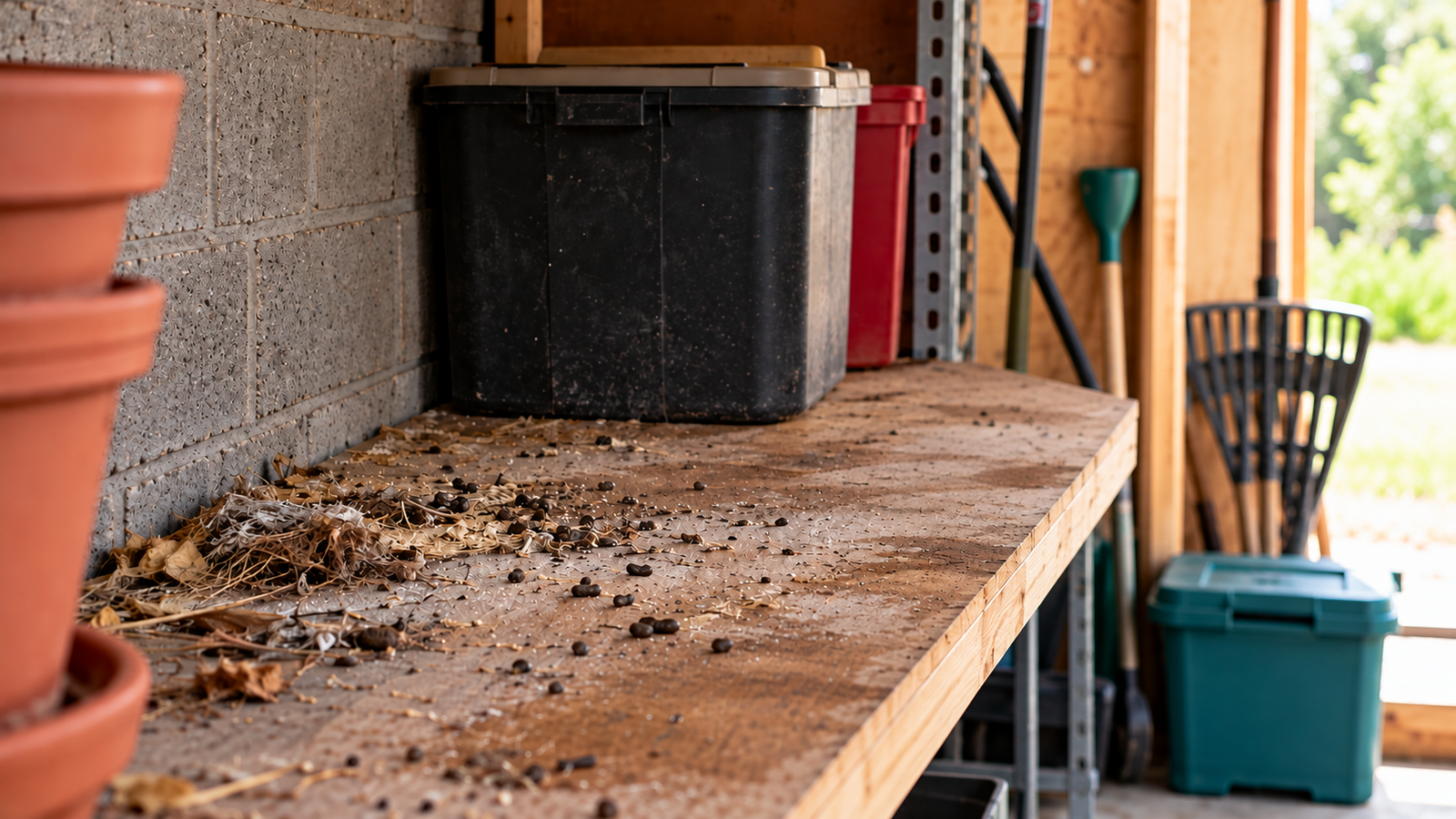
Many homeowners find droppings while opening a shed, a garage cabinet or a box of stored decorations, and the first reaction is to grab a broom. That broom is the problem. This guide covers which mice carry hantavirus, how people get infected, the cleanup steps public health agencies recommend, and when contaminated areas call for professional attic sanitation and deodorizing.
Do Mice Carry Hantavirus?
Yes, certain wild mice and rats carry hantavirus, with the deer mouse as the main carrier in the United States. The CDC states that the most common hantavirus causing hantavirus pulmonary syndrome (HPS) in the US is spread by the deer mouse. The CDC hantavirus prevention brochure lists four US rodents that carry the virus:
- Deer mouse: the carrier of Sin Nombre virus, the hantavirus found in California.
- White-footed mouse: also named by the CDC as a carrier.
- Rice rat: a wild rat named on the CDC list.
- Cotton rat: another wild rat named on the CDC list.
Do House Mice Carry Hantavirus?
The common house mouse is not on the CDC's list of hantavirus carriers. That does not make house mouse droppings safe to handle, because you cannot tell which species left them or whether the animal was infected just by looking. Our guide to rat poop vs mouse poop helps you identify what you found, but the cleanup method should be the same for all rodent droppings.
How Common Is Hantavirus in California?
California hantavirus cases are rare, at about 3 Sin Nombre virus infections reported each year according to CDPH. The risk rises when people disturb places where deer mice have been living, such as sheds, cabins, garages and closed-up buildings. Around a home, that can include storage sheds, detached garages and attics that sit undisturbed for months.
How Do People Get Hantavirus From Mice?
Most people get hantavirus by breathing in air contaminated with the virus from rodent urine, droppings or nesting material. CDPH explains that infection can happen when dried mouse urine, saliva or droppings are stirred up into the air. The CDC brochure lists these ways the virus reaches people:
- Breathing contaminated air: dust that contains fresh urine, droppings or nesting material from an infected rodent.
- Touching then touching your face: handling contaminated material and then touching your eyes, nose or mouth.
- Bites or scratches: being bitten or scratched by an infected rodent, which the CDC notes is rare.
- Contaminated food: eating food that an infected rodent's urine, droppings or saliva has touched.
This is why sweeping and vacuuming are the most common mistakes. Both lift dried waste into the air you breathe, which is the main route of infection.
How to Clean Up Mouse Droppings Safely: Step by Step
The safe way to clean mouse droppings is to ventilate the area, soak the waste with disinfectant, and wipe it up wet. These steps follow the CDC's guidance on cleaning up after rodents and the CDPH recommendations.
- Air it out first: open all doors and windows for 30 minutes and leave the area while it ventilates. For a vehicle, open the hood, doors and trunk for 20 minutes.
- Put on gloves: wear rubber or plastic gloves for the whole job.
- Mix a fresh disinfectant: use an EPA-registered household disinfectant, or mix 1.5 cups of household bleach in 1 gallon of water.
- Soak the droppings: spray the urine, droppings and nesting material until very wet and let it soak for 5 minutes, or as the product label directs.
- Wipe it up: pick up the waste with paper towels and put them in a covered garbage can that is emptied regularly.
- Clean the surfaces: mop or sponge floors, countertops, cabinets and drawers with disinfectant.
- Wash your hands twice: wash your gloved hands with soap and water or disinfectant, remove the gloves, then wash your bare hands with soap and warm water.
How to Handle Dead Mice and Nests
Spray the dead mouse, nest and the area around it with disinfectant and let it soak for 5 minutes. Place it in a plastic bag, knot the bag, then seal it inside a second knotted bag before putting it in a covered garbage can. The CDC also notes that fleas are common on rodents, so it recommends an EPA-registered repellent on clothing and shoes.
What Not to Do
- Do not sweep: a broom pushes dried droppings and urine into the air.
- Do not vacuum: the CDC warns against vacuuming urine, droppings or nests before they are disinfected.
- Do not use a pressure washer: high-pressure spray on contaminated areas spreads the waste.
- Do not use glue or live traps: the CDC and CDPH both advise snap traps instead.
If you already swept or vacuumed, the CDC says to follow the cleanup steps anyway. Do not panic, but do not keep going the same way.
What Disinfectant Should You Use for Hantavirus Cleanup?
The CDC recommends an EPA-registered household disinfectant or a fresh bleach solution. Check that the product label includes the word "disinfectant," and mix bleach at 1.5 cups per gallon of water, or 1 part bleach to 9 parts water, right before you use it. Porous items need a different approach, because you cannot wipe them clean:
- Clothing and bedding: wash in hot water with detergent, then machine dry on high or hang in the sun.
- Carpets and upholstery: shampoo with a commercial disinfectant or use a commercial-grade steam cleaner.
- Books and papers: leave them in direct sunlight for several hours, or keep them in a rodent-free area for at least three weeks.
- Cardboard boxes: throw out contaminated cardboard and disinfect plastic, glass or metal containers.
When Should You Call a Professional for Rodent Cleanup?
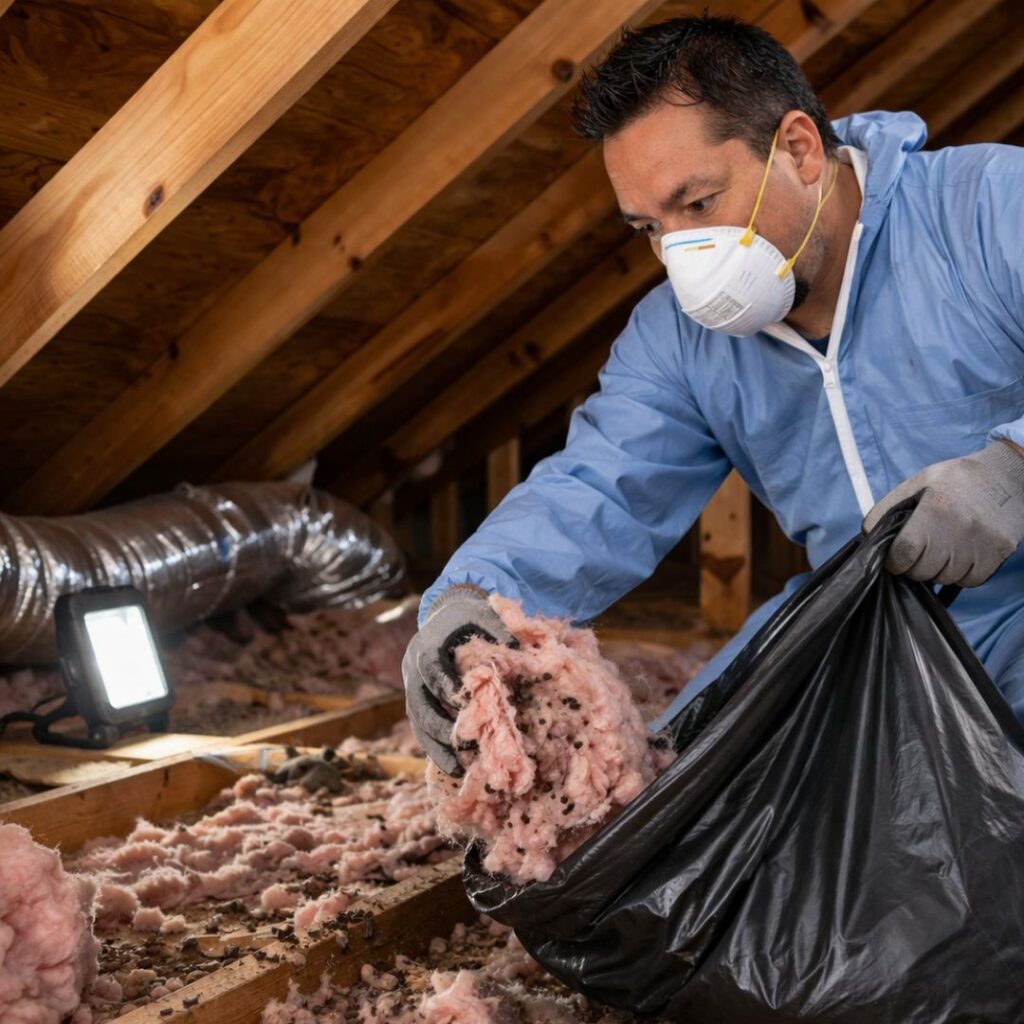
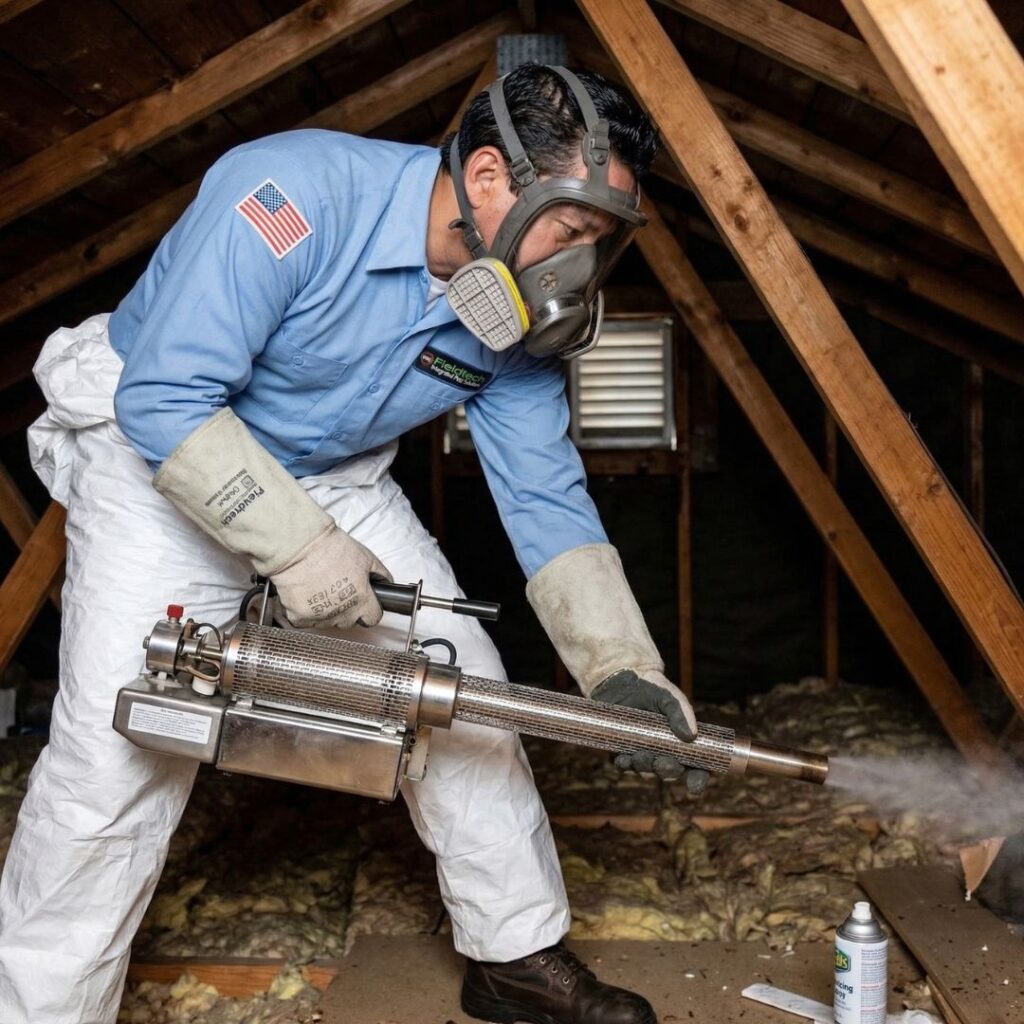
Call a professional when the contamination is heavy, hard to reach or inside your insulation or ductwork. For heavy infestations, the CDC recommends disposable coveralls, boots or shoe covers, goggles and a half-mask respirator with HEPA filters, which most homeowners do not have. Signs the job is bigger than a spray bottle and paper towels:
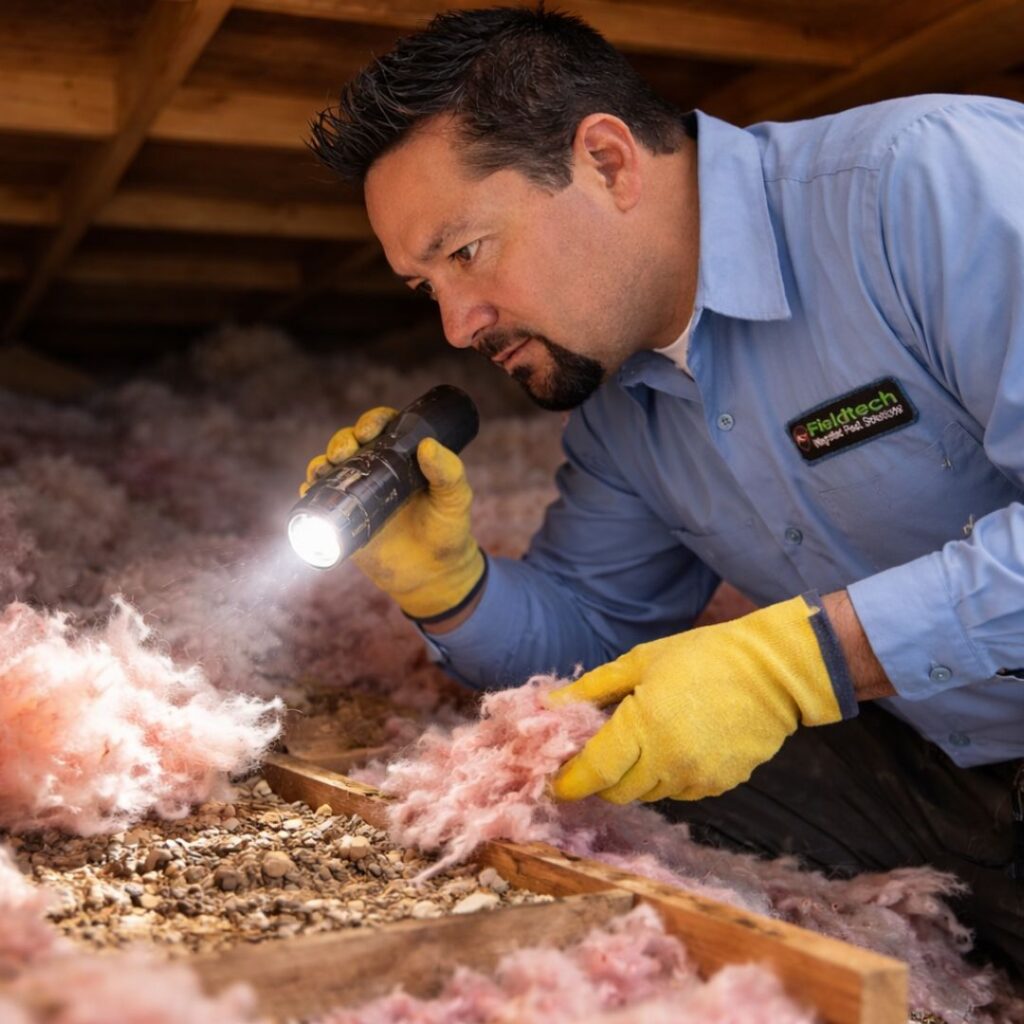
- Droppings across the attic: waste spread over insulation cannot be wiped up, and the CDC says contaminated insulation should be bagged for removal.
- Rodents in the air ducts: the CDC advises hiring a professional when rodents have reached heating or cooling systems.
- Strong odor: a lasting smell often means urine-soaked insulation or a dead rodent in a wall or ceiling.
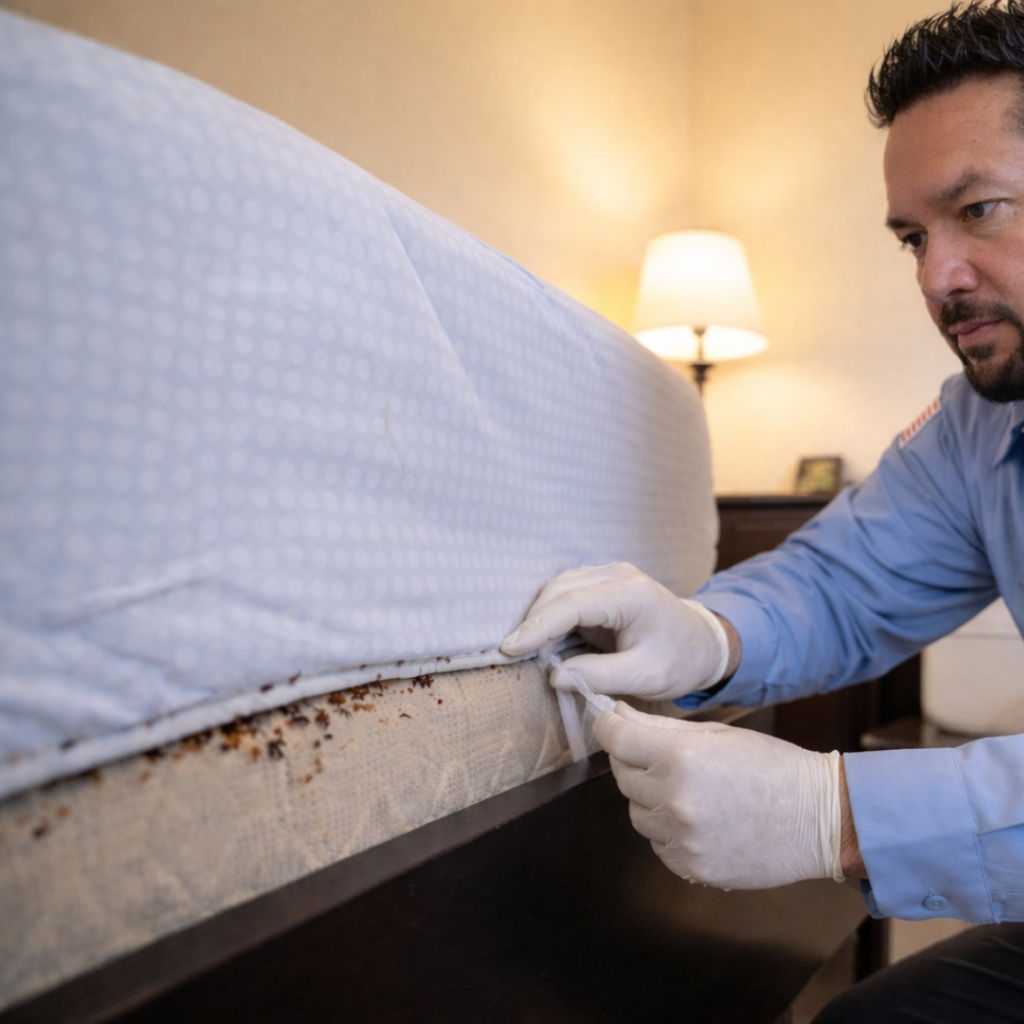
- Repeated activity: new droppings after cleanup mean mice are still getting in. Our post on the signs of rodent infestation covers what to look for.
In those cases, contaminated insulation removal and attic sanitation remove the source instead of masking it. Both are part of getting a home back to a clean, odor-free state after an infestation.
How Do You Keep Mice From Coming Back?
The only lasting fix is to seal the openings mice use to get inside. According to the CDC brochure, mice can fit through a hole the width of a pencil, so any gap of about 1/4 inch matters.
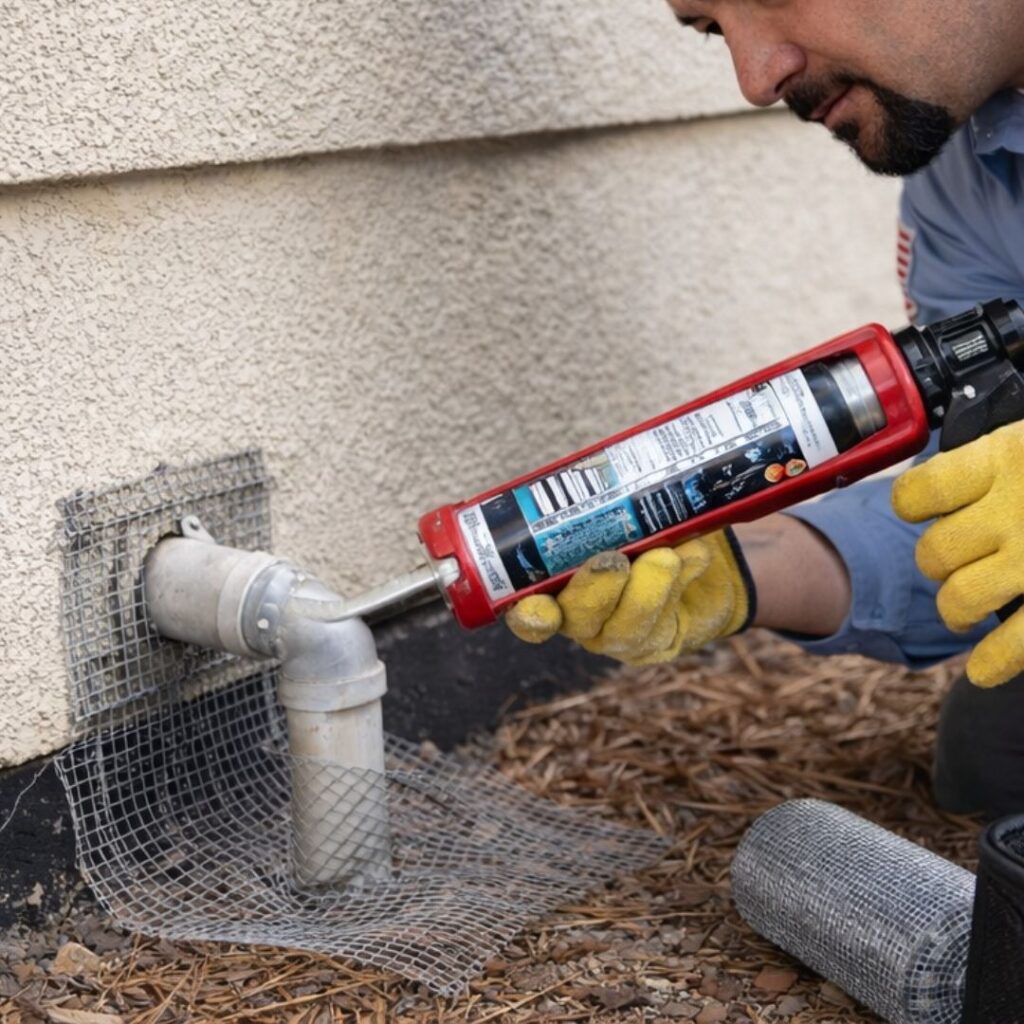
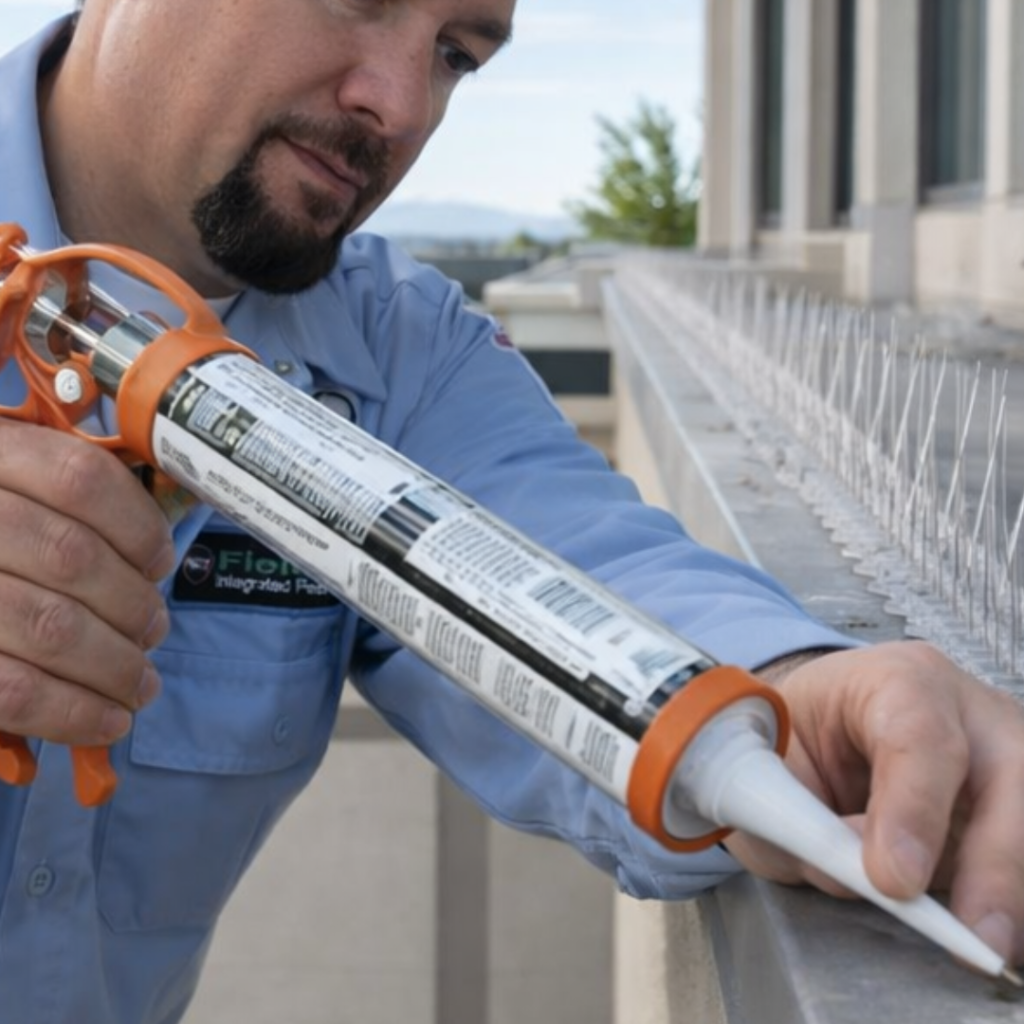
- Small holes: fill them with steel wool and secure it with caulk, or use spray foam.
- Larger gaps: close them with hardware cloth, metal sheeting, lath screen or cement.
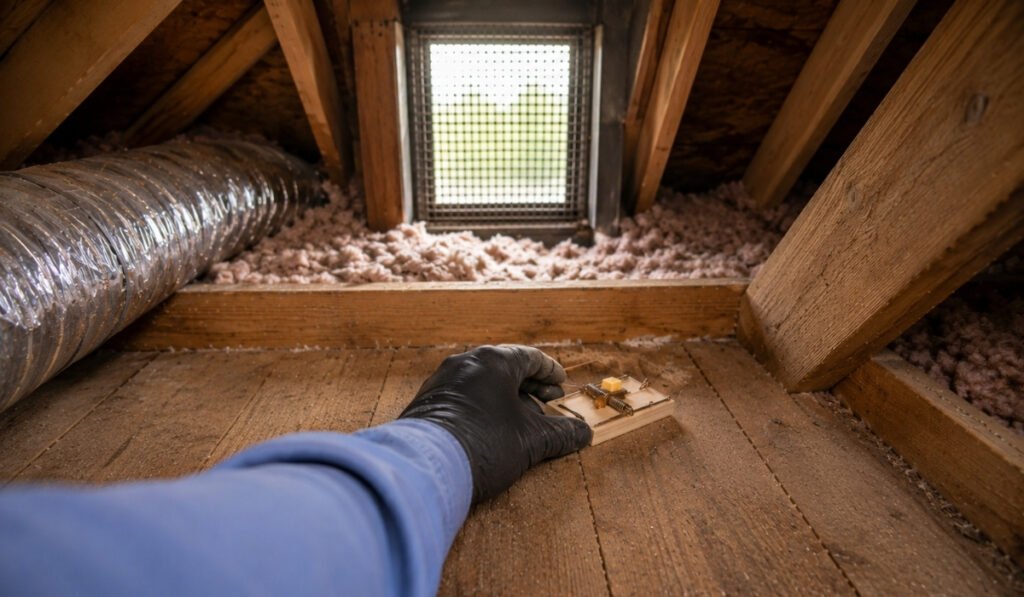
- Traps: use snap traps placed along walls, baited with a pea-sized amount of peanut butter.
- Food and trash: store food, pet food and birdseed in rodent-proof containers and keep trash covered.
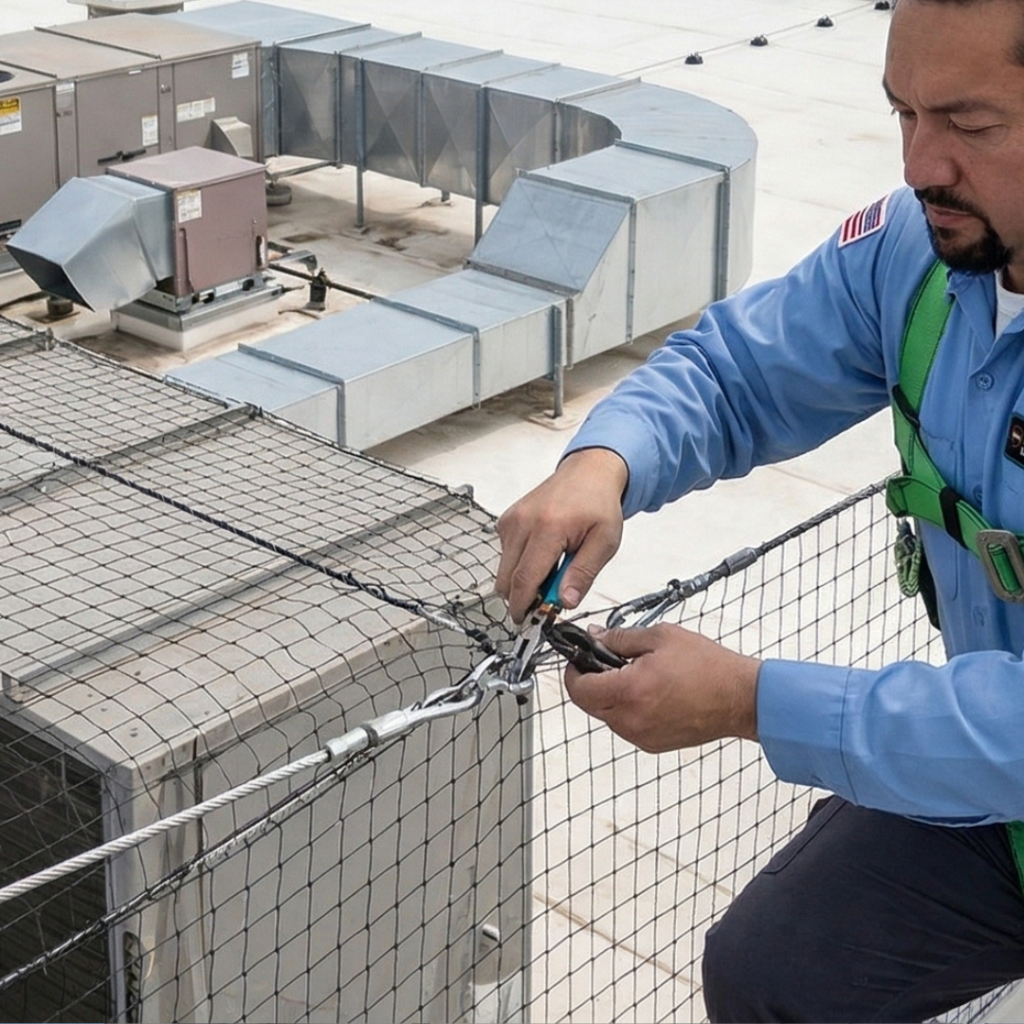
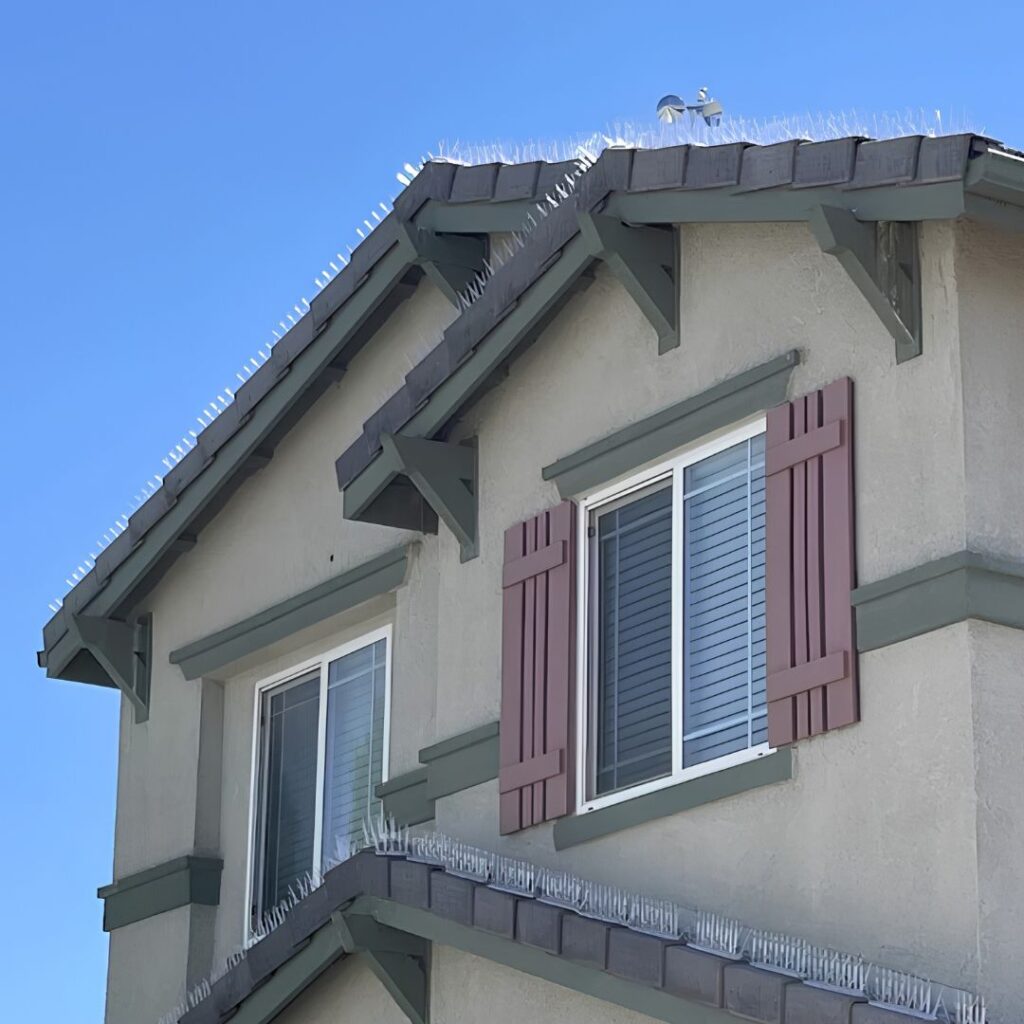
If you hear activity behind the drywall, our guide to mice in walls explains what it means. For a whole-house fix, professional rodent proofing and entry point sealing closes the gaps that are hard to find on your own.
How Fieldtech Handles Rodent Cleanup and Exclusion
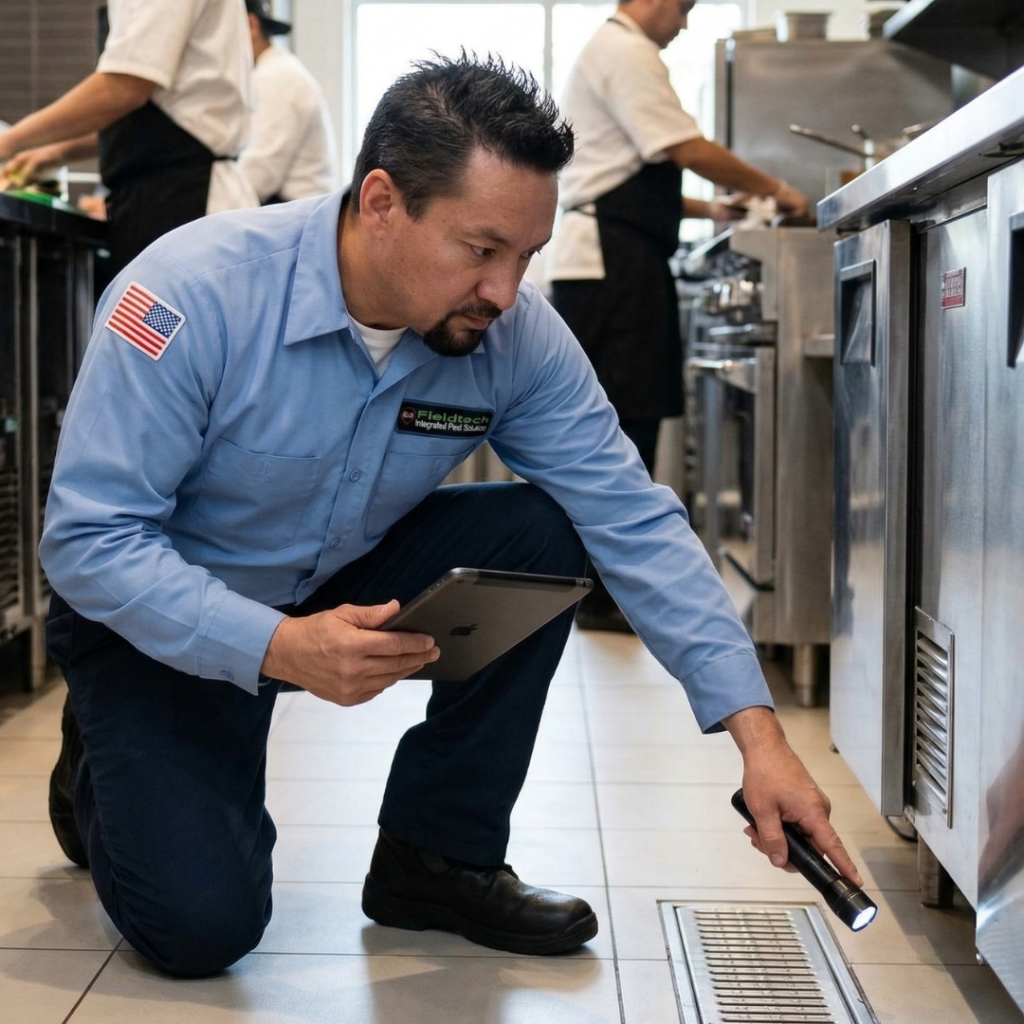
Nelson founded Fieldtech Integrated Pest Solutions in 2018 to solve pest problems at the source, not just treat the symptoms. For rodent droppings, that means cleaning up what the mice left behind and closing the openings that let them in.
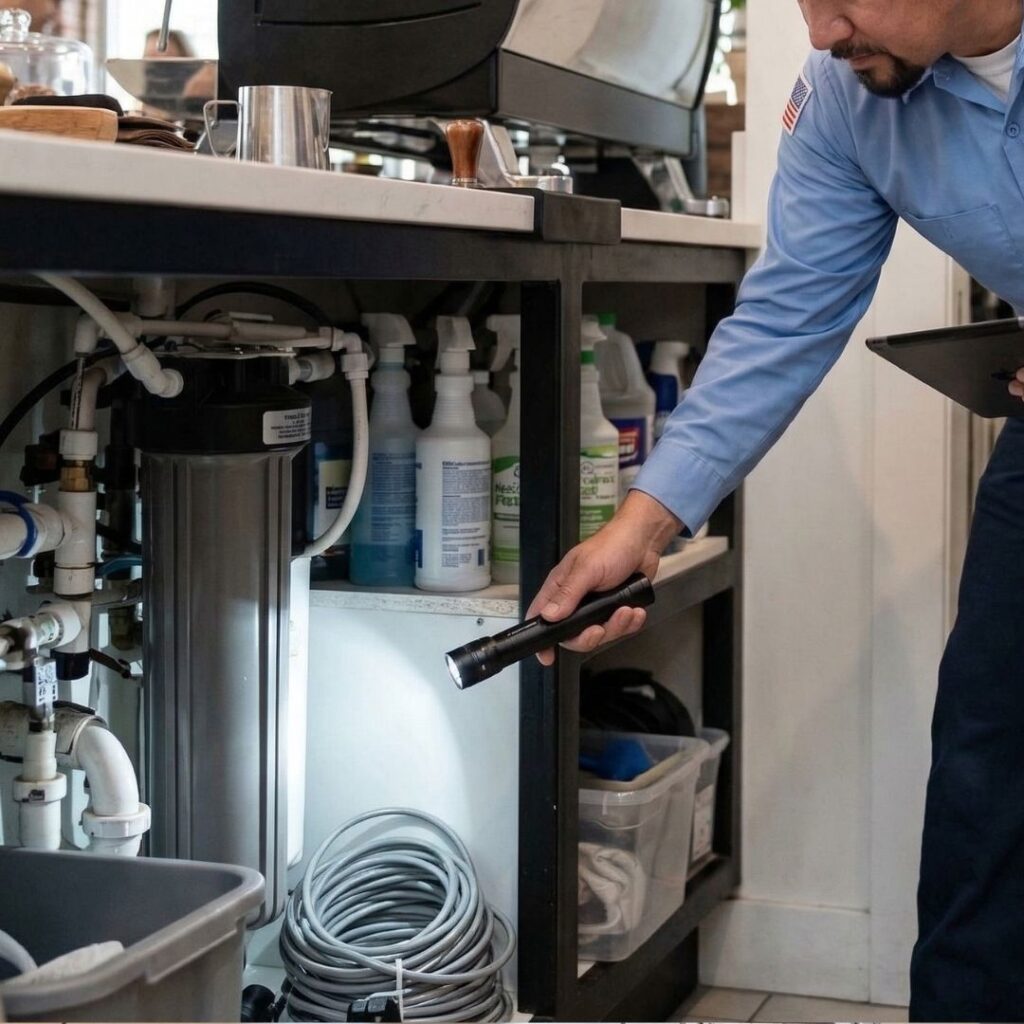
- Free detailed inspection: we find where mice are living, how they get in and how far the contamination has spread.
- Attic sanitation: we clean and deodorize attics and crawl areas where rodents have nested.
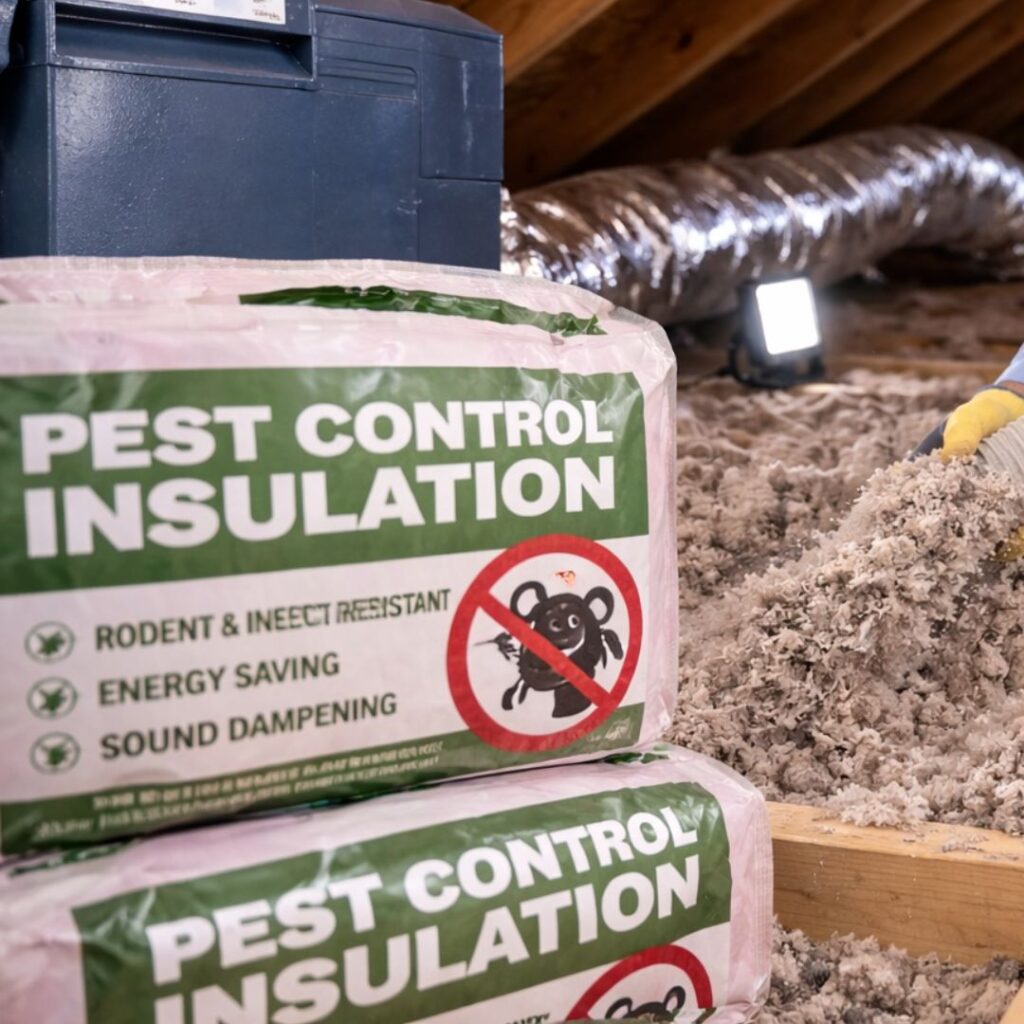
- Insulation removal and installation: we remove contaminated insulation and install new insulation.
- Rodent control and exclusion: we handle the active mice control and seal entry points to keep them out.
- Fast response: calls are returned within one hour, and our solutions are guaranteed.
We serve homes and businesses across the High Desert and Inland Empire, including rodent control in Apple Valley and pest control services in Hesperia, as well as Phelan and Lucerne Valley. New customers get 5% off, and military members, seniors and first responders get 10% off.
Book a Free Rodent Inspection
If you have found mouse droppings in your attic, garage or shed, let us check how far it goes before you start cleaning. Call (800) 805-5758 to book your free detailed inspection.
FAQ
Do house mice carry hantavirus?
House mice are not on the CDC's list of US hantavirus carriers, which names the deer mouse, white-footed mouse, rice rat and cotton rat. Because you cannot tell by sight which rodent left the droppings or whether it was infected, clean all rodent waste with the same wet method.
Can you get hantavirus from mouse droppings?
Yes, droppings from an infected rodent can spread hantavirus, mainly when dried waste is stirred into the air and breathed in. Soaking droppings with disinfectant before wiping them up keeps that dust out of the air.
Is it safe to vacuum mouse droppings?
No, the CDC advises against vacuuming or sweeping rodent urine, droppings or nests. Both can push contaminated particles into the air, so spray, soak and wipe with paper towels instead.
How soon do hantavirus symptoms appear?
CDPH says symptoms usually develop 4 to 42 days (1 to 6 weeks) after breathing contaminated air. The CDC advises seeking medical attention right away if symptoms, especially difficulty breathing, appear after rodent exposure, and telling your provider about the exposure.
Does hantavirus spread from person to person?
The CDC says the Andes virus is the only hantavirus known to spread from person to person. CDPH notes that the Andes virus is not found in California, where the deer mouse carries the Sin Nombre virus.