Spotted small dark droppings in your home? Your first job is figuring out whether you have rats or mice. According to the CDC, breathing in air disturbed near infected rodent droppings can transmit serious diseases – including hantavirus, which Mayo Clinic notes carries a fatality rate of 30 to 50%. Identifying the species correctly determines how you clean up and how you stop them coming back.
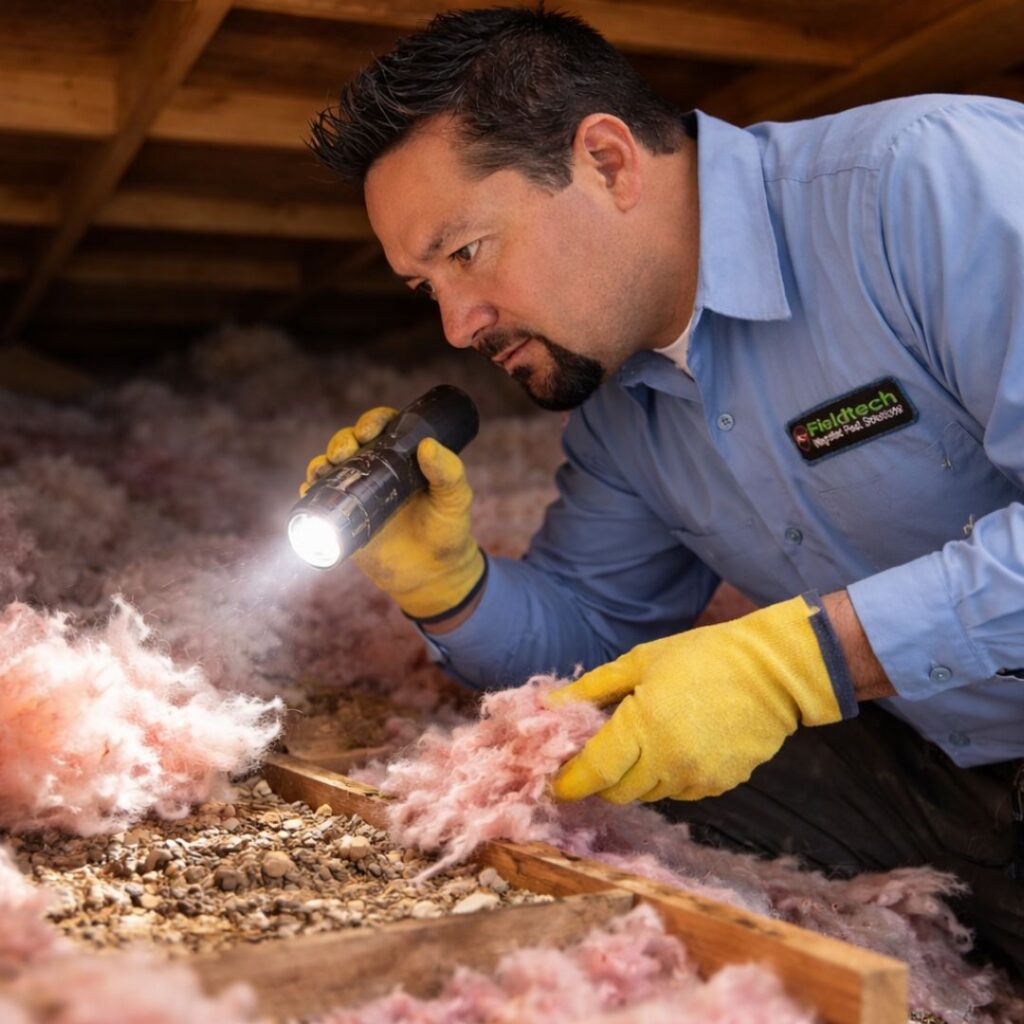
The good news: rat and mouse droppings look noticeably different once you know what to check. If you are in the High Desert or Inland Empire and want a professional set of eyes, our team at Fieldtech Integrated Pest Solutions offers free detailed inspections with a 1-hour callback guarantee.
Rat Poop vs Mouse Poop Pictures: The Key Visual Differences
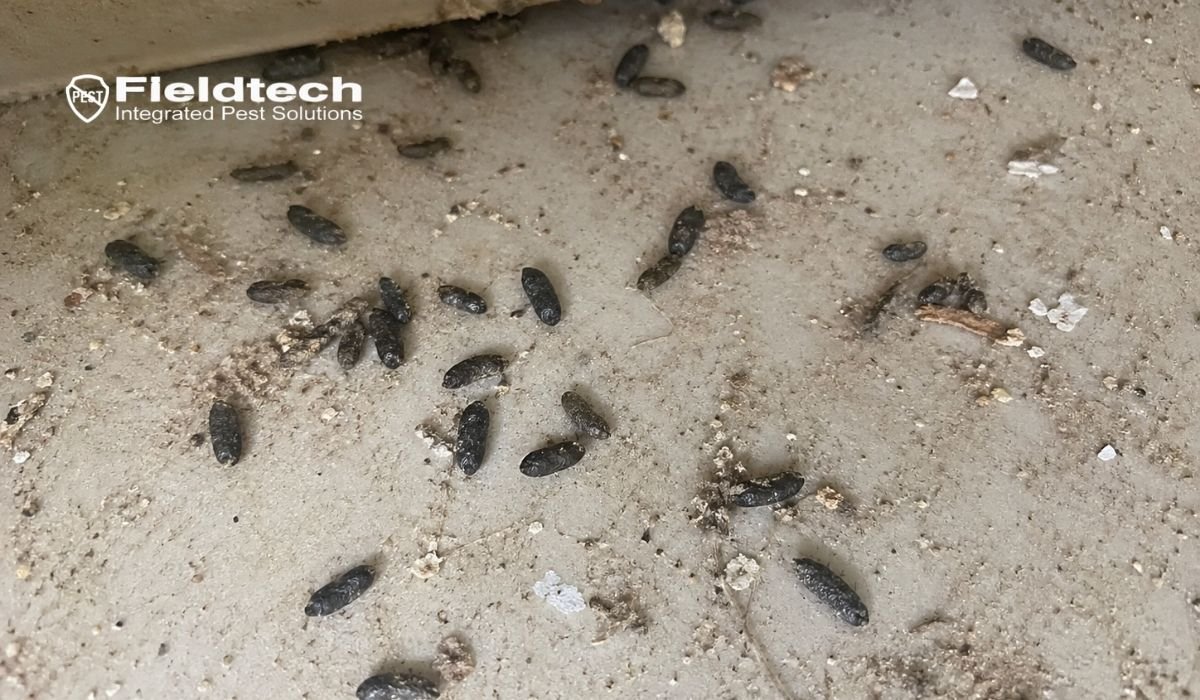
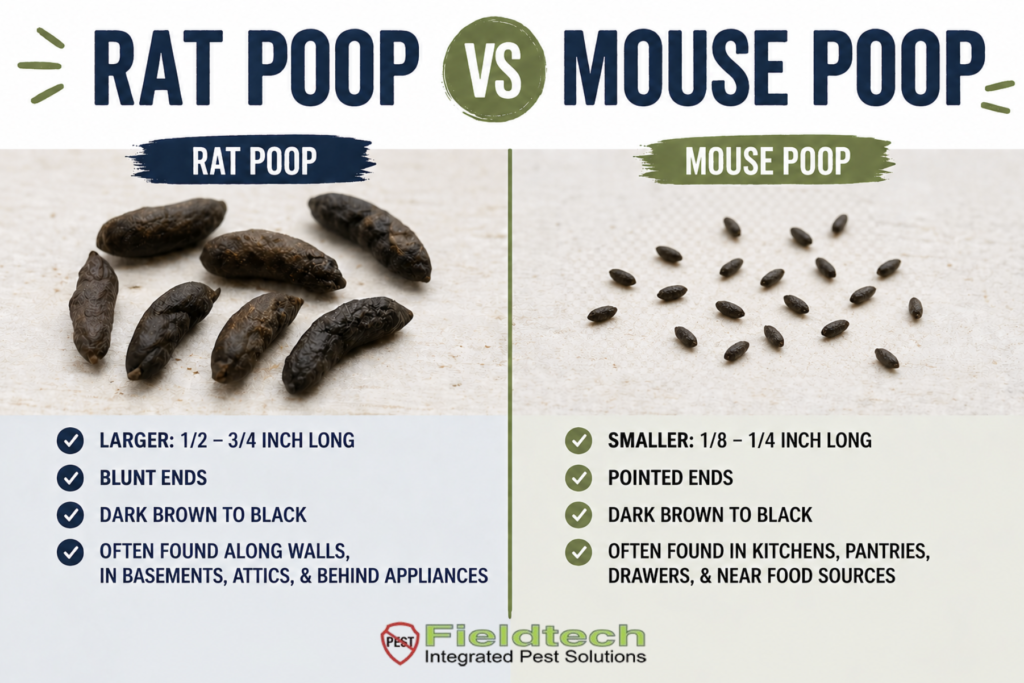
Size is your clearest indicator. Mouse droppings are roughly ¼ inch long with pointed ends – think dark grains of rice. Rat droppings are ½ to ¾ inch, noticeably thicker, and capsule-shaped with blunt or rounded ends – closer to small raisins or olive pits.
Fresh droppings from either species are dark, almost black, and look moist. Older ones fade to grey or dusty brown. Finding shiny new droppings regularly means the infestation is active.
- Mouse droppings: ¼ inch, pointed ends, scattered widely
- Norway rat droppings: ½–¾ inch, blunt ends, dark brown, spindle-shaped
- Roof rat droppings: ½ inch, curved or banana-shaped, pointed ends, dark black
Rat Poop or Mouse Poop? How to Tell by Location
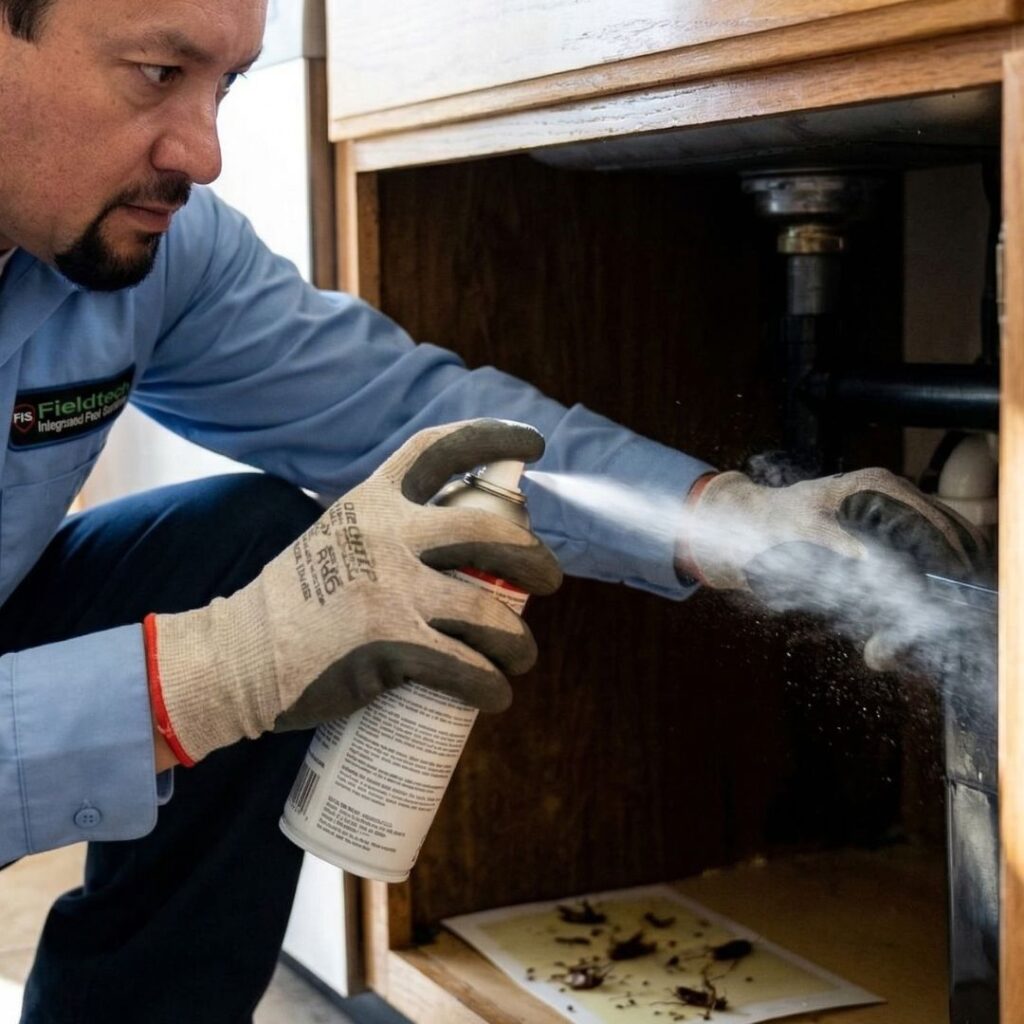
Mice scatter droppings everywhere – in drawers, behind appliances, along baseboards, under sinks. They produce up to 80 pellets a day and leave them spread across a wide area. Droppings in multiple spots across a room point to mice.
Rats are more methodical. They produce 40–50 droppings per day but deposit them in the same spots, near nests or food sources. Concentrated piles in attics, crawl spaces, or basements suggest rats. Look also for greasy smear marks along walls – caused by rats’ oily fur brushing against surfaces.
Roof Rat Poop vs Mouse Poop
Roof rats are common throughout the High Desert – Apple Valley, Victorville, Lake Arrowhead – and prefer attics and rafters. Their droppings are roughly ½ inch long, dark, and distinctly curved with pointed ends, almost banana-shaped. Mouse droppings are smaller and straighter; Norway rat droppings are larger with blunt tips.
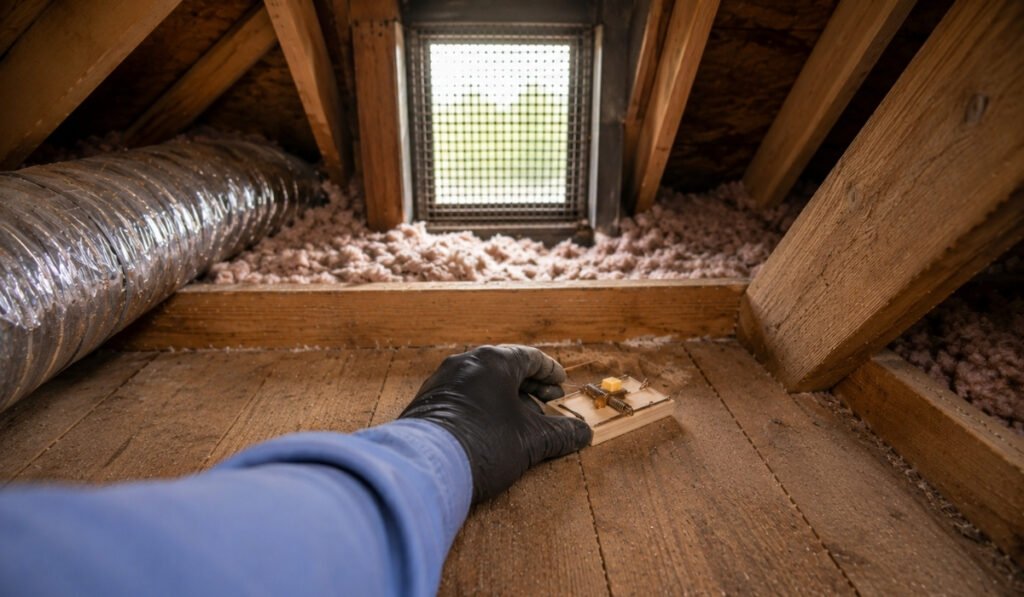
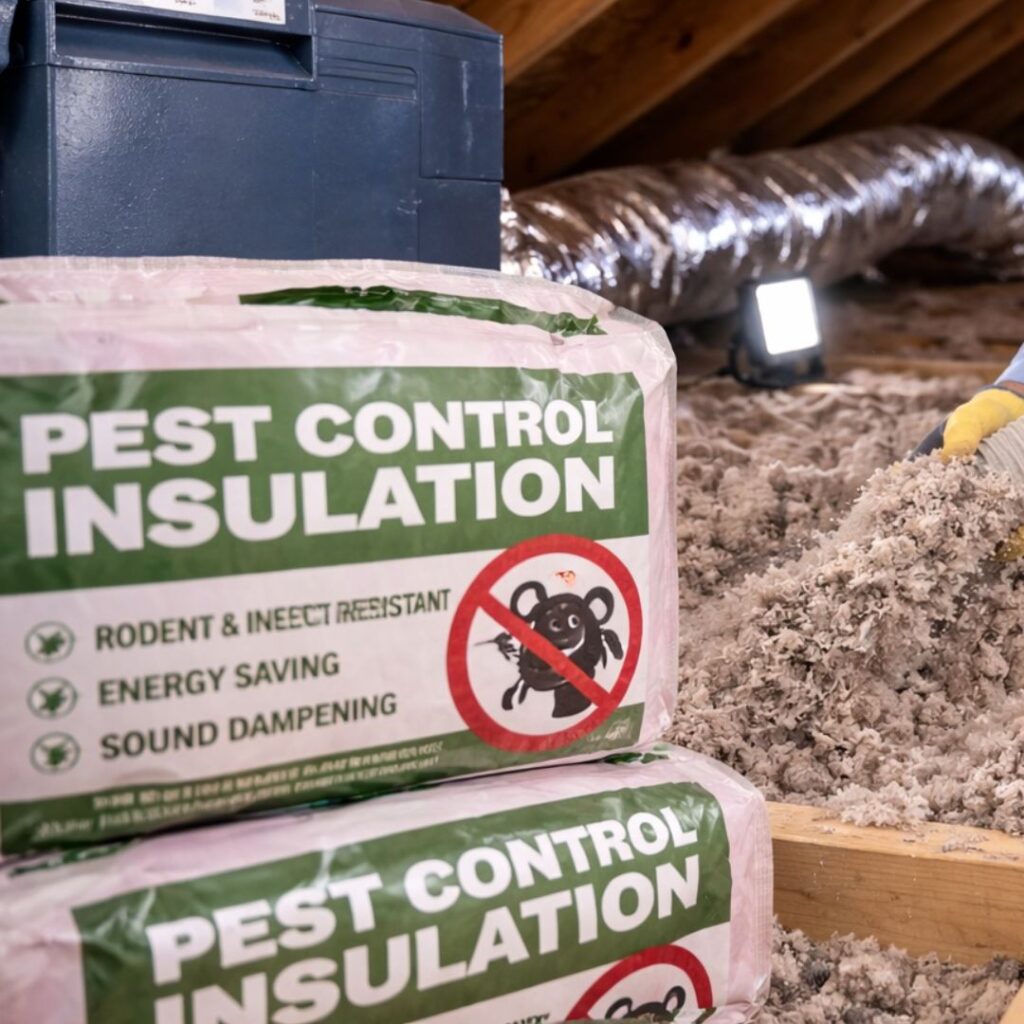
Finding banana-shaped droppings in your attic insulation is a strong indicator of roof rats. Our rodent control team can confirm the species with a free inspection and build a targeted plan.
How Big Is Rat Poop Compared to Mouse Poop?
Rat droppings are two to three times longer than mouse droppings and significantly thicker – a single rat pellet can be roughly twenty times the mass of a mouse pellet. Side by side, there is no ambiguity. The shape clinches it: mouse pellets taper to sharp points at both ends; Norway rat pellets are blunt; roof rat pellets are curved with pointed tips.
Rat Poop vs Mouse Poop vs Squirrel Poop
Squirrels share attic space with roof rats, so their droppings sometimes get confused. Squirrel droppings tend to be lighter in color – tan or reddish-brown – barrel-shaped, and clustered near a single nesting spot. Rat droppings are darker and found along well-worn travel routes. If you are not certain, do not handle the droppings – get a professional identification instead.
Health Risks from Rodent Droppings
Both species carry disease, but rat droppings typically harbor a wider range of pathogens. Key risks include hantavirus (airborne from disturbed droppings), salmonellosis, leptospirosis, and rat bite fever. The danger is not touching the droppings – it is disturbing them. Sweeping or vacuuming sends particles airborne. Always dampen the area first.
How to Safely Clean Up Rodent Droppings
Follow CDC guidance before touching anything:
- Ventilate the area for 30 minutes – open windows and doors
- Wear disposable gloves and an N95 mask
- Do not sweep or vacuum
- Spray with bleach solution (1.5 cups bleach per gallon of water), soak 5 minutes, then wipe with a damp paper towel
- Seal everything in a plastic bag and wash hands thoroughly
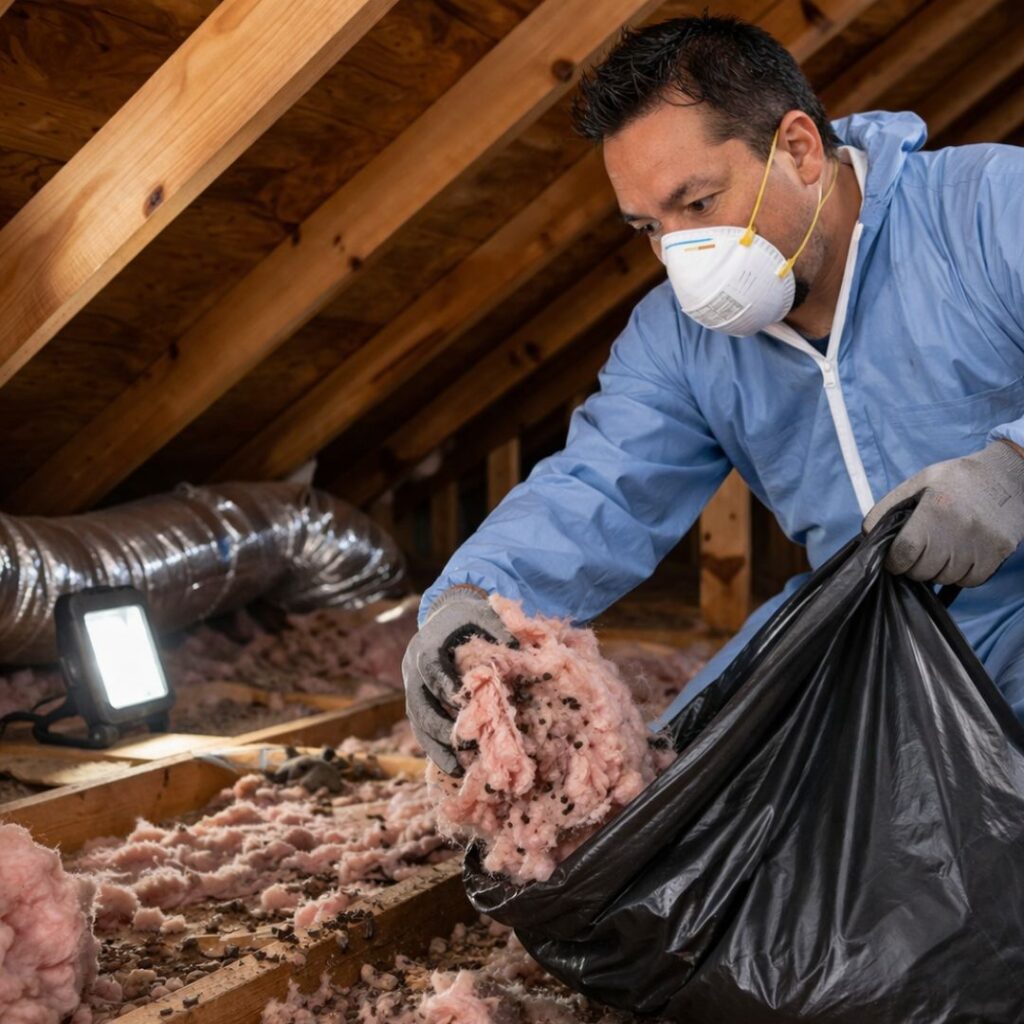
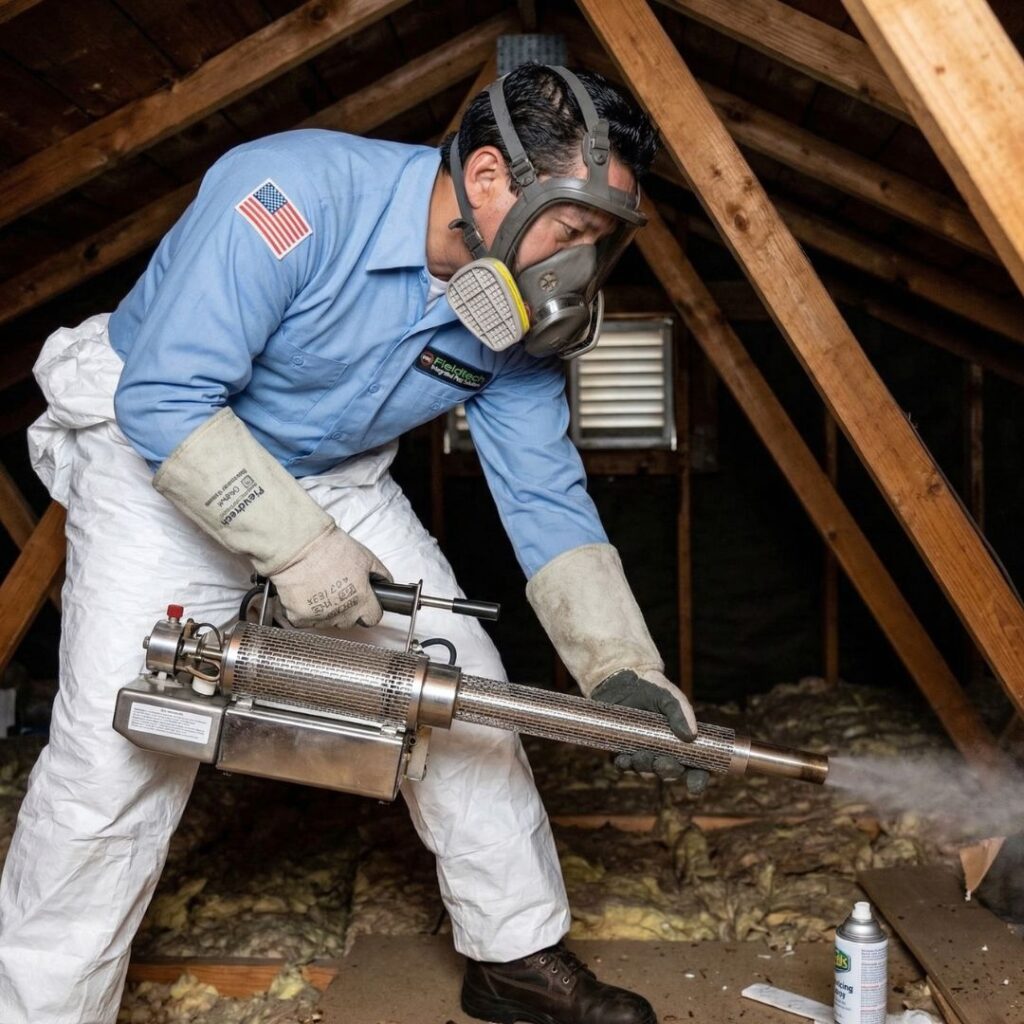
If attic insulation is involved, DIY cleanup is not enough. Our contaminated insulation removal service removes all affected material, followed by attic sanitation and deodorizing to eliminate biological traces that attract new rodents.
What to Do After You Find Rodent Droppings
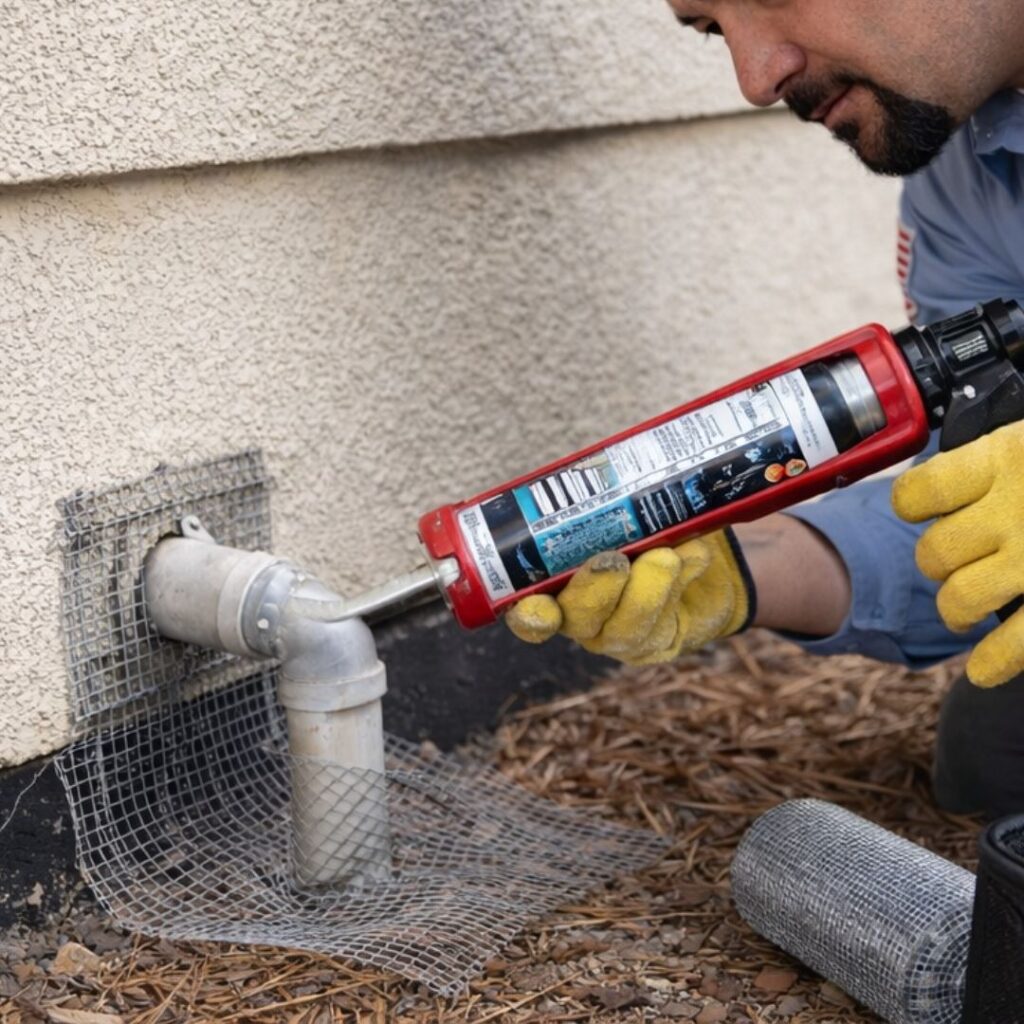
Droppings mean a rodent is active now or was very recently. Once you have identified the species, the next step is sealing every entry point. Mice squeeze through gaps the size of a dime; rats need a quarter-sized opening at minimum.
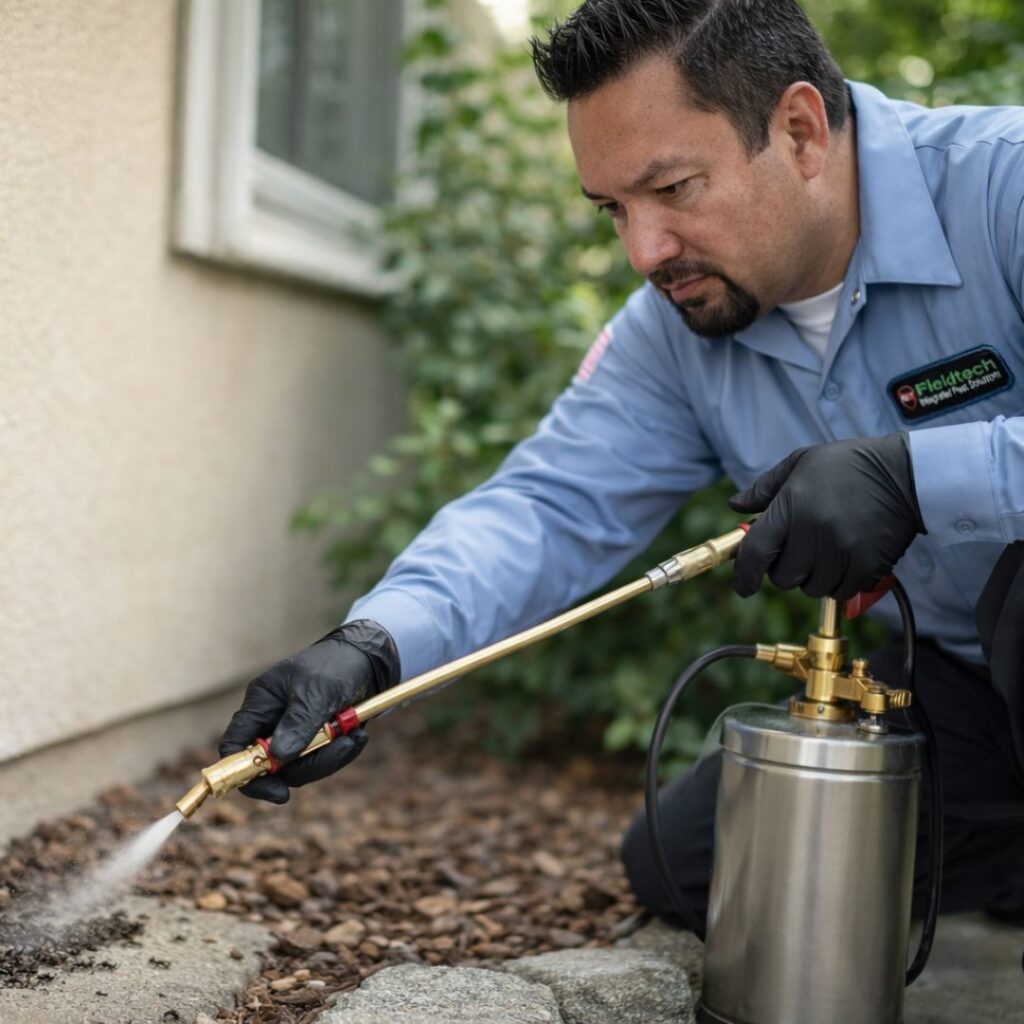
Our rodent proofing and entry point sealing service closes every gap so the problem does not repeat. Removing the current population without sealing entries just opens the door to the next one.
Rat poop and mouse poop are easy to tell apart once you know what to look for: ¼-inch pointed pellets mean mice; ½–¾-inch blunt or curved capsules mean rats. Location, quantity, and supporting signs like grease marks or gnaw damage round out the picture.
If you are in Apple Valley, Victorville, Hesperia, Rancho Cucamonga, or anywhere across the Inland Empire, Fieldtech’s free inspection will identify the species, locate the entry points, and give you a clear plan. Visit our rodent control page to get started.