It usually starts at night. A light scratching behind the bedroom wall, a quick scurry above the kitchen cabinets, then silence. You are not imagining it, and you are far from alone: the U.S. Census Bureau’s American Housing Survey found that nearly 14.8 million occupied U.S. homes reported seeing rodents in a single 12-month period. In California the stakes go beyond noise, because the California Department of Public Health warns that deer mice in the state can carry hantavirus, which spreads through the air when dried droppings and urine are stirred up.
Mice in walls are one of the most common calls we get from homeowners in Apple Valley, Victorville and Hesperia, and those calls pick up every fall as High Desert nights turn cold. The good news is that the problem is very solvable, as long as you deal with both the mice inside and the gaps that let them in.
This guide covers what those sounds mean, whether mice in walls are dangerous, what to do about the smell of a dead mouse, and how professional mice control gets them out for good.
Sounds of Mice in Walls: What You Are Hearing
Mice are most active at night, so you will usually hear them once the house goes quiet. Each sound tells you something different:
- Light scratching: mice climbing studs and moving along pipes and wiring inside the wall cavity.
- Fast scurrying: mice running between their nest and a food source. Scurrying in several spots at once usually means more than one mouse.
- Gnawing or chewing: a mouse’s front teeth never stop growing, so it chews constantly on wood, drywall and sometimes wiring.
- Squeaking: mice communicating with each other. Regular squeaking often points to a nest with young nearby.
- Rustling: mice shredding paper, fabric or insulation to build a nest.
Mice or rats?
Mouse sounds are light and quick. Rats are heavier, so they make louder thumps and dragging sounds, and they are more often heard in the attic. If the noises sound bigger than a mouse, read our guides to rats in the attic in Apple Valley and rat poop vs mouse poop to work out which one you have.
Mice in Walls but Not in the House: Is That Possible?
Yes, for a while. Wall voids, attics and crawl spaces are connected, and mice use them as hidden highways. A mouse can nest inside a wall and travel through these spaces for days or weeks without showing up in your kitchen or living room.
It rarely stays that way. Mice need food and water every day, so a mouse living in your walls will eventually come out looking for the pantry, the pet bowl or crumbs under the stove. Hearing them in the wall is an early warning, not a sign that the problem is contained.
Check these spots for proof that they are already reaching living areas:
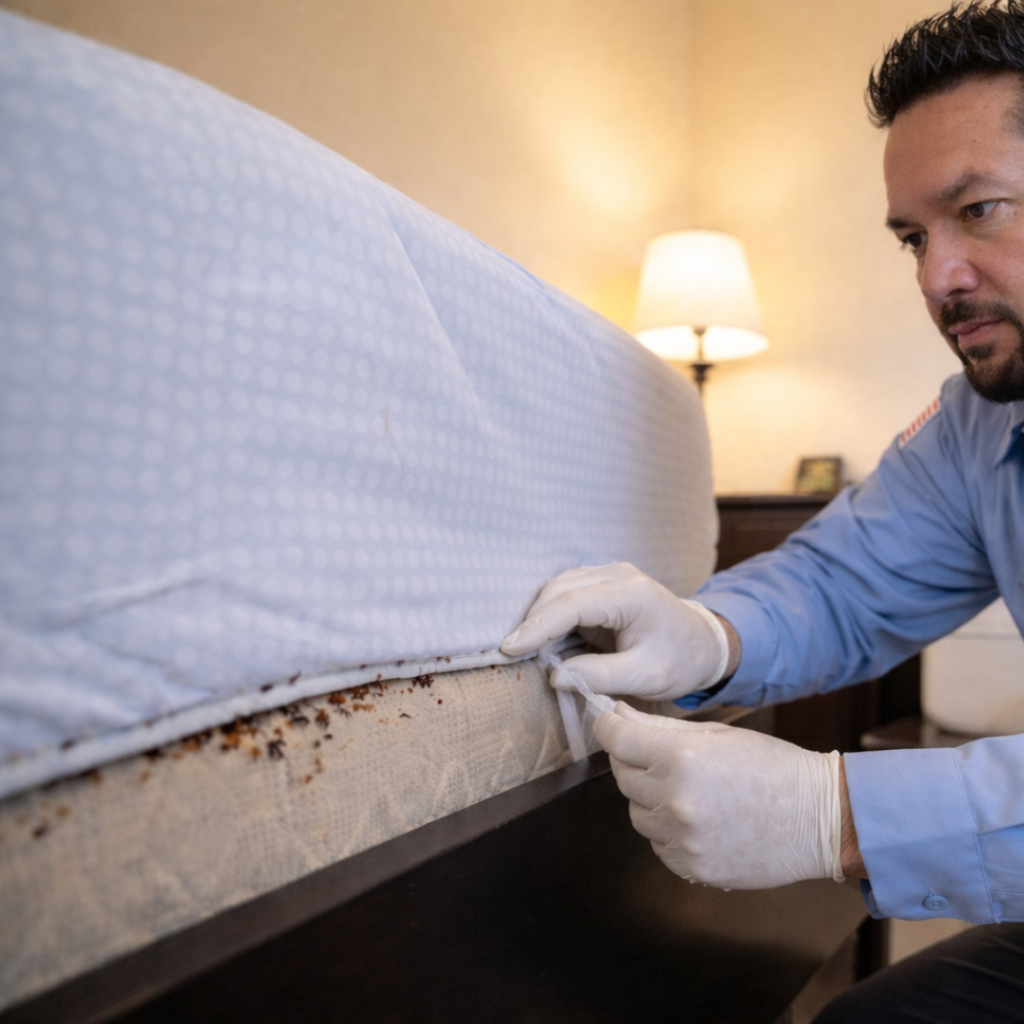
- Droppings about 1/4 inch long with pointed ends, near baseboards, under sinks and inside cabinets
- Dark grease marks along walls where mice run the same route every night
- Chewed food packaging in the pantry
- A musky, stale smell in closed cupboards
For a full checklist, see our guide to the signs of rodent infestation.
Are Mice in Walls Dangerous?
Mice in walls are more than an annoying noise. There are three real risks.
Disease. Mice leave droppings and urine wherever they travel. In California, deer mice are the main carrier of hantavirus, and you cannot tell a deer mouse from a house mouse by the sound it makes inside a wall. Treat all droppings with care: never sweep or vacuum them dry, because that can push particles into the air. Public health guidance is to wet them with disinfectant first, wear gloves, and air out the space.
Fire risk. Mice chew on electrical wiring inside walls and attics. Stripped insulation on a live wire is a fire hazard that you will not see until something goes wrong.
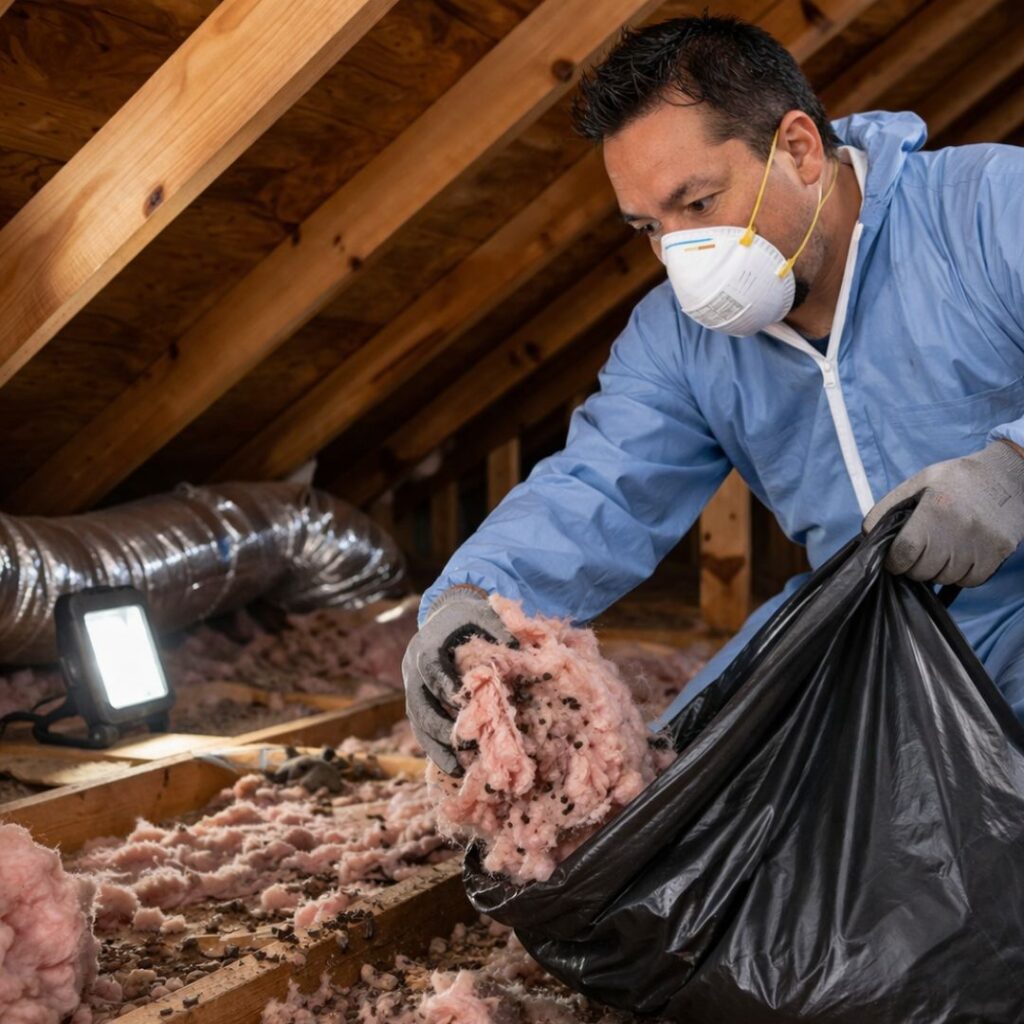
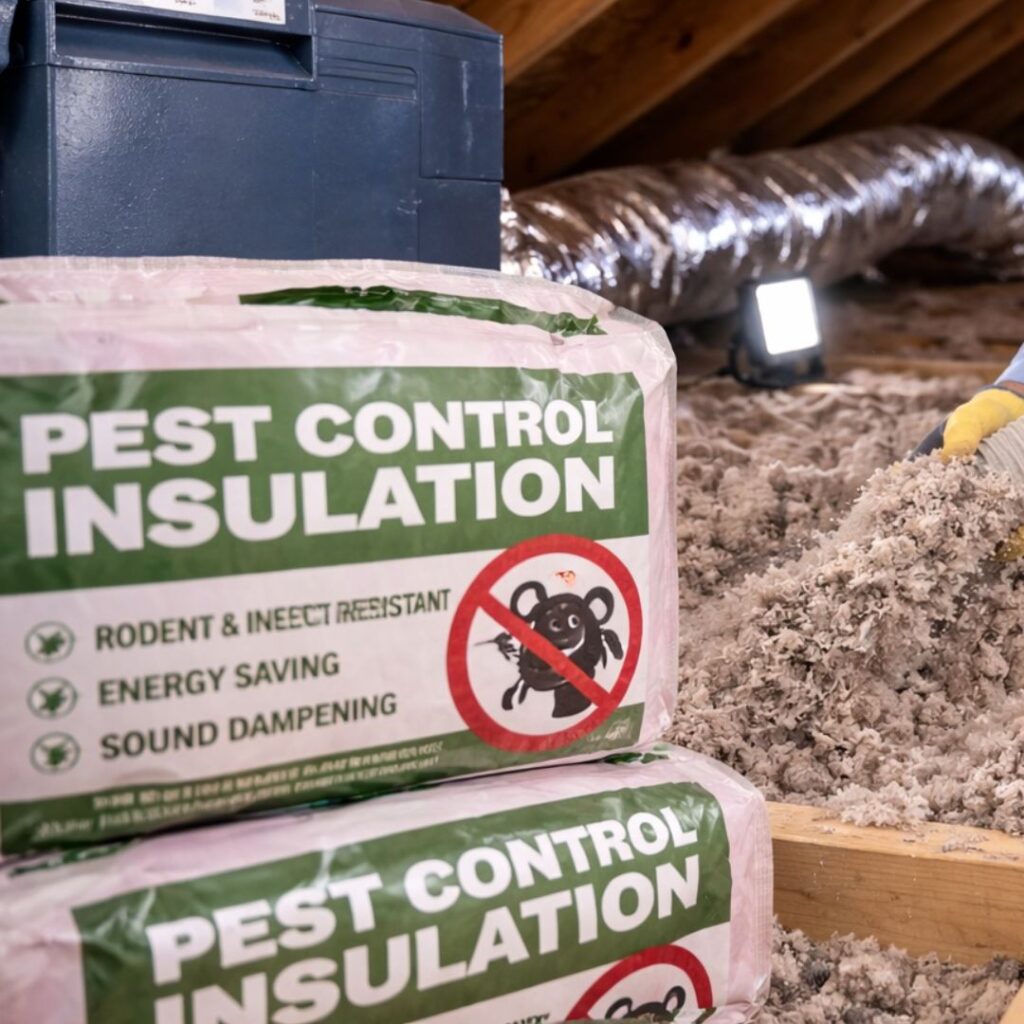
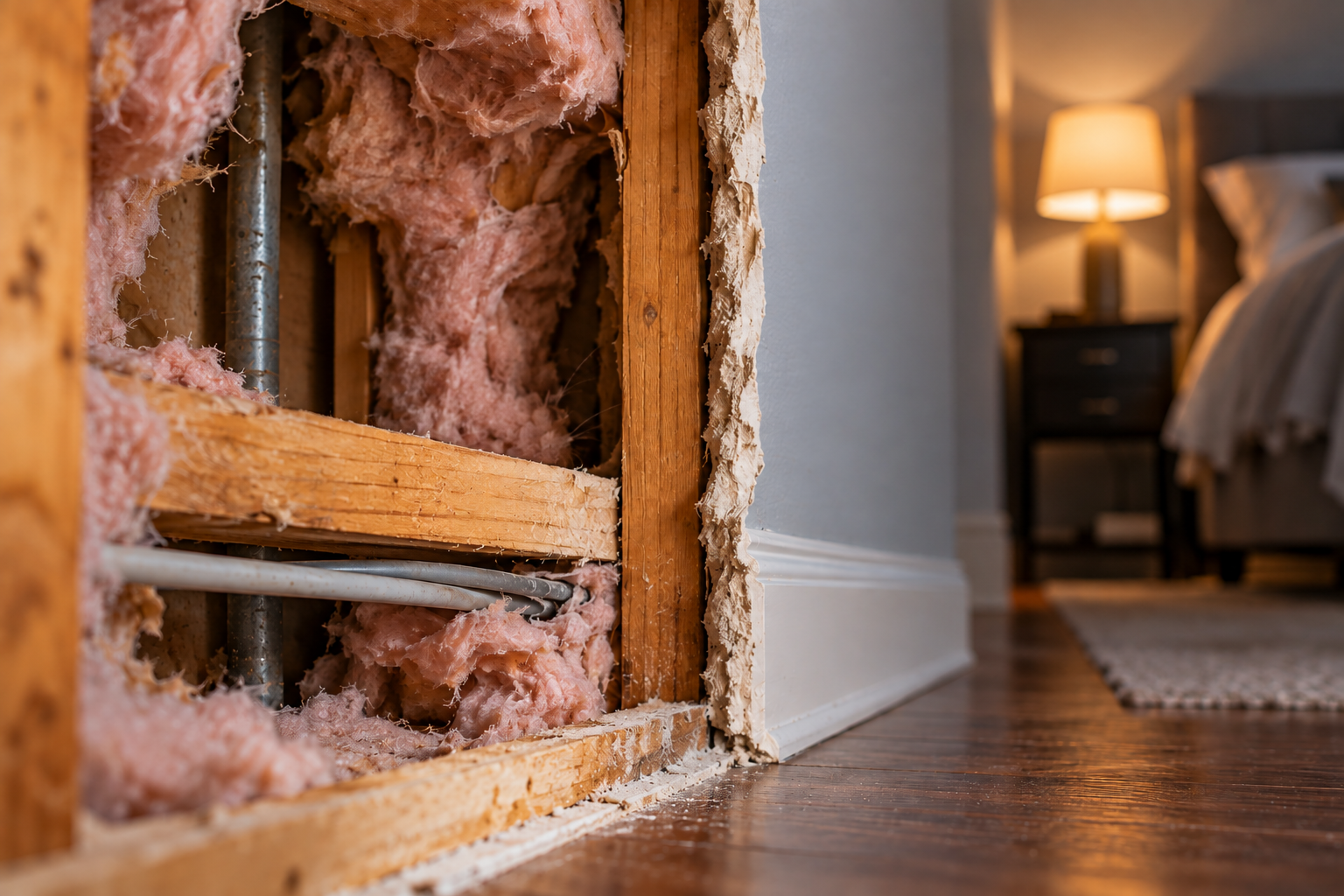
Damage to your home. Nesting mice shred insulation and soak it with urine and droppings. Contaminated insulation loses its effect and holds odor, and in bad cases it has to be removed. Our contaminated insulation removal service handles that safely.
How Do I Get Rid of Mice in the Walls?
Getting mice out of your walls works best in a set order. Skip a step and they usually come back.
1. Find where they are getting in
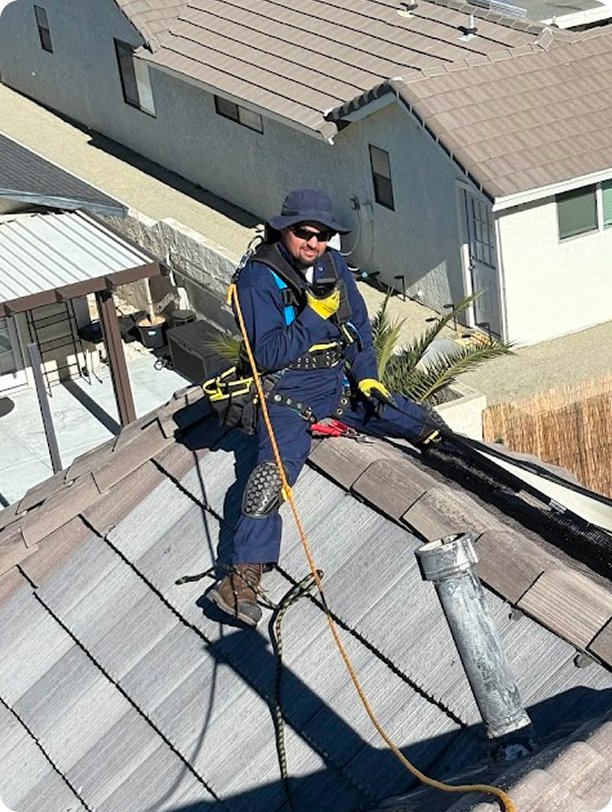
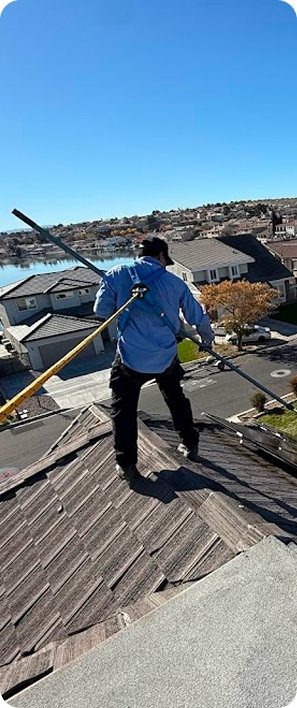
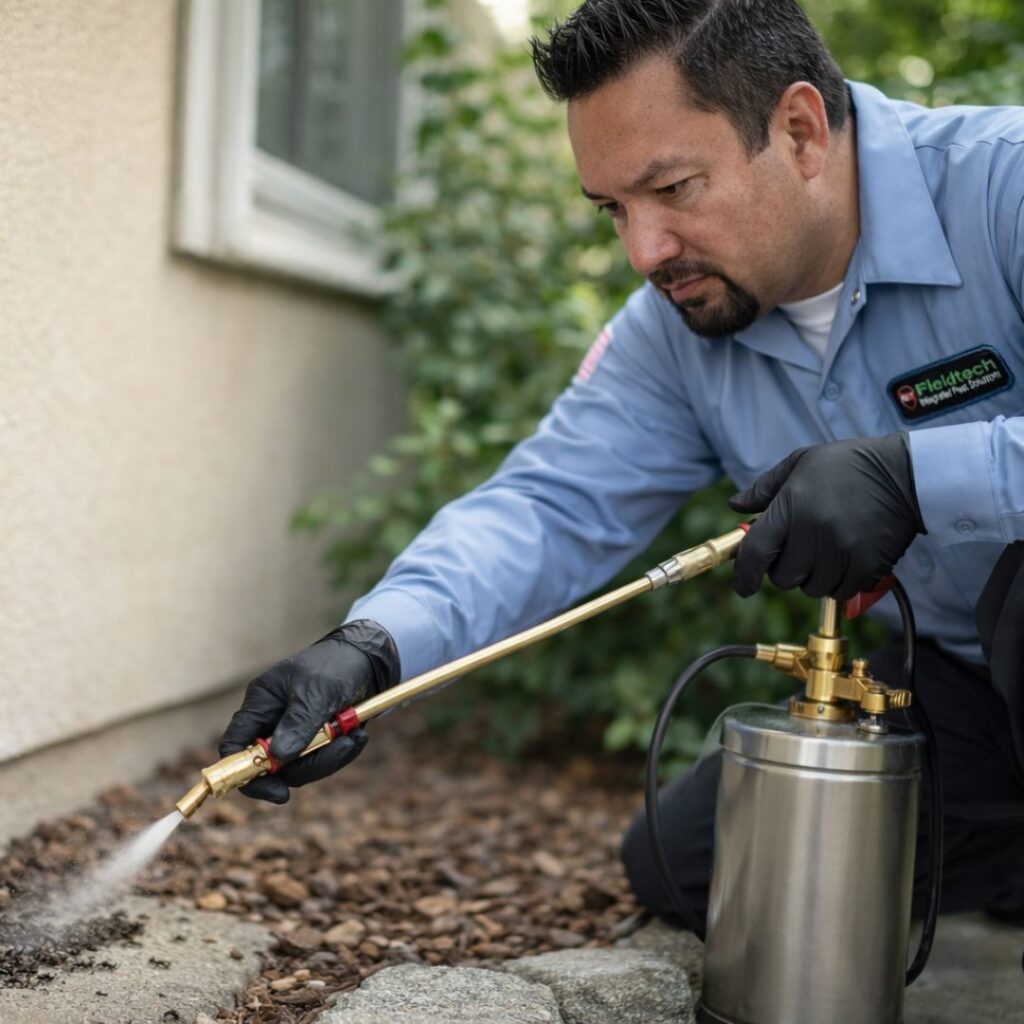
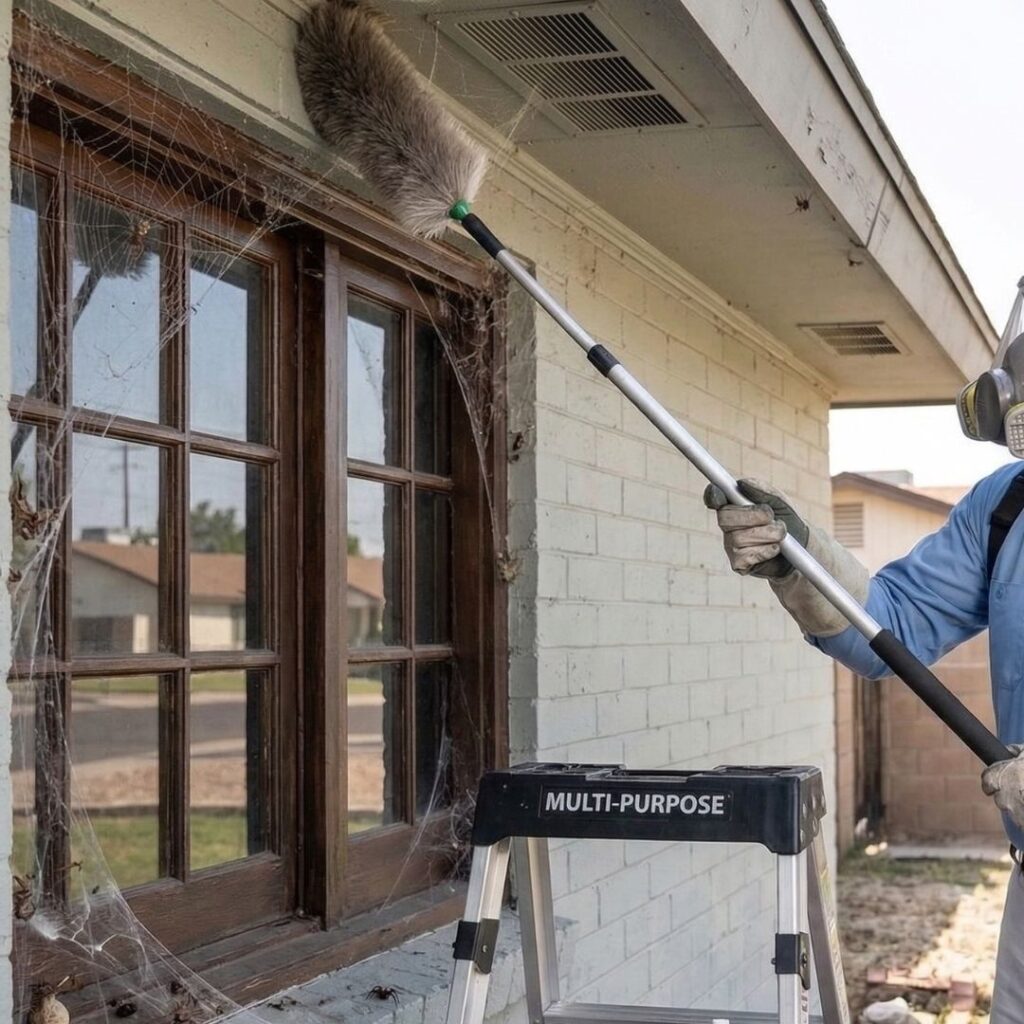
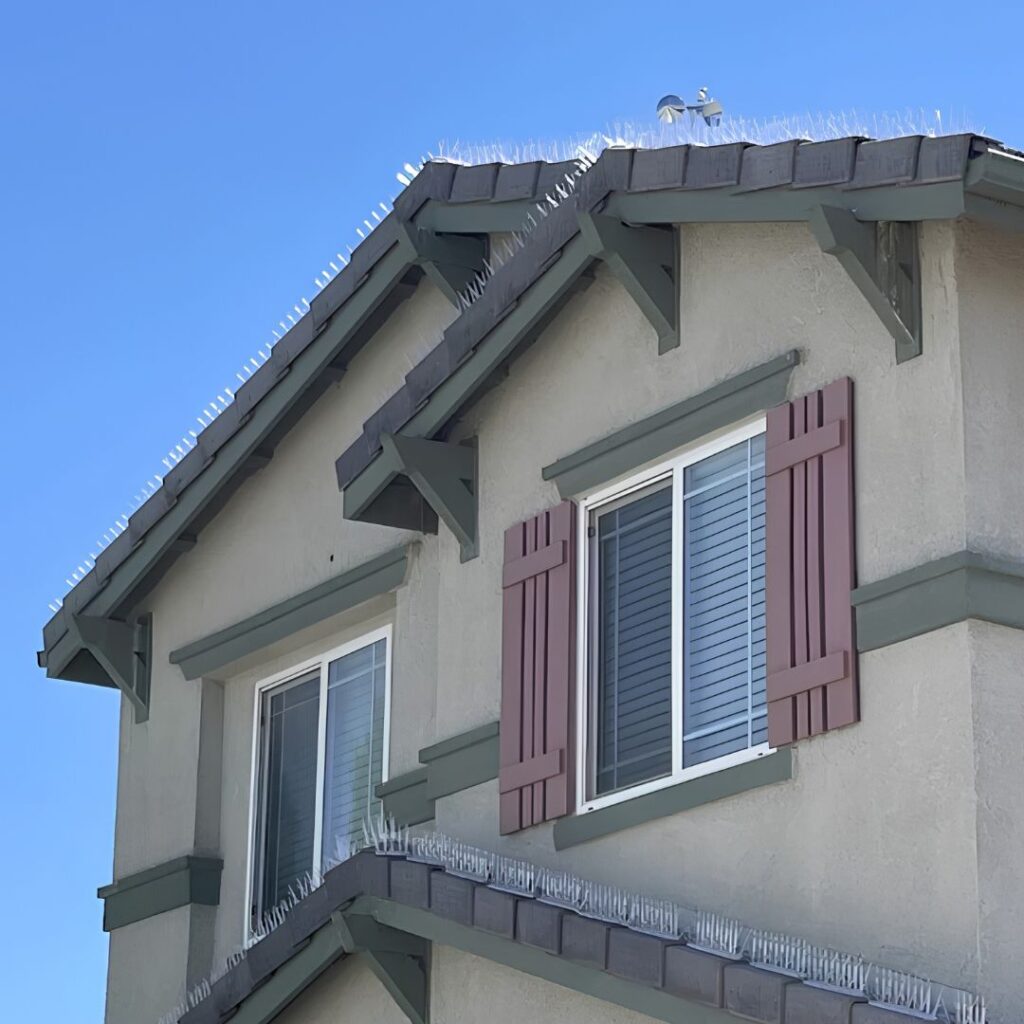
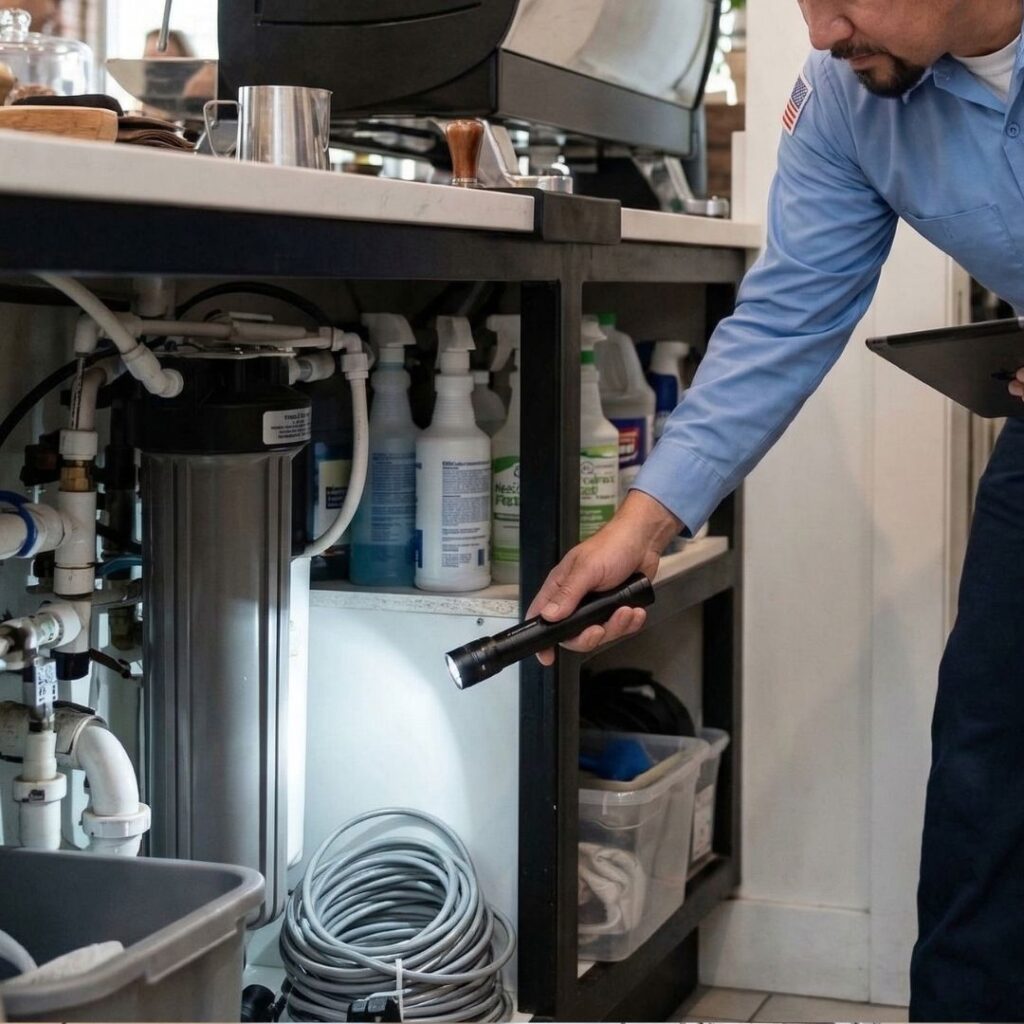
Start outside. Walk around the house and look at the places High Desert mice use most: gaps where plumbing, gas and AC lines enter the walls, worn garage door bottom seals, gaps along the roofline and eaves, vents without screens, and cracks in the foundation or stucco. A mouse can squeeze through a gap about the size of a dime, so small openings count.
2. Trap, do not poison, inside the house
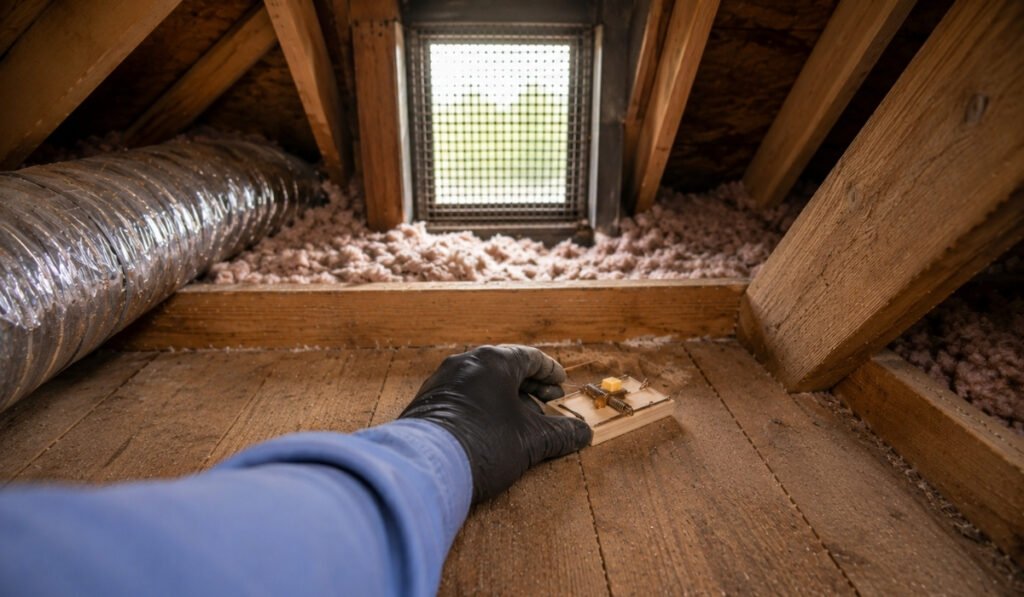
Place snap traps along the baseboards where you have seen droppings or heard activity. Set them at a right angle to the wall with the trigger end facing the wall, because mice run along edges rather than across open floor. Check them every day.
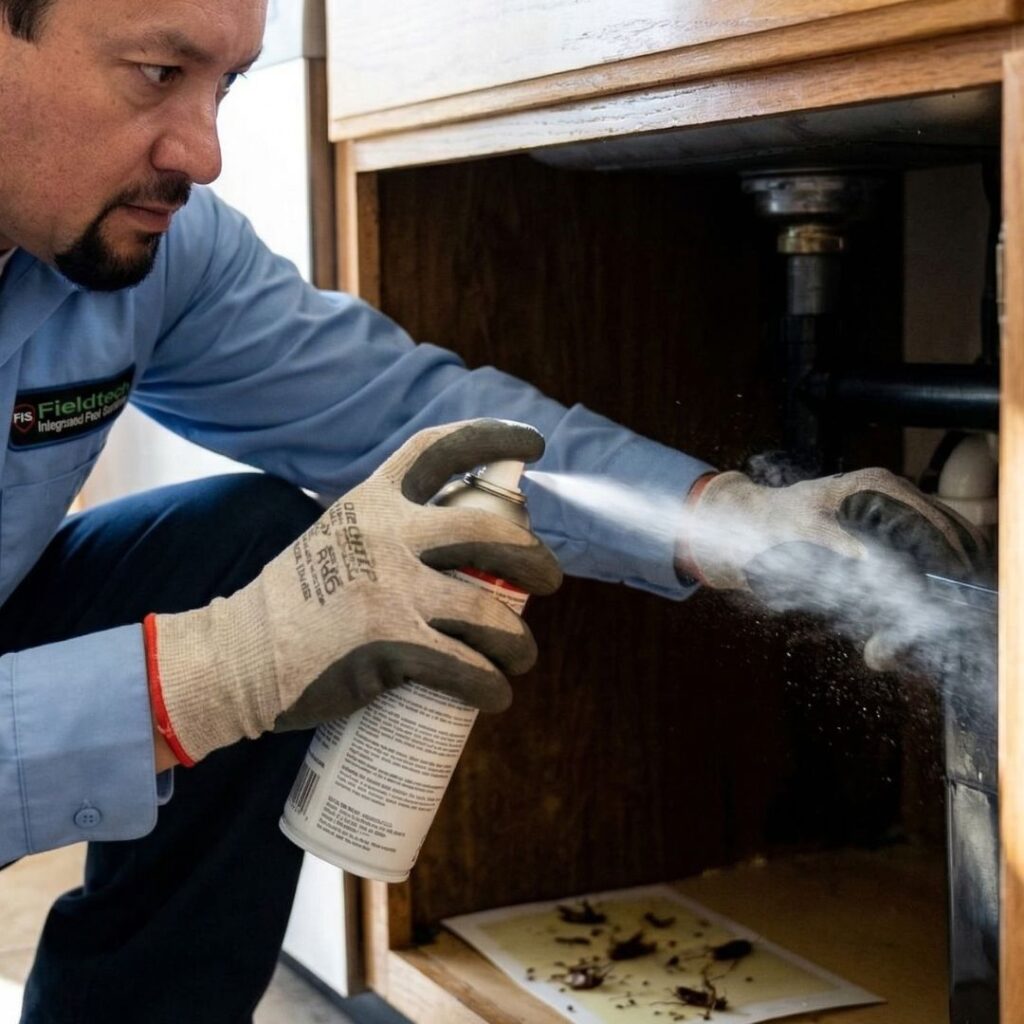
Avoid putting poison bait indoors. A poisoned mouse often crawls back into the wall void to die, which trades a noise problem for an odor problem. Indoor bait is also a risk to children and pets.
3. Seal entry points with the right materials
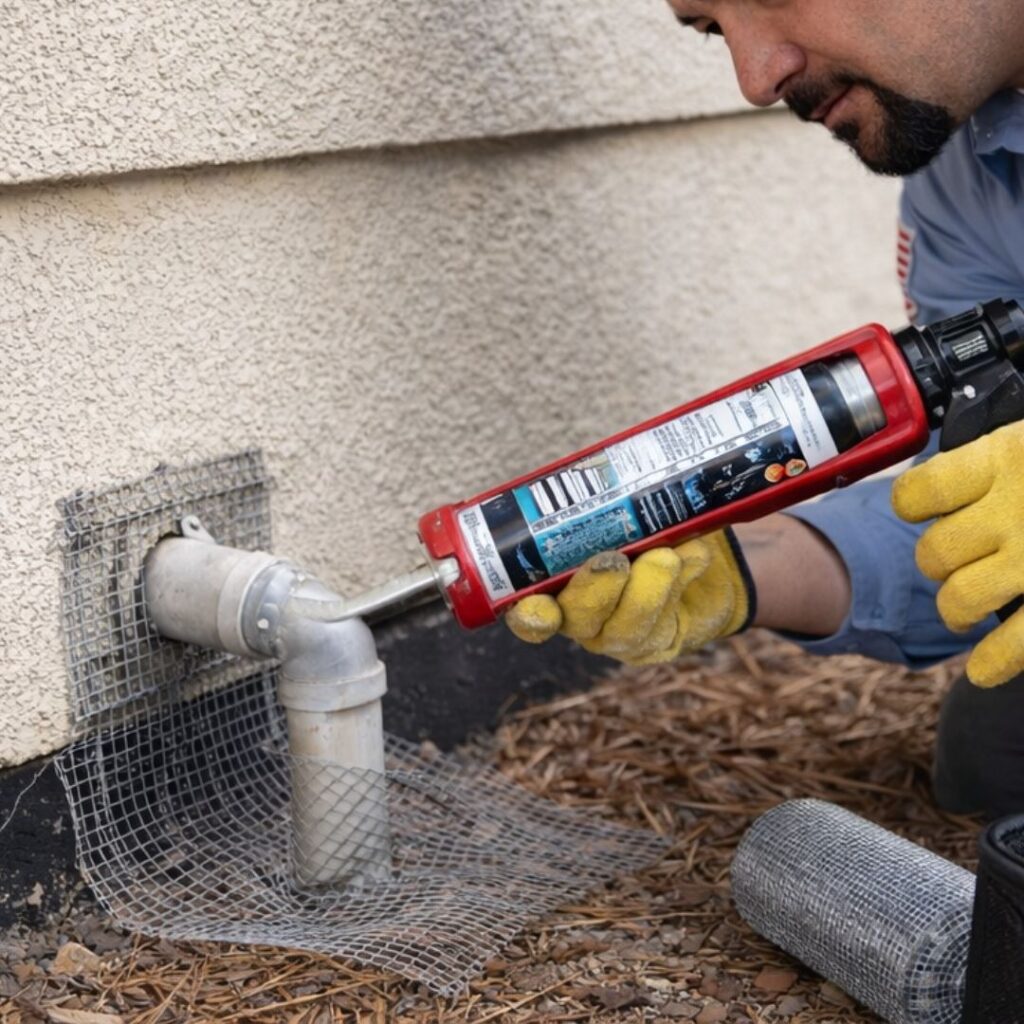
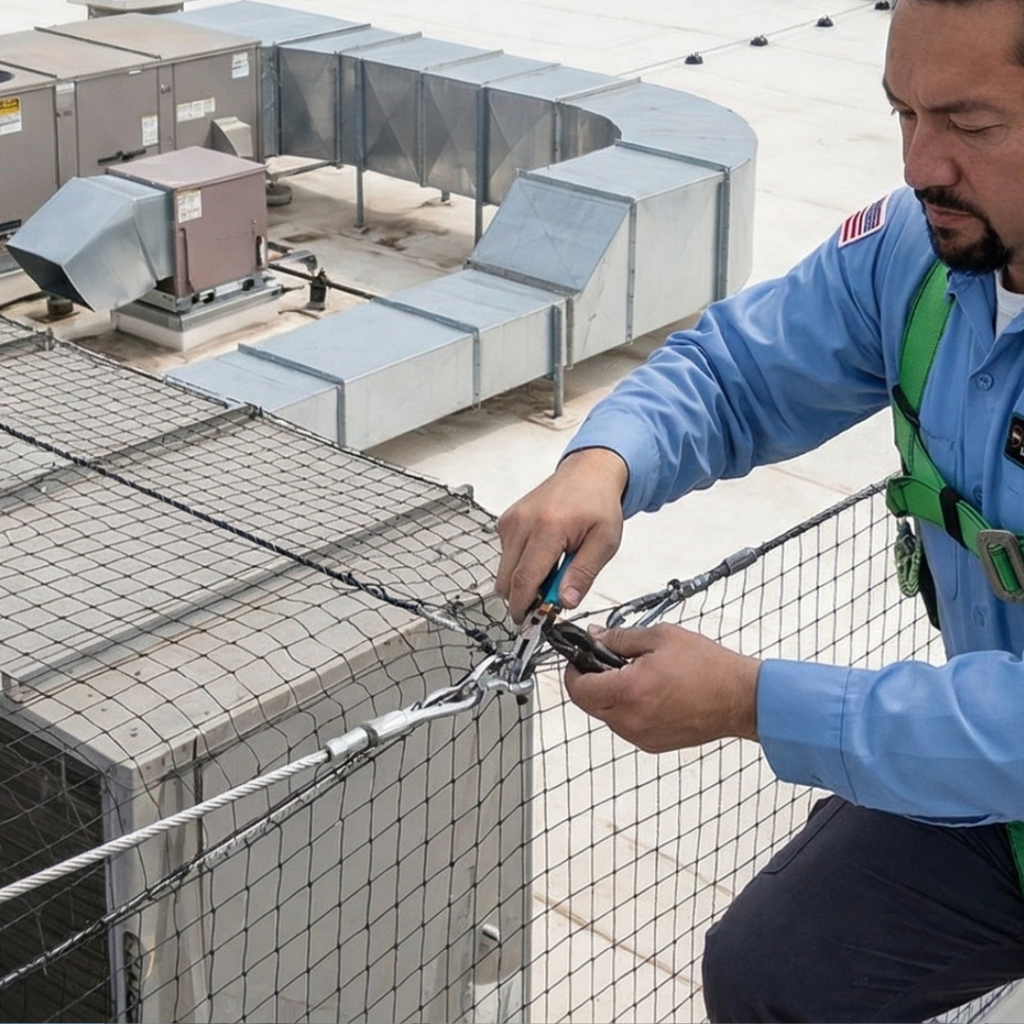
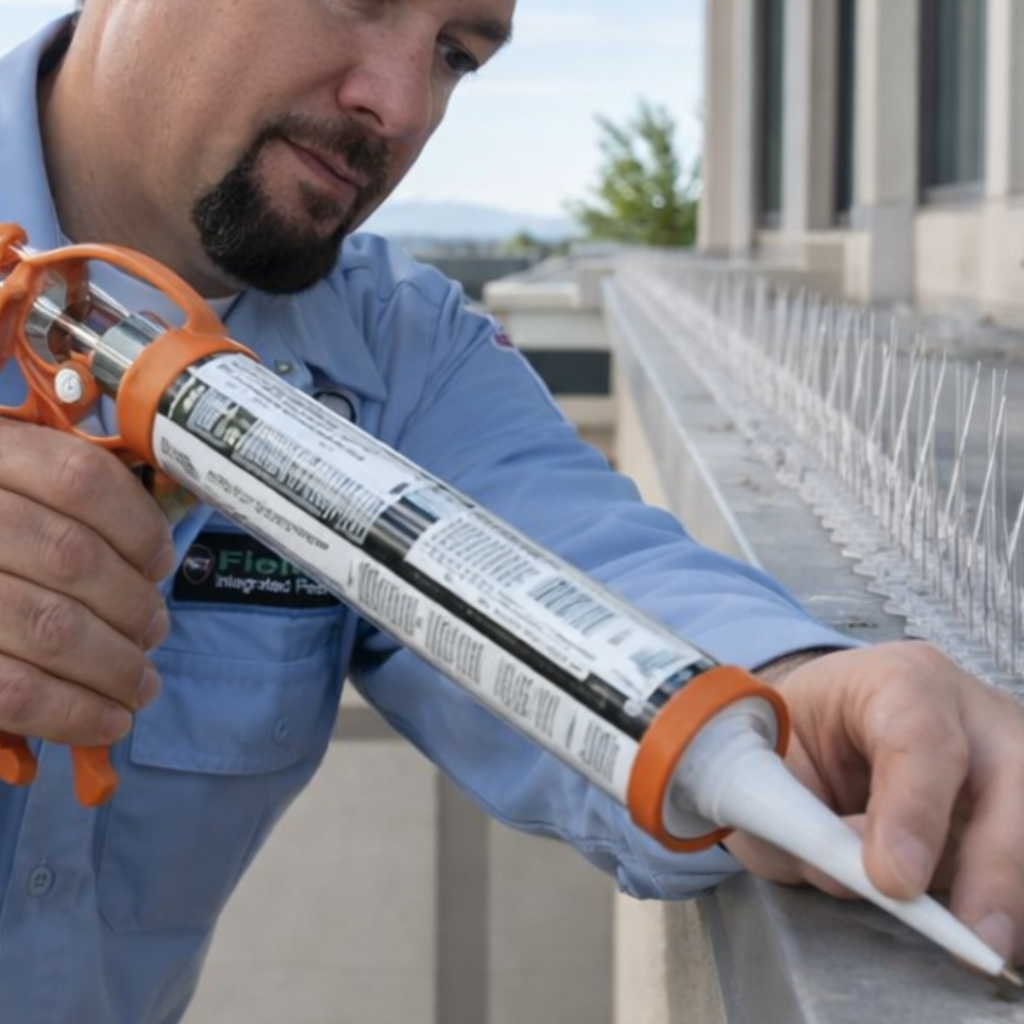
Mice chew through foam, rubber, plastic and wood. Seal gaps with steel wool packed with sealant, hardware cloth, metal flashing or cement. Timing matters too: seal once activity inside has stopped, or you can trap mice in the walls with no way out. Our rodent proofing and entry point sealing service is built around getting this step right.
4. Remove what attracts them
- Store pantry food and pet food in sealed containers, and do not leave pet bowls out overnight
- Clear clutter and cardboard boxes from the garage
- Keep birdseed and animal feed in metal bins
- Stack firewood away from the house and trim plants back from the walls
5. Clean up safely
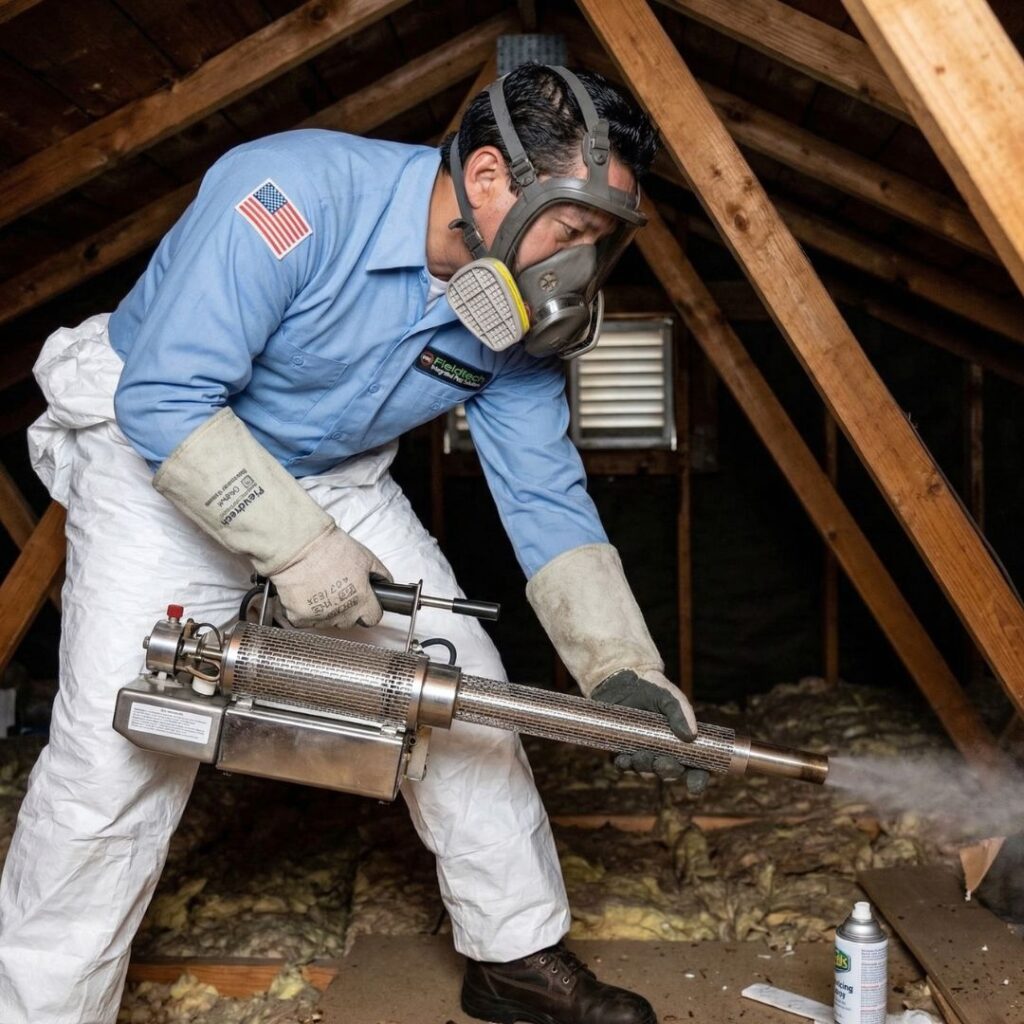
Once the mice are gone, clean droppings and nesting material the safe way: gloves on, windows open, everything wetted with disinfectant before you wipe it up. If the attic is heavily contaminated, attic sanitation and deodorizing is safer than doing it yourself.
When to call a professional
Call in help if you still hear activity after a week or two of trapping, if the sounds come from several walls, if you find nesting in the attic insulation, or if you notice a dead mouse smell. Trapping alone removes the mice you have, but it does not stop the next ones from following the same route in.
Dead Mice in Walls: Dealing With the Smell
A sharp, rotting smell that is strongest near one section of wall usually means a mouse has died inside it. You may also notice flies around an outlet or baseboard. This happens most often after poison bait has been used.
You have a few options:
- Wait it out. A single small mouse will dry out over time, but the smell can linger for weeks, longer in warm weather.
- Find and remove it. Follow the smell to the strongest point. Removal usually means cutting a small access hole in the drywall, which a professional can pinpoint to keep the damage small.
- Air out and neutralize. Open windows and use an enzyme-based odor neutralizer once the source is gone. Air fresheners only cover the smell.
If the odor is coming from the attic, sanitation and deodorizing removes the source along with any contaminated material.
How Fieldtech Gets Mice Out of Your Walls
Nelson founded Fieldtech Integrated Pest Solutions in 2018 after years at a large pest control company, with a simple rule: treat every customer the way he would want his own family treated. That means finding the real cause instead of just setting out bait.
Every mice-in-walls job follows the same approach:
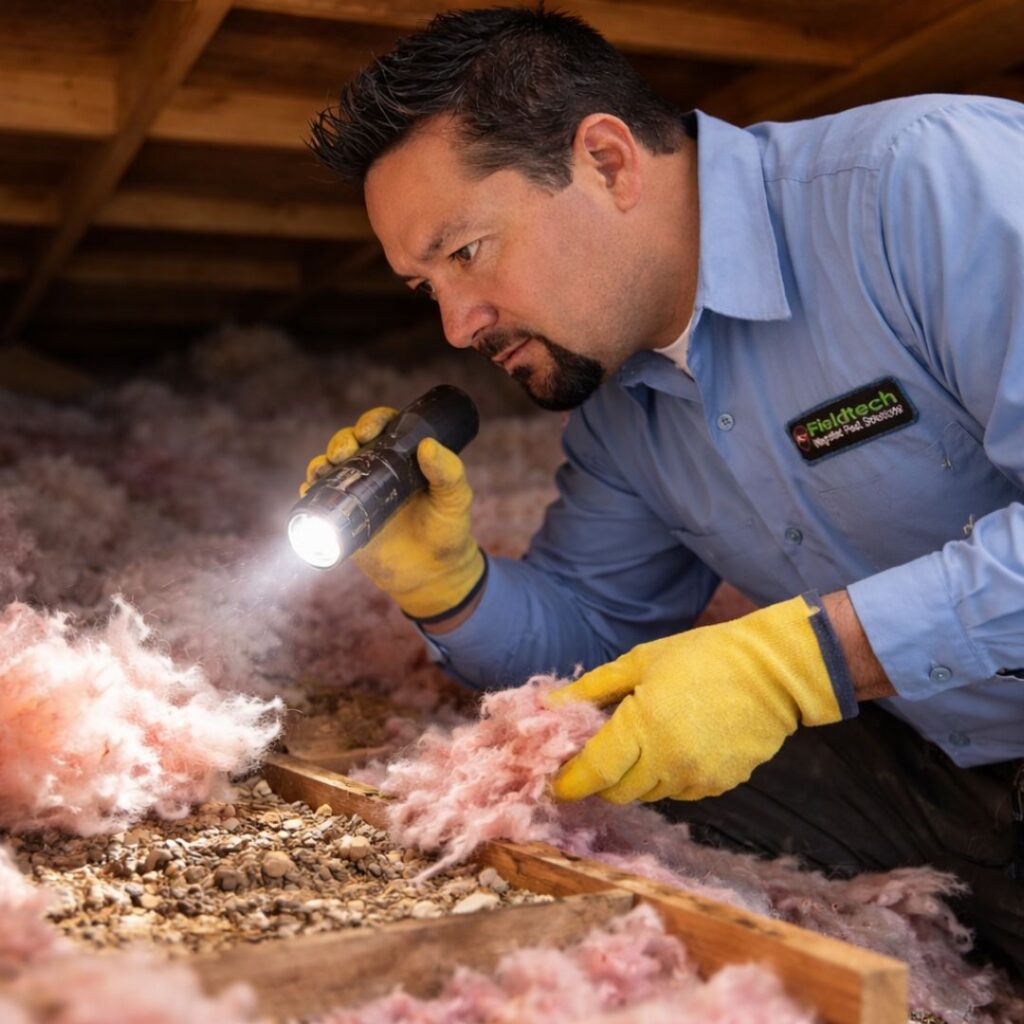
- Free detailed inspection to find entry points, travel routes and nesting areas
- Targeted trapping and monitoring instead of unnecessary pesticide use
- Exclusion work to seal the gaps so new mice cannot get back in
- Cleanup and sanitation where droppings and nesting material need to go
We return calls within one hour, our solutions are guaranteed, and new customers get 5% off. Military members, seniors and first responders get 10% off. We serve homes and businesses across the High Desert and Inland Empire, including Apple Valley, Victorville and Hesperia.
Hearing mice in your walls? Call Fieldtech at (800) 805-5758 to book a free inspection.
Frequently Asked Questions
How do I know if I have mice in my walls?
Listen for light scratching, scurrying or squeaking at night, especially in quiet rooms like bedrooms. Then look for small pointed droppings along baseboards, grease marks on walls and chewed food packaging.
Will mice in walls go away on their own?
No. Mice inside a warm wall with food nearby have no reason to leave, and they breed quickly. The problem only goes away once the mice are removed and their entry points are sealed.
When are mice most active in walls in the High Desert?
Activity usually rises in fall and winter, when cold nights push mice indoors looking for warmth. Because mice are active at night, that is also when you are most likely to hear them.
Can mice chew through drywall?
Yes. Mice can gnaw through drywall, wood and soft sealants like foam. That is why entry points should be sealed with steel wool, hardware cloth, metal flashing or cement.
Should I cut open the wall to get mice out?
Usually not. Trapping along baseboards and sealing entry points removes live mice without wall damage. Cutting a small access hole is normally only needed to remove a dead mouse that is causing an odor.