Pantry pest traps tell you that moths or beetles are in your kitchen, but they rarely clear an infestation on their own. Here is how to find the source, clean it out and keep your holiday baking supplies safe.
Small moths fluttering out of a cabinet or tiny beetles in the flour tend to show up right when holiday baking starts. According to the University of California Statewide IPM Program (UC IPM), the Indian meal moth is the most common moth found on food products in the home, and pantry pests usually enter the home in an infested package of food. One bag of flour, nuts or pet food can be enough to spread them through the whole pantry.
Before you buy traps, make sure you are dealing with stored food insects and not something else. Ants, roaches and mice also raid pantries, and they need a different plan; if you are seeing roaches, our cockroach control service is the better place to start. This guide covers what pantry pests are, what traps can and cannot do, and how High Desert homeowners can keep flour, sugar and spices clean through the season.
What Are Pantry Pests?
Pantry pests are moths and beetles that feed on stored dry food such as flour, cereal, pasta, nuts, dried fruit, spices and pet food. UC IPM groups them into a few common types, and knowing which one you have makes it easier to find the source.
- Indian meal moth: The most common moth in home food. Its larvae feed on dried fruit, nuts and chocolate, among other foods.
- Sawtoothed and merchant grain beetles: These feed on food of plant origin, especially grain and grain products, and often turn up in pet food and bird seed.
- Confused and red flour beetles: They have a wide food range that includes cereals, grain products and shelled nuts.
- Cigarette and drugstore beetles: General feeders that get into spices such as chili powder and paprika.
- Warehouse beetle: It feeds on cereals, candy, cocoa, cookies and cornmeal.
- Weevils: Bean, granary and rice weevils feed mainly on seeds or whole grains.
Signs of a Pantry Pest Infestation
Adults are usually easier to spot than larvae, and UC IPM notes that the first sign is often small moths flying around the kitchen. Pantry moth eggs and young larvae are hard to see, so look closely at the packages themselves:
- Webbing: Silky threads in the tight corners or folds of a package.
- Tiny holes: Pinholes in boxes, bags or wrappers.
- Moving specks: Small beetles or larvae in flour, cereal, rice or spices.
Where Do Pantry Pests Come From?
Most pantry pests ride in with groceries. UC IPM says they usually arrive in an infested package of food, and the source is often a damaged or opened package that was forgotten at the back of a shelf.
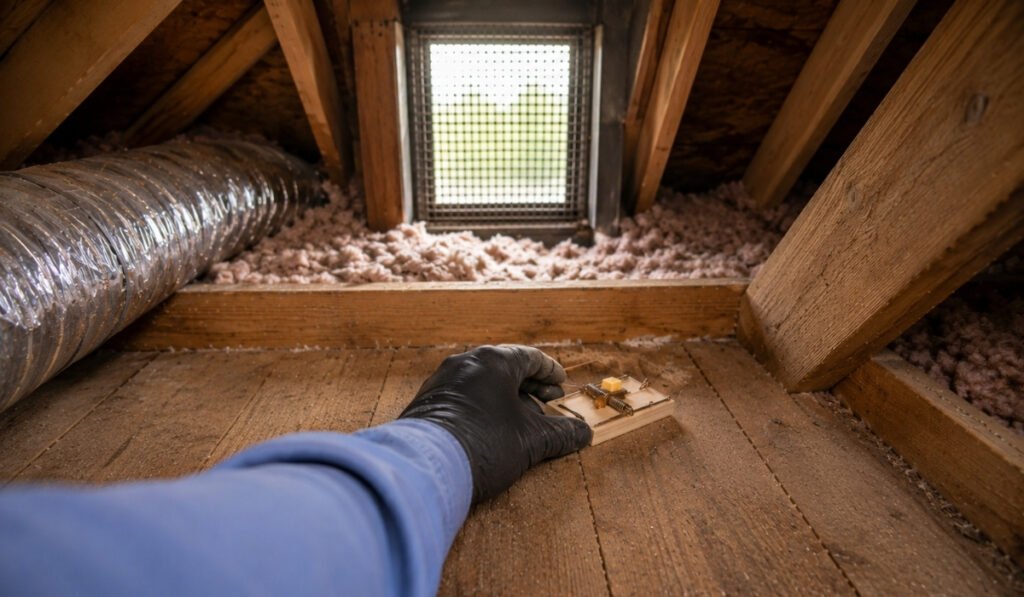
Some come from inside the house itself. According to UC IPM, certain pantry insects breed in the nests of rodents and insects and can migrate from there into living areas. If you clear the pantry and the bugs keep coming back, a mouse nest in a wall, attic or garage may be the real source, and that calls for professional mice control.
Pet Food, Bird Seed and Garage Storage
Bulk pet food and bird seed are common hiding spots. UC IPM lists pet food, bird seed and even rodent bait among the foods that sawtoothed grain beetles infest. If you keep feed or seed in the garage or a shed, check those bags every time you check the pantry.
Do Pheromone Traps for Pantry Moths Work?
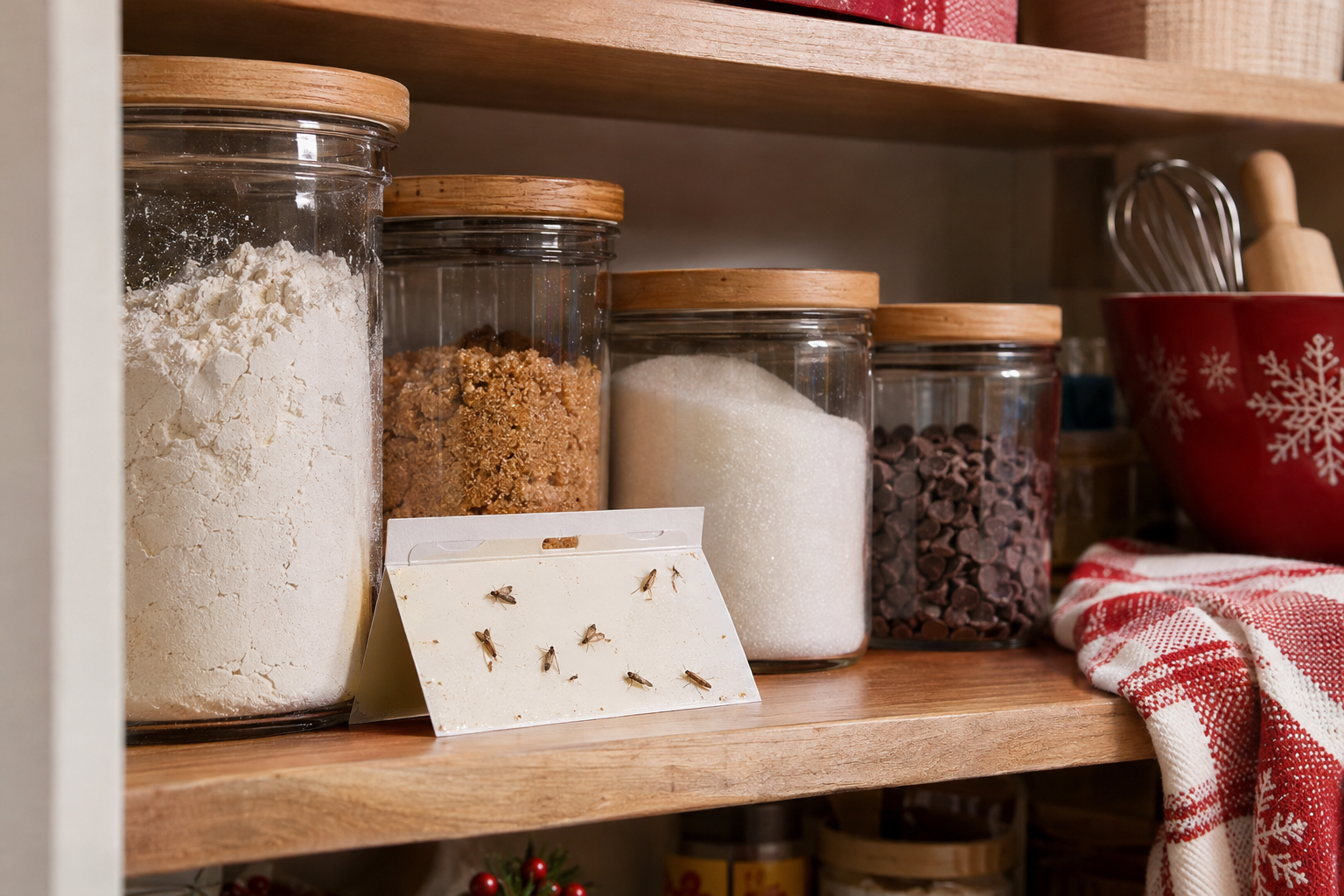
Pheromone traps work as an early warning system, not as a complete fix. UC IPM recommends using them to detect pests that remain after the infested food has been removed. The lure in Indian meal moth traps attracts males only, so the female moths are not caught.
What Pantry Pest Traps Can Do
- Show where activity is: A trap that keeps catching moths points to a hidden source nearby.
- Tell you when the problem is over: Several weeks of empty traps after a clean-out is a good sign.
- Reduce mating: Catching males before they mate may reduce egg production, according to UC IPM.
What Pantry Pest Traps Cannot Do
- Clean infested food: Larvae inside a bag of flour keep feeding no matter how many moths the trap catches.
- Catch every pest: Many lures target specific species, so check the label to see which pests a trap is made for.
- Replace a clean-out: The University of Florida IFAS Extension notes that traps by themselves may be insufficient to manage persistent pest infestations.
Where to Put Pantry Pest Traps
Place traps in the area of the previous infestation and check them weekly, as UC IPM advises. The UF/IFAS Extension also warns that too many traps in a confined area may confuse moths and make the traps less effective. Write the date on each trap when you set it so you know when to replace it.
Step by Step: How to Get Rid of Pantry Moths and Beetles
The fix is a thorough clean-out, done once and done well. Work shelf by shelf so nothing gets missed.
- Empty the pantry: Take every dry food item off the shelves, including spices, pet food and baking supplies.
- Inspect each package: Look for webbing, tiny holes, larvae and live beetles, and check items stored nearby as well.
- Throw out infested food: UC IPM advises discarding any food that shows evidence of infestation. Bag it and take it to an outdoor bin.
- Vacuum shelves and cracks: Use a crevice attachment in corners, shelf supports and edges, then empty the vacuum outside.
- Wash the shelves: Scrub with soap and water, paying attention to corners and crevices, and let everything dry.
- Restock into sealed containers: Move dry goods into containers with tight-fitting lids before they go back on the shelf.
- Set traps and monitor: Place pheromone traps where you saw activity and check them every week.
Skip the bug spray. In its Pest Note on pantry pests, UC IPM states that insecticides are not recommended for controlling pantry pests and warns against spraying pesticides on or near food.
Keep watching after the clean-out. UC IPM says the Indian meal moth takes about six to eight weeks to complete its egg, larval and pupal stages in warm weather, so a few late moths can still appear. Keep checking traps for at least two months before you call the problem solved.
How Do You Keep Pantry Pests Out of Holiday Baking Supplies?
Holiday baking brings more flour, sugar, nuts, chocolate, dried fruit and spices into the house at once, and many of those are favorite pantry pest foods. A few habits keep new stock from becoming the next infestation.
- Inspect before you shelve: Pass over torn or damaged packages at the store, and look at new bags before they go into the pantry.
- Use sealed containers: Glass jars or hard containers with tight-fitting lids keep pests from spreading from one food to the next.
- Buy what you will use: Smaller amounts move through the pantry faster and give pests less time to settle in.
- Freeze slow-moving items: UC IPM suggests keeping infrequently used flours, spices and grains in the freezer if possible.
- Keep it dry: Moisture favors pantry pest development, so wipe up spills and keep storage areas dry.
- Rotate stock: Use older packages first and do not let opened bags sit forgotten at the back of a shelf.
- Check decorations: Cigarette beetles may infest dried pepper arrangements and wreaths, so store holiday decor away from food.
Is It Pantry Pests, Mice, Ants or Roaches?
Not every bug or mess in the pantry comes from moths and beetles. These clues help you tell the most common kitchen invaders apart.
- Pantry pests: Small moths flying near cabinets, webbing in packages, or tiny beetles inside flour and cereal.
- Mice: Chewed packaging, droppings on shelves and shredded nesting material. Our guide to the signs of a rodent infestation covers what to look for.
- Ants: Trails leading along counters to sugar, syrup and spills. If you see trails, our ant control service is the right fit.
- Cockroaches: Insects that scatter when the lights come on and hide under sinks and appliances.
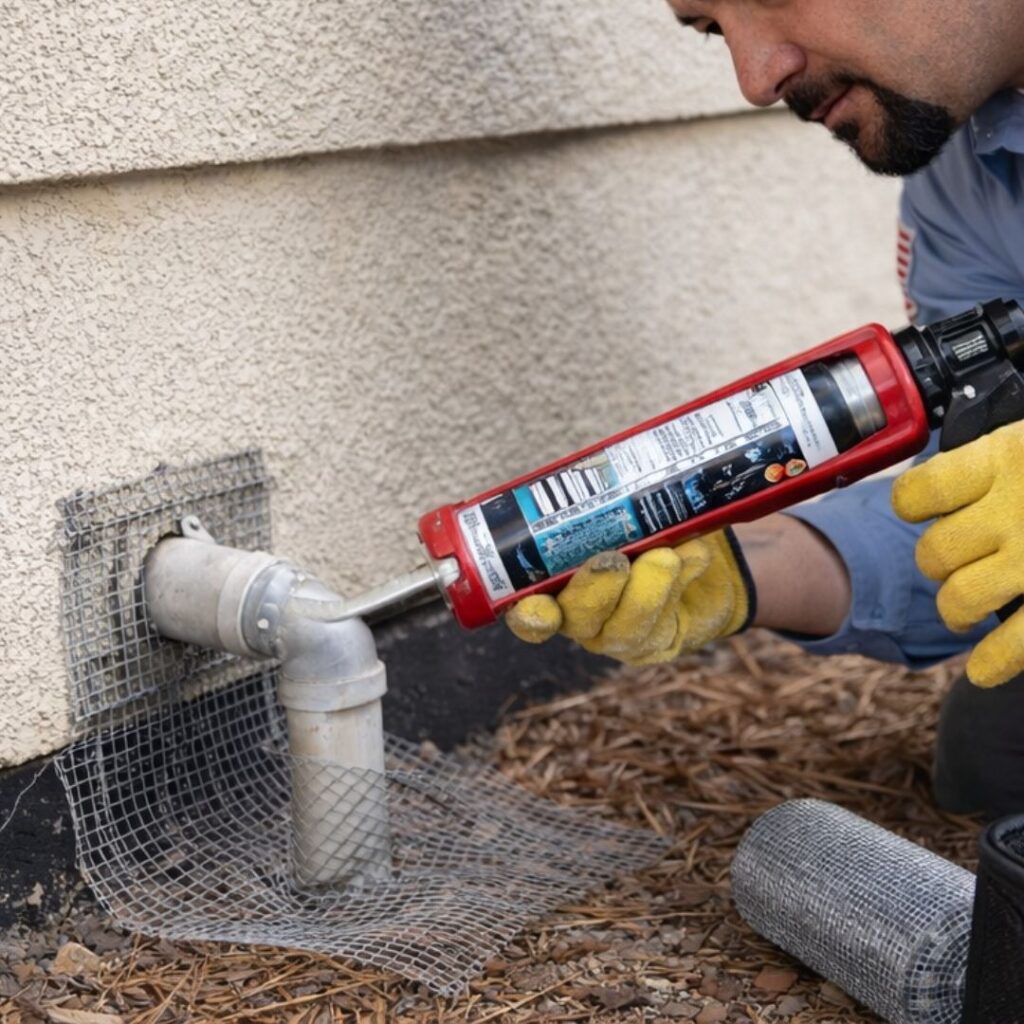
If mice are behind the problem, sealing the gaps they use is the long-term fix. Read how mice get into your house, and see our rodent proofing and entry point sealing service.
How Fieldtech Handles Pantry Pest Problems
Nelson founded Fieldtech Integrated Pest Solutions in 2018 to solve pest problems at the source, not just treat the symptoms. That approach fits pantry problems well, because when bugs keep coming back after a clean-out, the cause is often hiding somewhere you cannot easily see.
- Free detailed inspection: We look at the kitchen, pantry, garage and other storage areas to find where the pests are coming from.
- Rodent control and exclusion: If a rodent nest is feeding the problem, we deal with the rodents and seal the entry points.
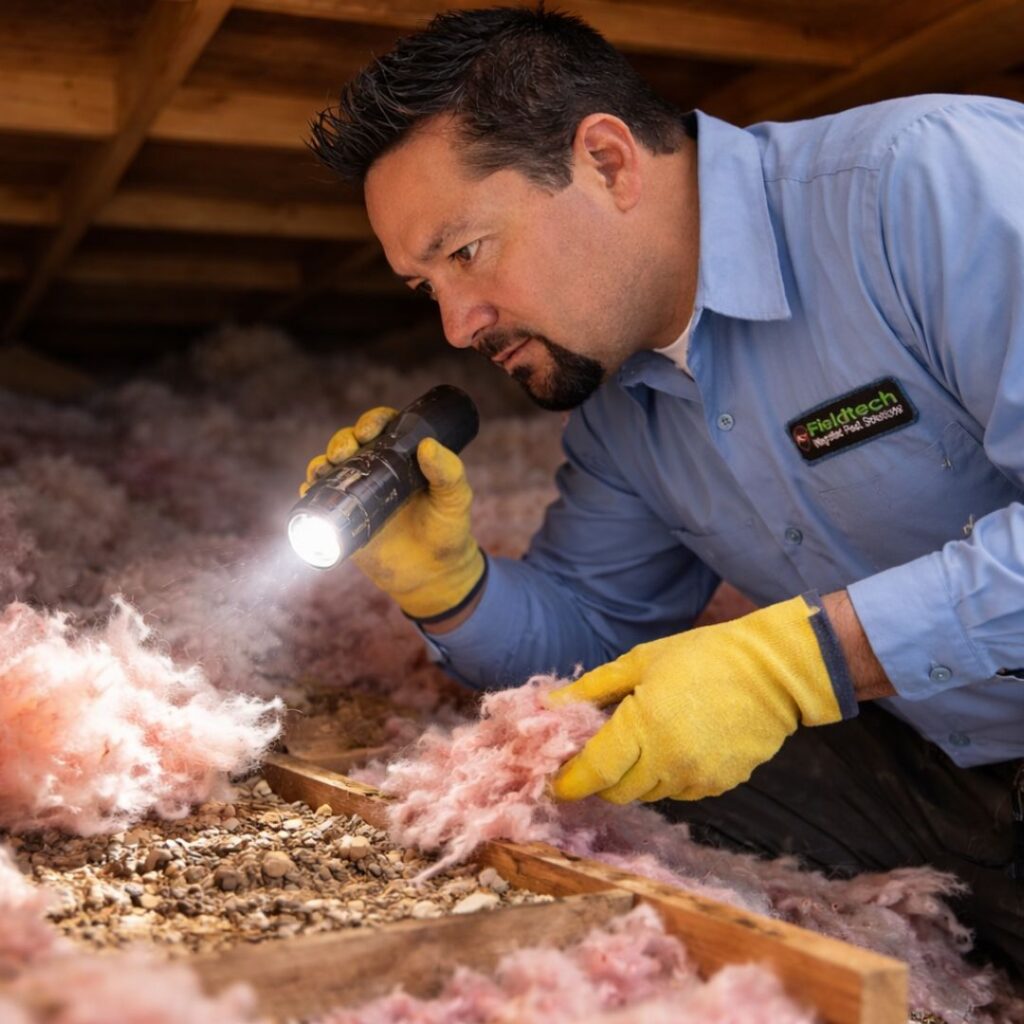
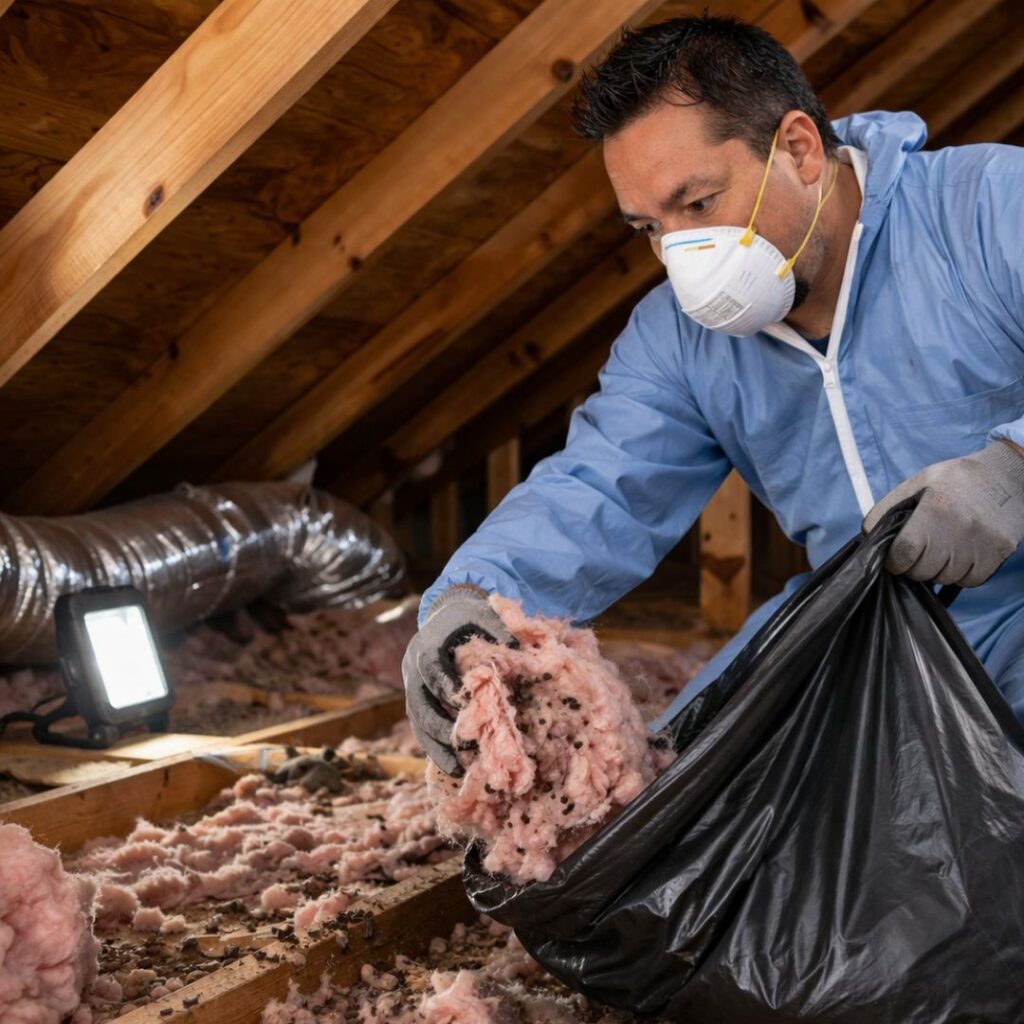
- Attic sanitation: Where rodents have contaminated an attic, we offer attic sanitation and deodorizing plus insulation removal and installation.
- Residential and commercial service: We handle pest control for homes and for businesses with kitchens and food storage.
- Fast response: Calls are returned within one hour, and our solutions are guaranteed.
- Discounts: New customers get 5% off, and military members, seniors and first responders get 10% off.
We serve homes and businesses across the High Desert and Inland Empire. That includes homeowners in Apple Valley, families and businesses in Hesperia, and customers in Phelan and Lucerne Valley.
Book a Free Pantry Pest Inspection
If pantry bugs keep showing up or you suspect mice behind the problem, call Fieldtech Integrated Pest Solutions at (800) 805-5758 for a free detailed inspection. We return calls within one hour.
FAQ
How long do pantry pest traps last?
UC IPM says most pheromone traps remain effective for about three months. Replace a trap sooner if its sticky surface fills up with insects or dust.
Are pantry pests a sign of a dirty kitchen?
Not necessarily. UC IPM says pantry pests usually enter the home in an infested package of food, so even a clean kitchen can get them, although moisture and spills help them build up.
Can pantry pests get through plastic bags?
UC IPM states that plastic bags are not adequate for storing susceptible food. Use containers with tight-fitting lids instead.
Why do pantry moths keep coming back after I clean?
Usually a source was missed, such as a forgotten package in another cabinet or a bag of pet food or bird seed in the garage. If the pantry is clean and moths still appear, a rodent or insect nest nearby may be feeding them.
When should I call a pest control company for pantry pests?
Call if bugs return after a careful clean-out, or if you find droppings, chewed packages, roaches or ant trails along with the insects. A professional inspection can find a source that is hidden in walls, the attic or the garage.