
California has a serious rat problem. In 2025, Los Angeles ranked as the number-one rattiest city in America, according to Orkin’s annual Rattiest Cities report, with San Francisco, San Diego, and Sacramento all appearing in the top 50. Rats are drawn to the state’s mild climate, dense urban areas, and abundant food sources, making Southern California’s Inland Empire and High Desert communities particularly vulnerable. If you’ve heard scratching in your attic, spotted droppings along baseboards, or noticed gnaw marks on wiring, you’re not alone, and you’re right to act quickly.
According to the CDC, rats and mice can spread diseases including hantavirus, leptospirosis, and salmonella through their droppings, urine, and nesting material. Beyond health risks, rodents cause serious structural damage by chewing through wiring, insulation, and wood, sometimes sparking electrical fires. A female rat can produce four to six litters per year, so a small problem can turn into a full infestation within weeks.
In this guide, we’ll walk you through everything you need to know about how to get rid of rats in California, including how to identify the species in your home, proven removal methods, and long-term prevention strategies. If you’re dealing with a significant infestation in Apple Valley, Victorville, Hesperia, or the surrounding communities, Fieldtech Integrated Pest Solutions offers free detailed inspections and guaranteed results backed by 15 years of local experience.
Know Your Enemy: California’s Two Main Rat Species
Before you start placing traps or sealing gaps, it helps to know which rat you are dealing with. California homes are primarily plagued by two species, each with different habits and preferred habitats.
Roof Rats (Rattus rattus)
The roof rat is the most common culprit in Southern California. Slender, dark brown to black, with a tail longer than its body, this species is an agile climber. It enters homes through utility lines, tree branches touching the roofline, and gaps in eaves. Once inside, it nests in attics, wall cavities, and false ceilings. If you hear scratching sounds overhead at night, a roof rat is the likely cause.
Norway Rats (Rattus norvegicus)
Norway rats are larger and stockier, with coarse brownish-grey fur and a shorter, thicker tail. They are ground-dwellers that burrow along building foundations, beneath wood piles, and around compost bins. Indoors, they tend to stay at ground level in basements, crawlspaces, and garages. Norway rats can chew through concrete and cinder block over time.
Identifying the species helps you place traps correctly. Roof rats need traps at height, on ledges, beams, and shelving. Norway rats need traps on the ground, along walls, and in corners.
How to Spot the Signs of a Rat Infestation
Rats are cautious and nocturnal, so you rarely see them during the day. Instead, look for these signs:
- Droppings: Dark, pellet-shaped, roughly the size of a raisin, found along walls, in cabinets, and near food sources
- Gnaw marks: On wiring, wooden beams, food packaging, or plastic pipes
- Grease rub marks: Dark smears left on walls and baseboards where rats travel regularly
- Scratching or scurrying sounds: Especially at night in attics, walls, or ceilings
- Nests: Shredded insulation, paper, or fabric tucked into hidden corners
- Burrows: Holes in soil along foundations or beneath debris in the yard
Spotting any of these signs early is key. The longer you wait, the more established the colony becomes and the harder it is to eliminate.
How to Get Rid of Rats in Your Home: Step-by-Step
There is no single magic fix for a rat problem. Effective rat removal in California requires a coordinated approach that combines trapping, sanitation, and exclusion. Here is how to do it.
Step 1: Inspect Your Property
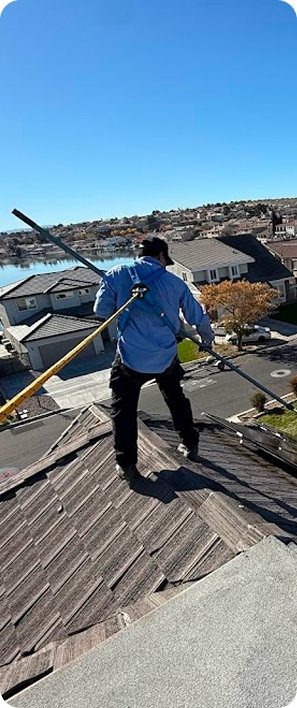
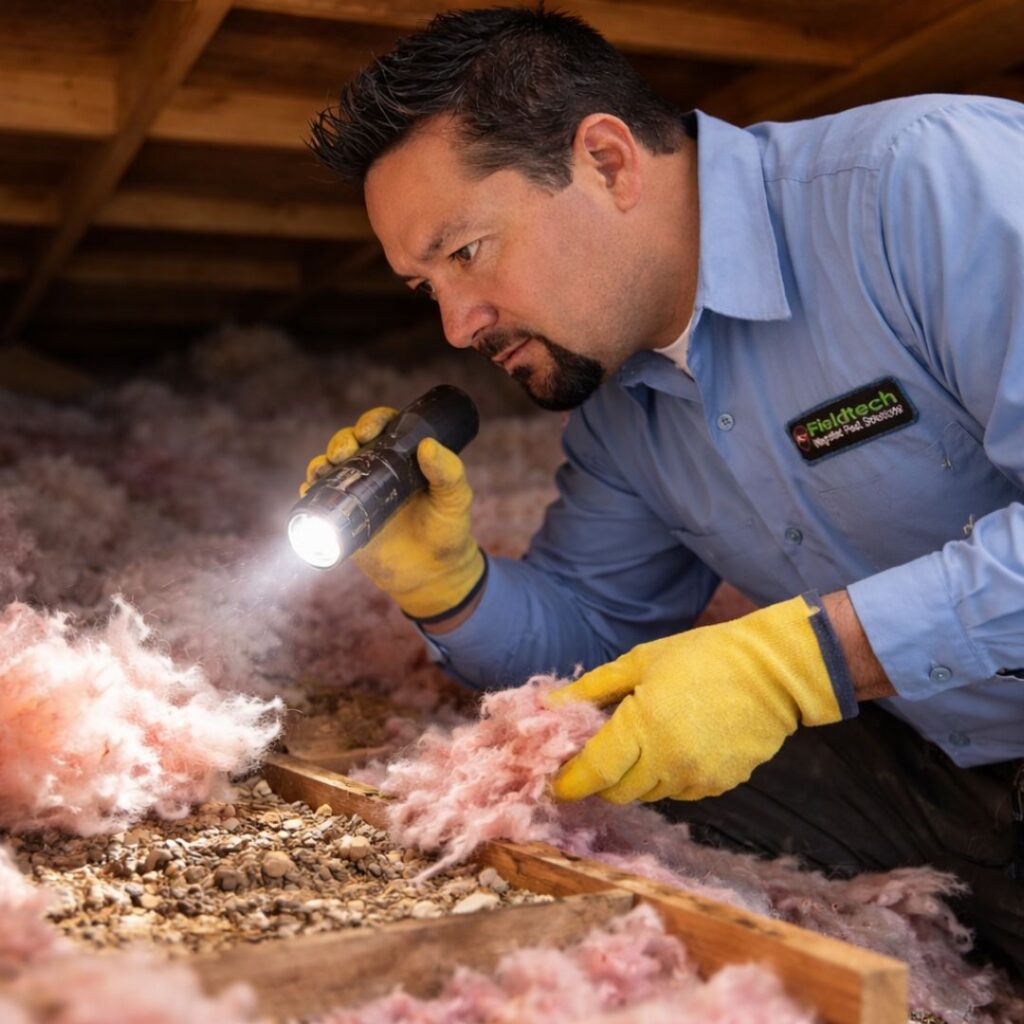
Walk the perimeter of your home and inspect the interior. Look for entry points, droppings, gnaw marks, and nesting material. Inspect at dusk when rats begin to move. Check the attic, crawlspace, garage, and kitchen, paying attention to where pipes and conduit enter the structure. Roof rats only need a gap the size of a quarter to squeeze through.
Step 2: Set Snap Traps
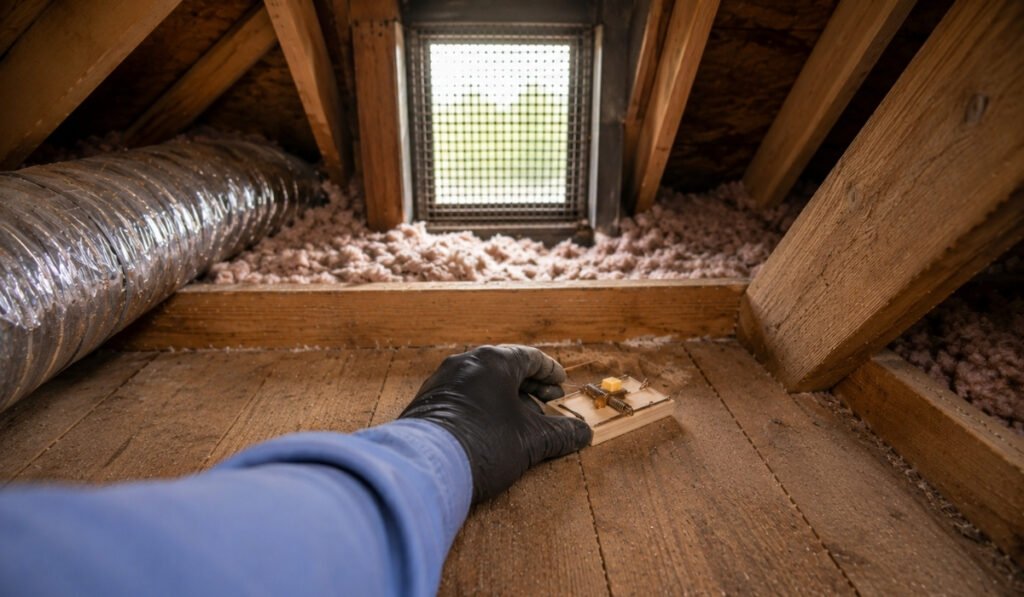
Snap traps are the most effective, safest, and most affordable tool for rat removal. They eliminate rats without the secondary poisoning risk that rodenticides carry for pets and wildlife. Use peanut butter, dried fruit, or nesting material as bait.
- For roof rats: Place traps off the ground on ledges, beams, or along the tops of walls
- For Norway rats: Place traps flush against walls and in corners at ground level
- Leave traps unset for the first two days so rats become comfortable with them
- Check traps at least once daily and dispose of caught rats using gloves and sealed bags
Step 3: Remove Food and Water Sources
Rats will not stay where food is scarce. Eliminate attractants both inside and outside the home:
- Store pet food in airtight containers and bring bowls indoors at night
- Keep garbage bins sealed with tight-fitting lids
- Pick up fallen fruit and citrus daily, a major draw in Southern California yards
- Fix dripping outdoor faucets and eliminate standing water
- Store bulk pantry items in hard-sided containers rather than paper or cardboard
Step 4: Seal Entry Points
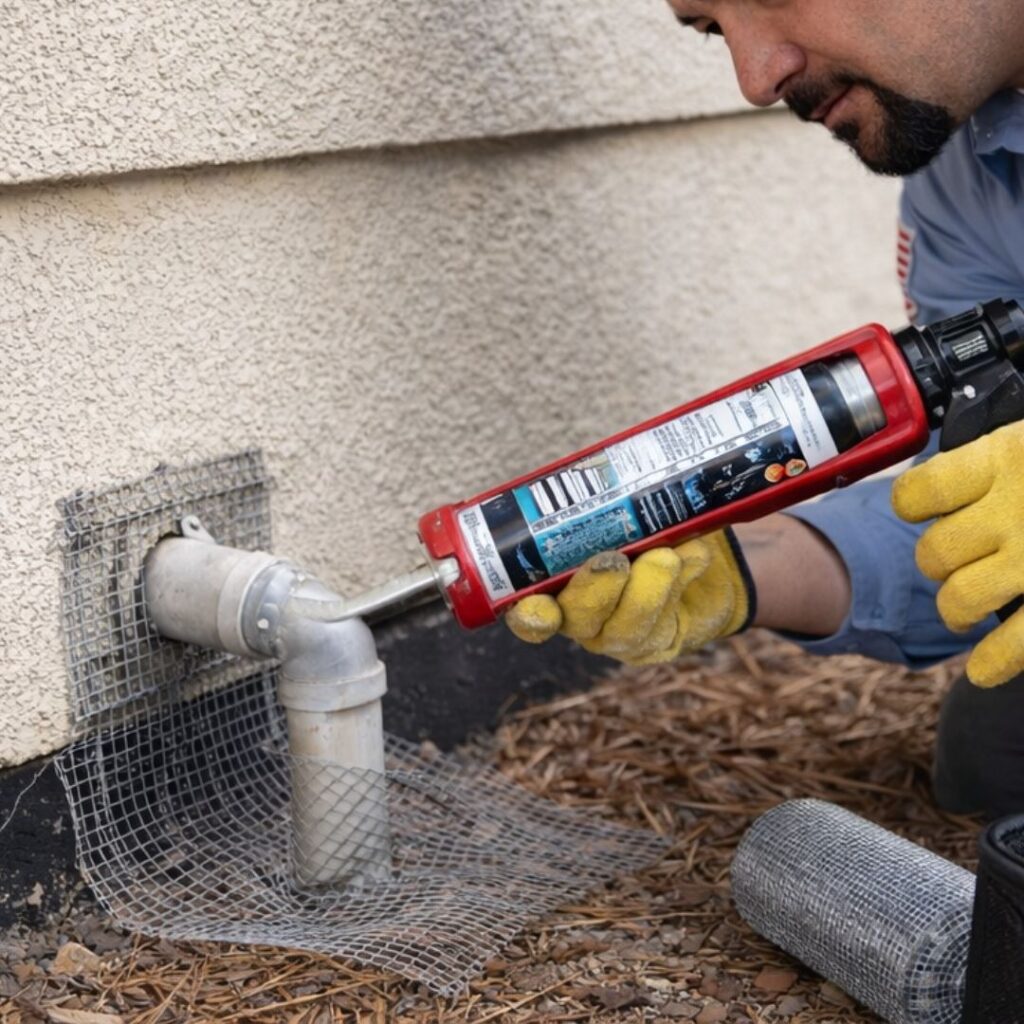
Trapping alone will not solve the problem if rats can keep entering. Once you have reduced the active population, seal every gap larger than a quarter inch. Use steel wool, wire mesh, or sheet metal rather than foam or caulk, which rats can chew through. Pay special attention to:
- Gaps around pipe penetrations in walls, floors, and ceilings
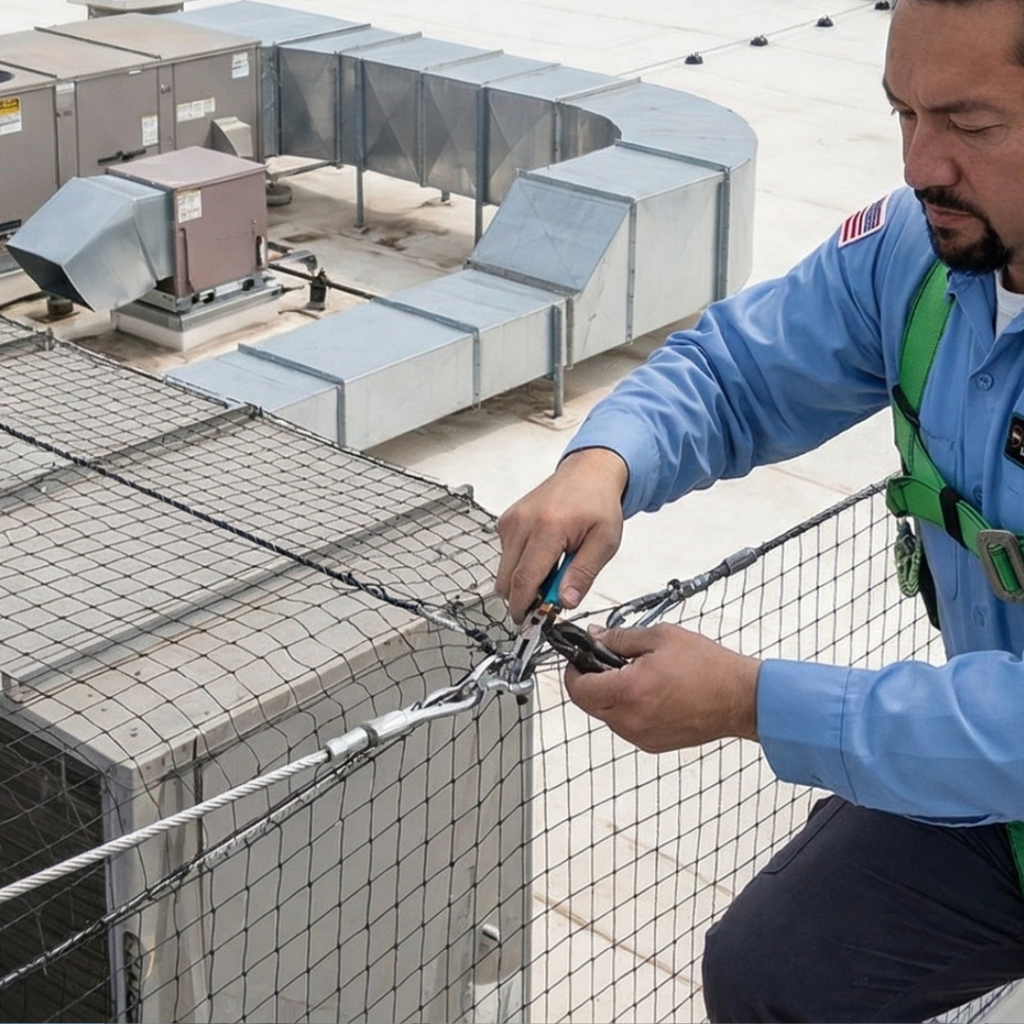
- Damaged or missing vent covers, especially in the roof and crawlspace
- Gaps beneath doors and around garage door seals
- Where utility lines enter the structure
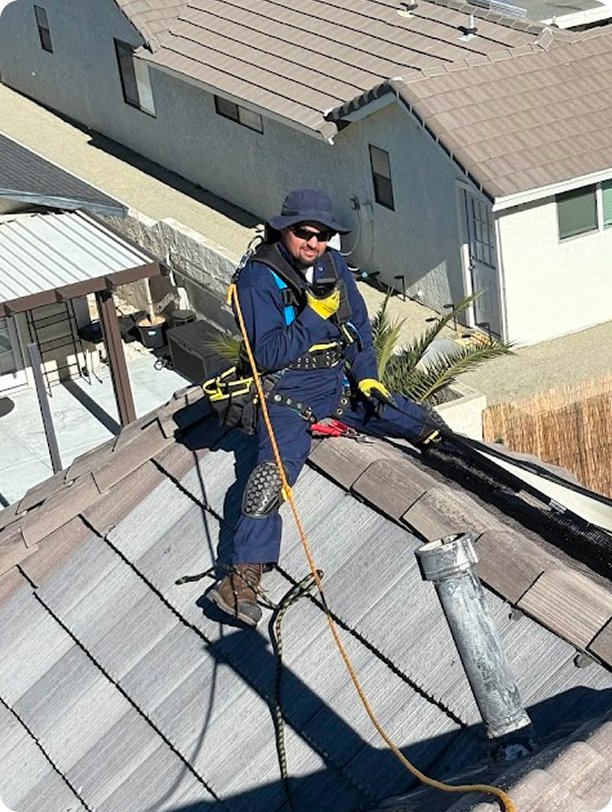
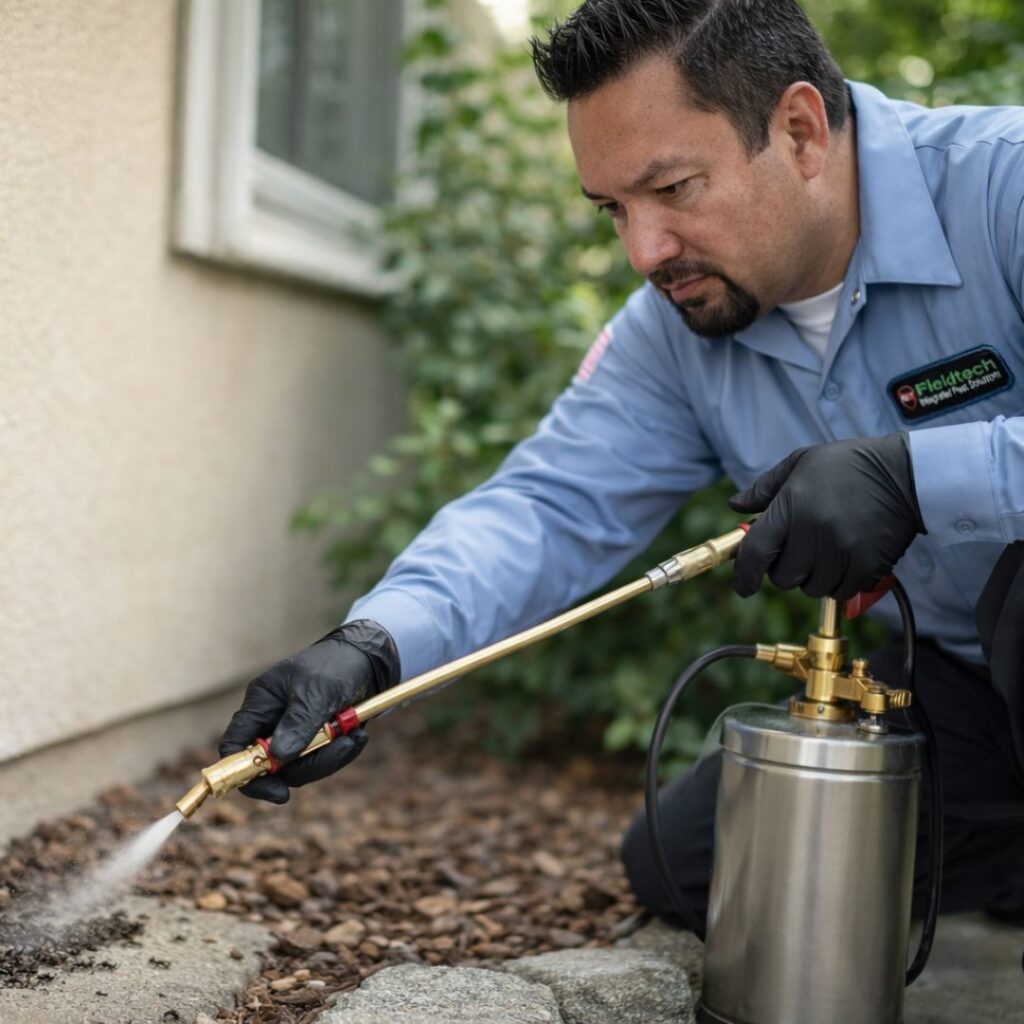
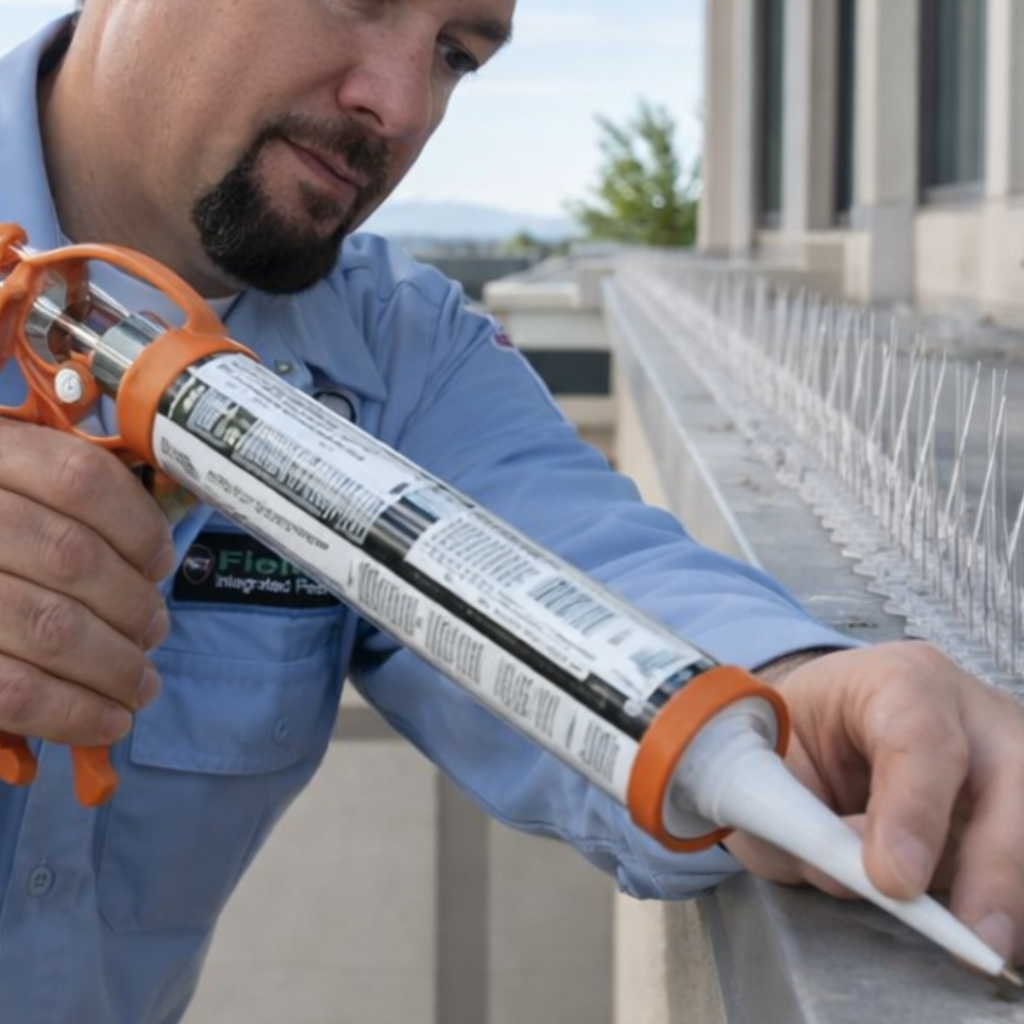
This process is called rodent exclusion, and it is the most important long-term solution. Our team at Fieldtech specializes in professional rodent proofing and entry point sealing, identifying every potential access point that a homeowner might miss.
Rat Poison and California Law: What You Need to Know
In September 2024, California passed the Poison-Free Wildlife Act, which bans the use of second-generation anticoagulant rodenticides (SGARs) such as brodifacoum and bromadiolone. These poisons bioaccumulate in the food chain, killing owls, hawks, mountain lions, and other natural predators that help keep rodent populations in check.
First-generation rodenticides remain legal in California, though they must be placed in tamper-resistant bait stations if used outdoors. However, pest control professionals now emphasize that rodenticides alone are never enough. Without exclusion and sanitation, new rats will simply replace the ones you have poisoned.
The most effective approach, endorsed by the University of California’s Statewide IPM Program, is Integrated Pest Management (IPM): a combination of exclusion, trapping, and sanitation that reduces the population without relying heavily on toxicants.
Rat Prevention: Keeping Rats Away Long-Term
Getting rid of rats is one challenge. Keeping them out is another. California’s climate means rats can be active year-round, so prevention is an ongoing effort.
- Trim tree branches to at least 3 feet from your roofline, as roof rats use them as highways into your home
- Thin dense shrubs and ground cover to at least 2 feet from the building perimeter
- Remove wood piles, debris, and clutter from your yard, which provide nesting habitat
- Inspect your home’s exterior every six months for new gaps or damage
- Replace damaged door sweeps and weather stripping annually
- Coordinate with neighbors, since rats do not respect property lines
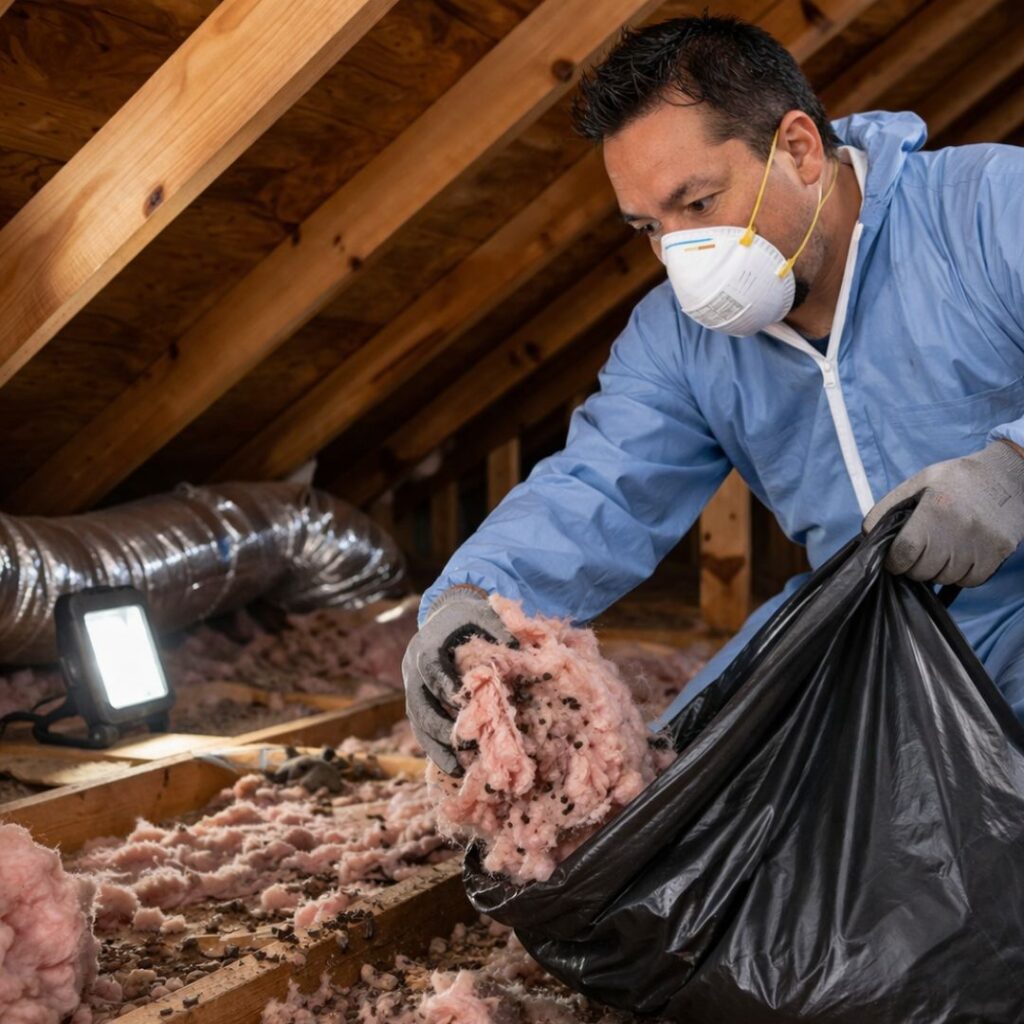
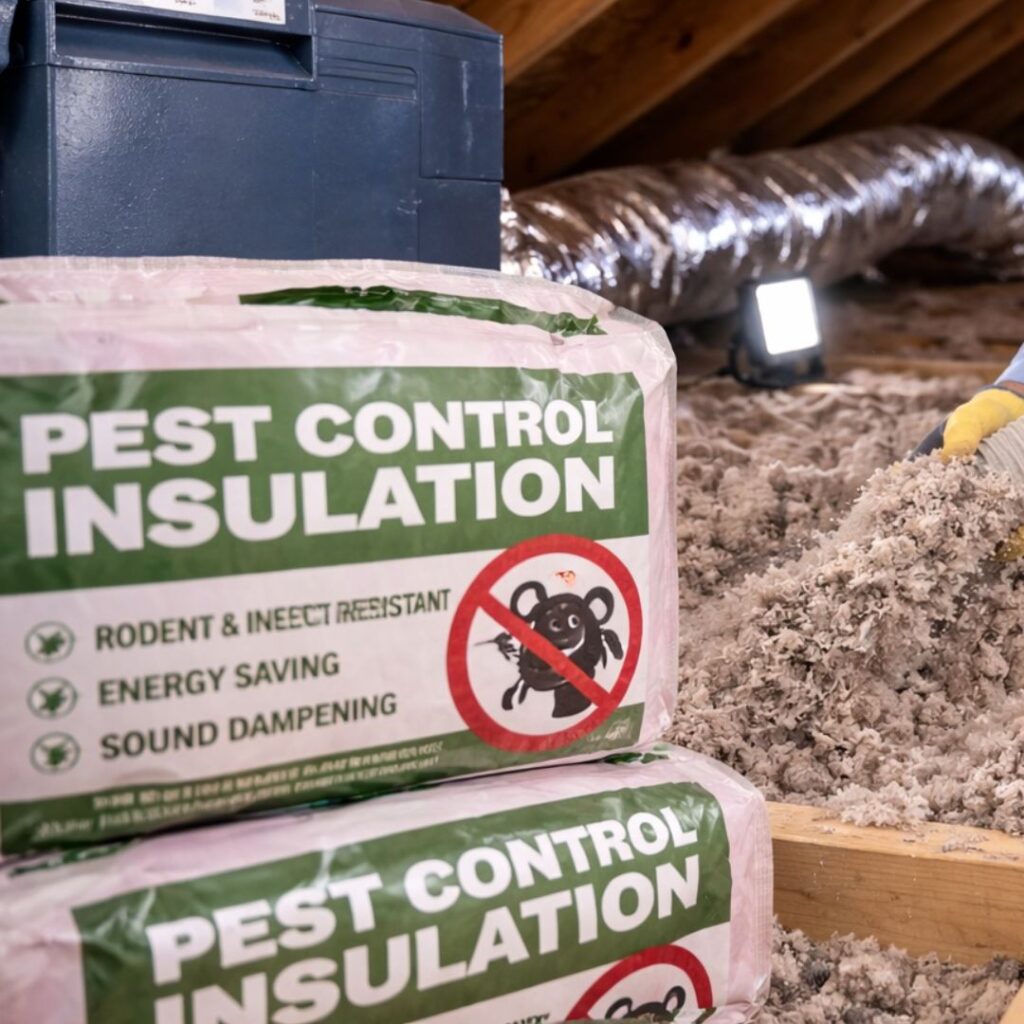
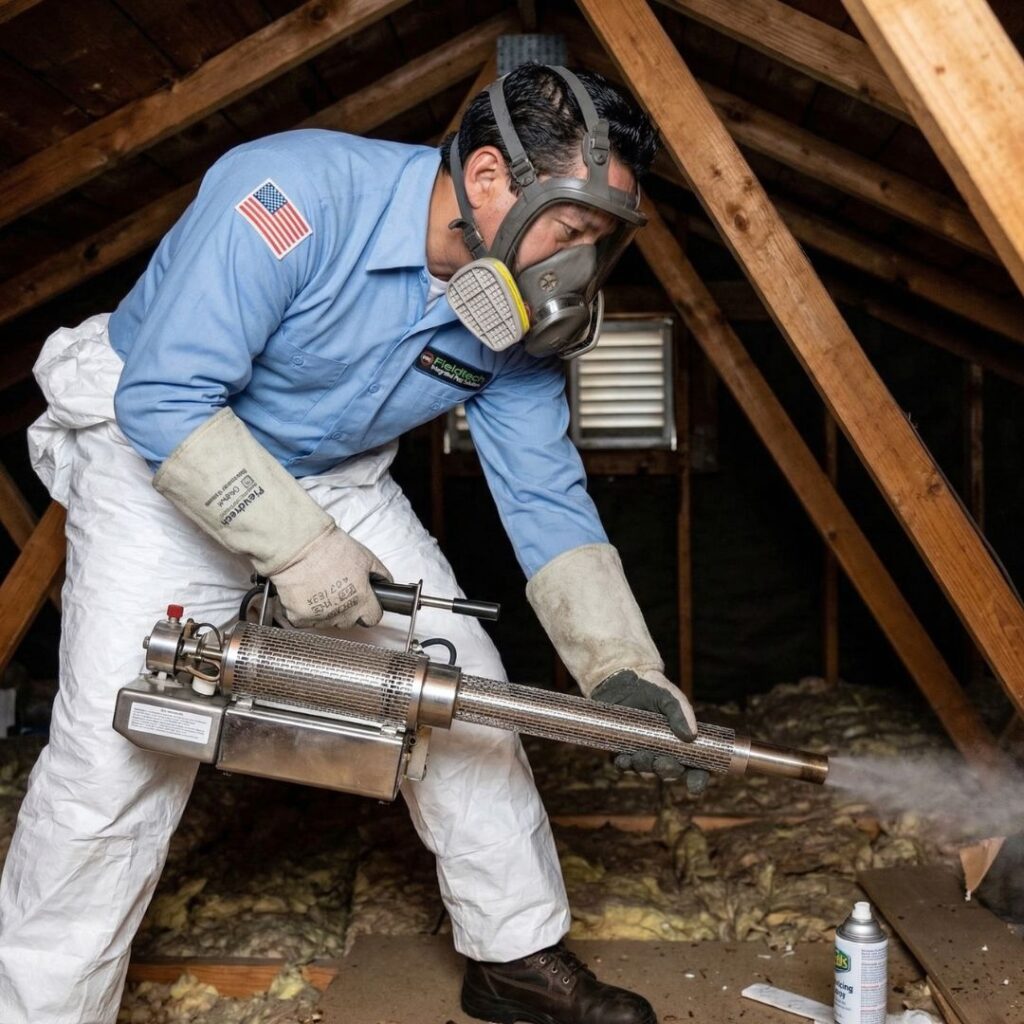
If your attic has been home to rats, sanitation is critical even after the infestation is cleared. Rat droppings, urine, and nesting material carry pathogens and leave pheromone trails that attract new rodents. Fieldtech offers professional attic sanitation and deodorizing to fully remediate contaminated spaces and eliminate the scent markers that make your home a target for future infestations.
When to Call a Professional Rat Exterminator in California
DIY methods can work for a minor rat problem caught early. But in many cases, a professional inspection is the most efficient and cost-effective path forward. Call a licensed pest control company if:
- You have found droppings in multiple areas of your home
- You are hearing activity nightly and it is not improving after two weeks of trapping
- You are unsure where rats are entering or have been unable to locate all entry points
- There is evidence of contaminated insulation or structural damage in your attic
- You have young children, elderly family members, or immunocompromised individuals in the home
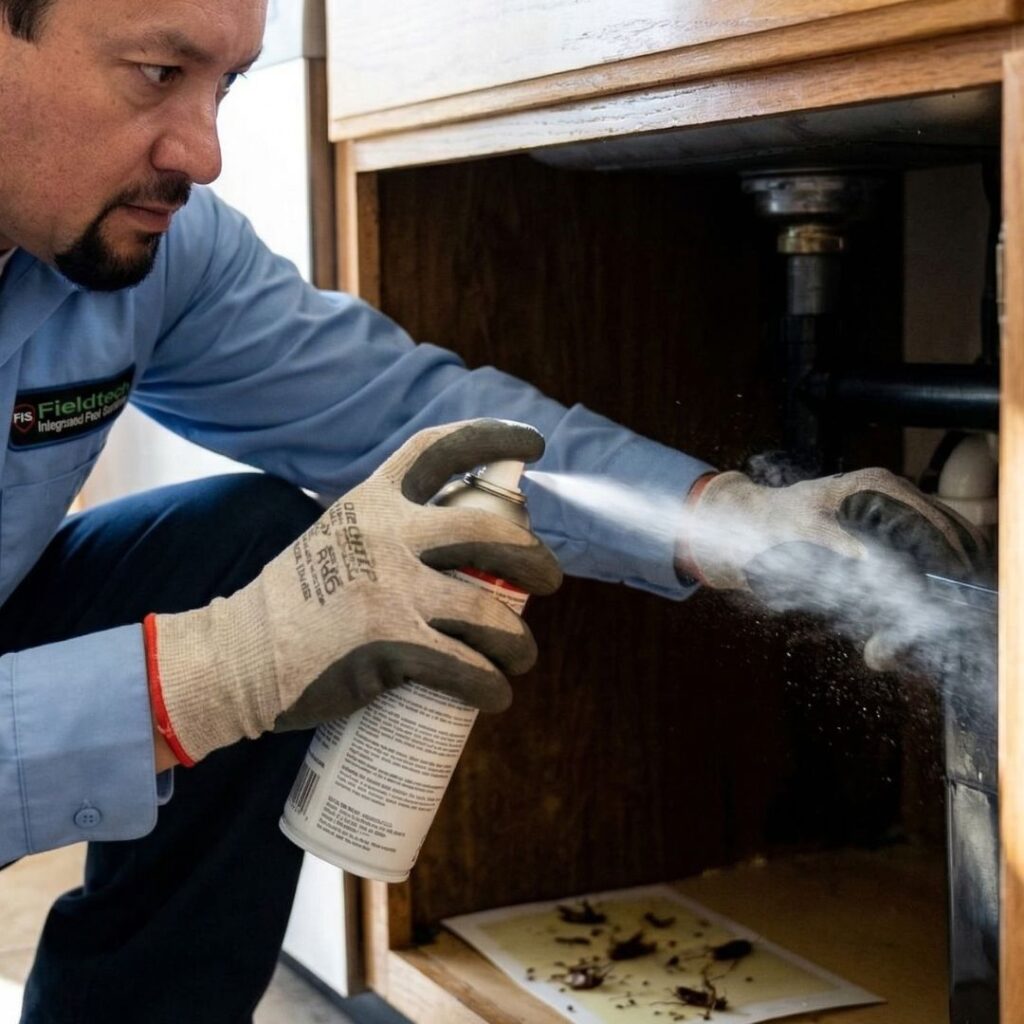
Fieldtech Integrated Pest Solutions serves the Inland Empire, High Desert, and surrounding communities with no-nonsense, effective rodent control. Founded by Nelson, who left a corporate pest control company to do things the right way, Fieldtech offers free detailed inspections, a 1-hour callback guarantee, and guaranteed solutions. New customers receive a 5% discount, and military families, seniors, and first responders qualify for 10% off.
Explore our full range of rodent control and exclusion services or find your local service area to get started.
Rats in California are a serious and growing problem, but they are not unbeatable. The key is to act fast and take a thorough approach: identify the species, trap aggressively, remove food and shelter, and then seal every possible entry point. Prevention is not a one-time task, it is an ongoing habit.
If you are dealing with an active infestation in Apple Valley, Victorville, Hesperia, Fontana, Rancho Cucamonga, or any of the communities we serve, do not wait for the problem to get worse. Contact Fieldtech today for your free inspection and let our team handle it the right way.