A single gopher can turn a healthy lawn into a minefield of dirt mounds in just a few days, and the damage below ground is often worse than what you see on top. The University of California’s IPM program notes that one pocket gopher’s burrow system can spread across 200 to 2,000 square feet, and Oklahoma State University Extension reports that a single gopher’s tunnels can run several hundred feet and cover close to an acre of ground. For High Desert homeowners, that means one uninvited gopher can put your garden, irrigation, and even young trees at risk.
Gophers are tough to get rid of because they live almost entirely underground and breed quickly, so the gap between noticing the first mound and facing a real infestation is short. The good news is that with the right approach they are very manageable. At Fieldtech Integrated Pest Solutions, we deal with burrowing rodents across the High Desert, and the yards that win the gopher battle all rely on the same proven methods.
This guide covers how to identify gophers, how to tell them apart from moles and voles, the control methods that actually work, the popular myths that waste your time and money, and how to keep gophers from coming back.
What Are Gophers?
Gophers, more precisely called pocket gophers, are burrowing rodents named for the fur-lined cheek pouches they use to carry food and nesting material. They are stout and powerfully built for digging, with large-clawed front paws, small eyes and ears, and four prominent front teeth. Adults are usually 6 to 10 inches long. California alone is home to five species, with Botta’s pocket gopher being the most widespread.
They are the largest of the common rodents that tunnel through yards, and they are built to dig. A gopher spends nearly its entire life underground and rarely surfaces, which is exactly why most people never see the animal itself, only the destruction it leaves behind. Gophers do not hibernate, and they stay active year round, both day and night.
Gophers vs Moles vs Voles: How to Tell the Difference
Before you treat, make sure you are actually dealing with gophers. Moles and voles cause similar looking damage but call for different solutions.
- Gophers: push up fan or crescent shaped mounds of loose soil, with the hole plugged and set off to one side. They feed on plant roots.
- Moles: create round, volcano shaped mounds with the opening in the center, along with raised ridges across the lawn. They eat worms and grubs, not your plants.
- Voles: are smaller, leave shallow surface runways and open holes, and do not build mounds. They gnaw on stems and bark at ground level.
If you see crescent shaped mounds and roots being eaten from below, gophers are almost certainly the culprit.
Signs You Have Gophers in Your Yard
Because gophers stay hidden, you have to read the signs they leave behind:
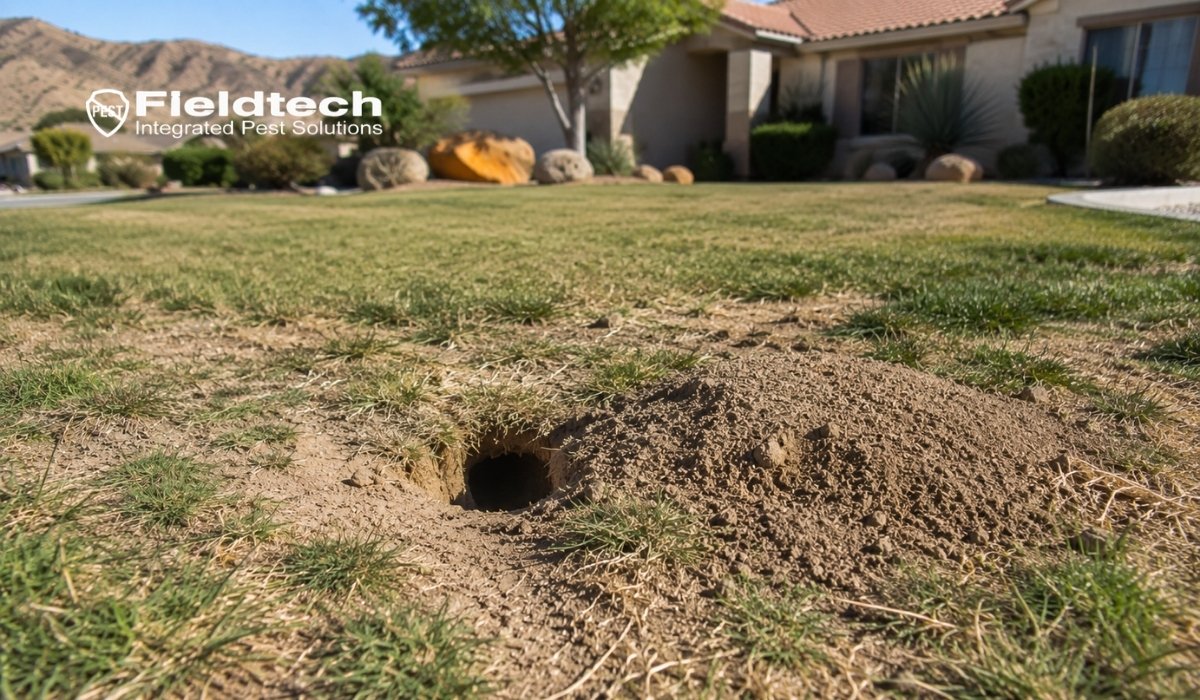
- Fresh, fan or horseshoe shaped mounds of loose dirt, sometimes several appearing in a single day.
- A plugged hole set off to one side of each mound, rather than in the center.
- Plants that suddenly wilt or get tugged down into the soil as their roots are eaten.
- Chewed or damaged irrigation lines, sprinkler heads, and drip tubing.
- Gnawed roots on young trees, shrubs, and vegetables.
Fresh mounds are the clearest sign of an active gopher. Old, crusted mounds with no new activity may mean the gopher has moved on, or simply relocated to another part of your yard.
Why Gophers Are a Problem
Gophers are far more than an eyesore. A single animal can ruin a vegetable bed in a short time by eating roots from below, and gophers regularly gnaw through buried irrigation and sprinkler lines, which leads to leaks, dry patches, and costly repairs. Their mounds smother grass, dull mower blades, and create tripping hazards in the yard.
In the High Desert, where established landscaping and trees take years and real water investment to grow, losing a mature plant to gophers is a genuine setback. Left unchecked, gopher activity can also draw in predators like snakes that you would rather not have near the house.
How to Get Rid of Gophers in Your Yard
Effective gopher control comes down to acting early and combining methods. Here is what actually works.
Trapping
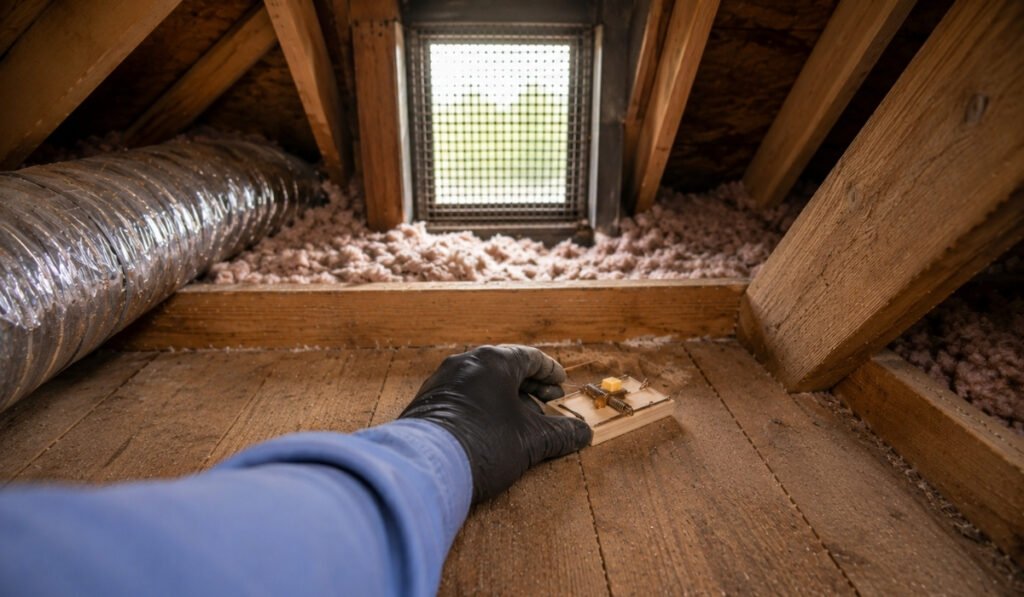
Trapping is the most reliable method for a home lawn or garden, and it does not rely on poisons. Use pincer-style traps, often sold under names like Macabee or Victor, or box traps. Locate an active main tunnel by probing near a fresh mound, then set traps in pairs facing opposite directions so you catch the gopher coming from either way. Gopher traps do not need bait. Cover the opening so no light gets in, check the traps often, and keep at it until no new mounds appear.
Exclusion and Underground Fencing
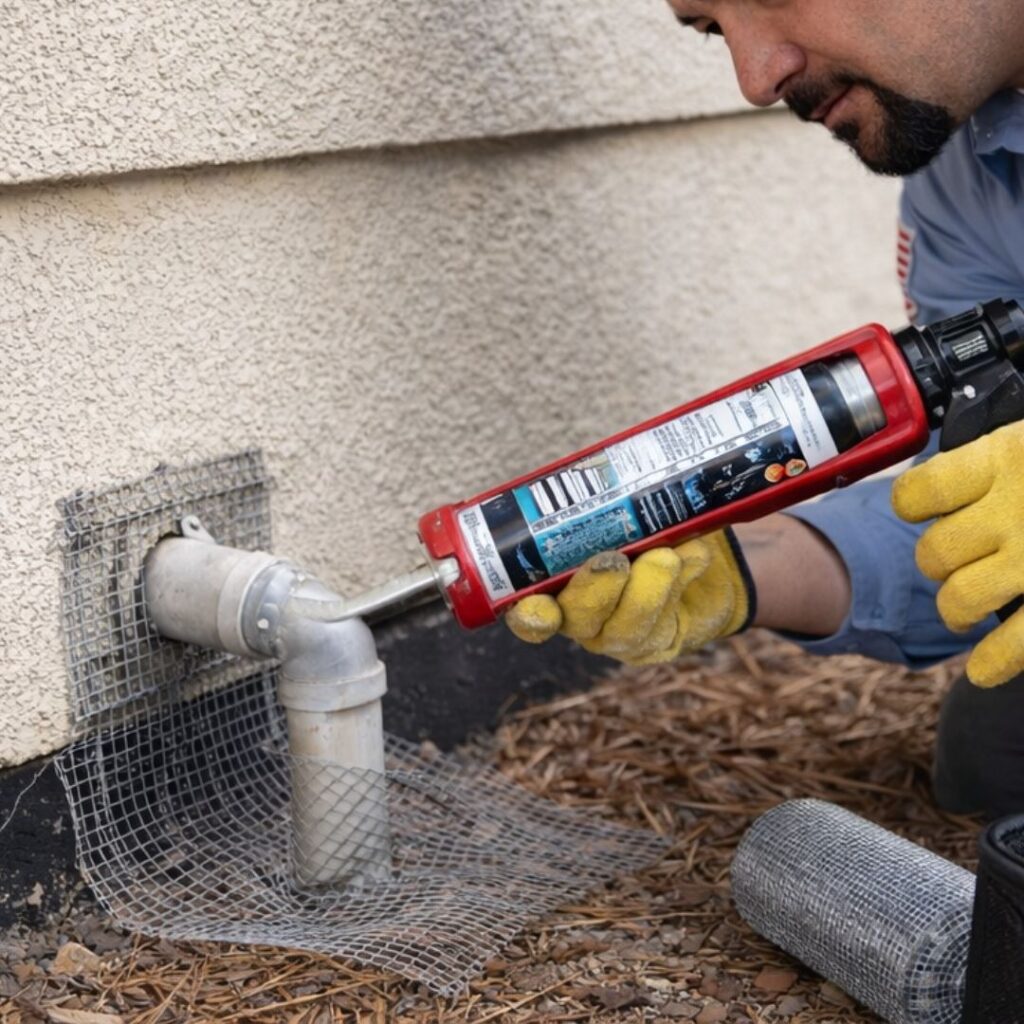
To protect specific plants and beds, underground barriers work well. Line raised beds with galvanized gopher wire or hardware cloth, and plant valuable shrubs and young trees inside wire baskets so the roots are shielded from below. This will not clear out an existing gopher, but it stops them from reaching what matters most.
Baiting
Toxic baits can be economical over large, heavily infested areas, but they carry real risks to pets, children, and local wildlife, especially in a backyard. If you go this route, follow the product label exactly and place bait deep in the tunnel system, never loose on the surface. For most home yards, trapping is the safer and more targeted choice. Baiting is also an area where professional help pays off, because the products and placement make all the difference.
Timing
Gophers are easiest to control in spring and fall, when they are active near the surface. Watch for fresh mounds, which tell you a tunnel is occupied and worth treating. Treating old, abandoned runways only wastes time and materials.
Gopher Control Myths That Waste Your Time
Many popular gopher remedies simply do not hold up. Based on research trials summarized by UC IPM, the following are not reliable:
- Ultrasonic and vibrating stakes, pinwheels, and other frightening devices. Gophers quickly get used to them and dig right past.
- Repellent plants such as gopher purge, castor bean, and garlic. None have been shown to drive gophers out of an area.
- Castor oil sprays. Widely promoted online, but research has not shown them to reliably protect a yard, even though some gardeners swear by them.
- Owl boxes and predators alone. Helpful in a balanced ecosystem, but not enough on their own to stop the damage.
- Flooding and home smoke remedies. Usually impractical, since you can rarely reach the entire burrow system.
If a product promises to make gophers vanish with no trapping and no digging, be skeptical.
How to Keep Gophers from Coming Back
Once your yard is clear, a few habits lower the odds of a repeat. Keep an eye out for fresh mounds and act on the very first sign rather than waiting. Reduce dense weeds and excess vegetation that give gophers cover and food. Protect new plantings with wire baskets from the start. And consider an ongoing monitoring plan, because gophers from neighboring properties will happily move into an open, well-watered yard. Professional rodent control programs build this kind of monitoring right in.
Why Gophers Thrive in the High Desert
Irrigated yards are an oasis in the High Desert, and gophers know it. Lush lawns, garden beds, and the soft, watered soil around Apple Valley, Victorville, and Hesperia give gophers easy digging, a steady food supply, and year-round activity. As more homes add landscaping, gophers simply move from yard to yard. If you are battling them locally, our team serves your area through pest control in Apple Valley, CA and the surrounding High Desert communities.
When to Call a Professional
You can manage a single gopher with patience and a couple of traps. But if you are seeing mounds across the yard, losing plants faster than you can trap, or dealing with damaged irrigation, a professional will save you time, money, and frustration. Experts locate the active tunnels quickly, set traps where they actually work, and handle baiting safely when it is warranted.
Fieldtech Integrated Pest Solutions offers free, detailed inspections and a one-hour callback guarantee, backed by more than 15 years of experience and 5-star Google reviews. We find the active burrows, remove the gophers, and help you protect your landscaping going forward as part of our rodent control and exclusion services. New customers receive a 5 percent discount, and we offer a 10 percent discount for military, seniors, and first responders. We proudly serve Apple Valley and communities across the High Desert.
Gophers are persistent, destructive, and skilled at staying out of sight, but they are not unbeatable. Identify them correctly, act on the first fresh mound, lean on trapping and exclusion instead of gimmicks, and stay alert for new activity. Do that and you can take your yard back. And if the problem grows beyond a trap or two, Fieldtech is ready to step in and solve it for good.
Frequently Asked Questions
What is the fastest way to get rid of gophers?
Trapping is the fastest reliable method for a home yard. Locate an active main tunnel near a fresh mound, set a pair of traps facing opposite directions, and keep trapping until the mounds stop appearing. It works without poisons and gives you proof of each catch.
How do I know if it is a gopher, mole, or vole?
Look at the mounds. Gophers leave fan or crescent shaped mounds with a plugged hole off to one side and feed on plant roots. Moles leave round, volcano shaped mounds and eat worms and grubs. Voles make no mounds at all, just shallow surface runways and small open holes.
Do home remedies like castor oil or ultrasonic devices work on gophers?
Research has not shown these to reliably solve a gopher problem. Castor oil sprays, repellent plants, ultrasonic stakes, and pinwheels may seem to help briefly, but gophers usually ignore them or dig around them. Trapping and exclusion are far more dependable.
Will gophers go away on their own?
Not usually. A yard with watered soil and plenty of plant roots is ideal habitat, and even if one gopher moves on, another is likely to take over the tunnels. Active control is the only dependable way to protect your landscaping.
How many gophers are in my yard?
Often just one. Gophers are solitary and territorial, so a single animal can be responsible for many mounds, since one gopher can create several in a single day. That said, neighboring gophers can move in quickly, which is why ongoing monitoring helps.