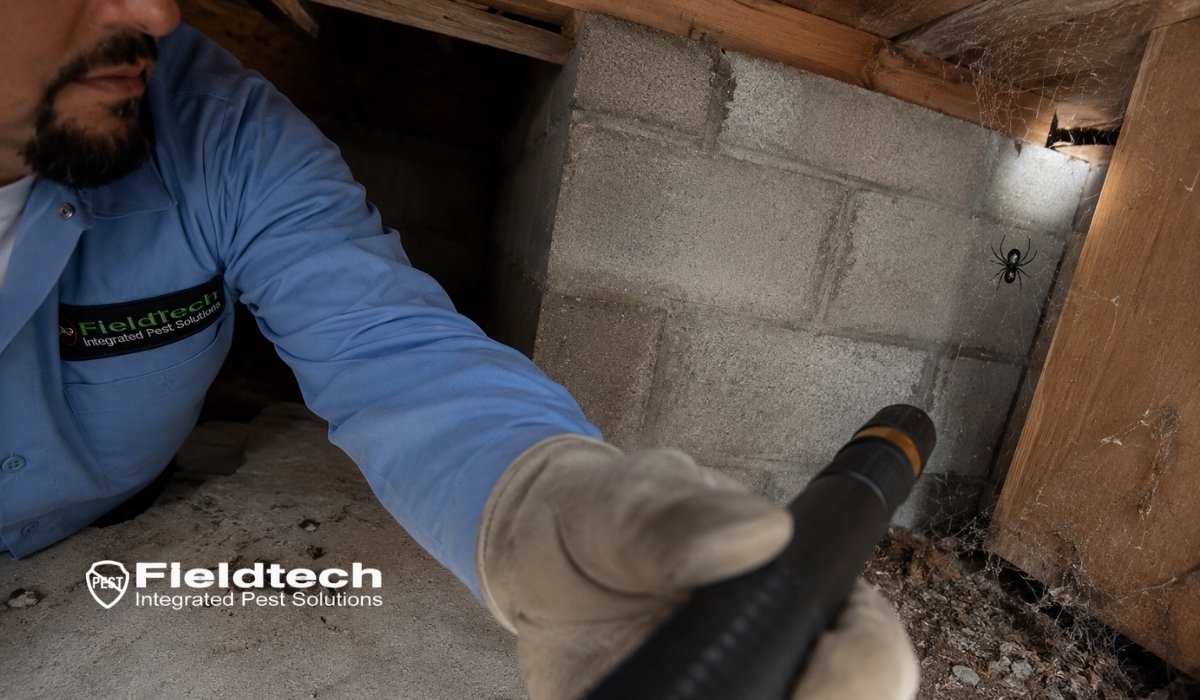
Few spiders trigger the same jolt of fear as the black widow, and for good reason. Its glossy black body and red hourglass marking are unmistakable, and its venom is among the most potent of any spider in North America. The danger, though, is often overstated. Roughly 2,600 black widow exposures are reported to the National Poison Data System each year, yet serious outcomes are rare, and no deaths from black widow bites have been recorded in the United States since 1983. Even so, a black widow in the garage or woodpile is not something to ignore, especially in homes with children or pets.
If you have spotted one on your property, you are probably wondering whether you can handle it yourself or whether it is time to bring in a professional black widow exterminator. This guide covers how to identify these spiders, why they show up, the risk they pose, and exactly how the pros clear them out for good. At Fieldtech Integrated Pest Solutions, we have spent 15+ years handling spiders across the High Desert, and black widows are one of the most common calls we get.
Let us start with making sure the spider you found is actually a black widow, because getting the identification right changes everything about how you treat it.
What Does a Black Widow Spider Look Like?
Correct identification is the first step in any effective treatment. Mistaking one spider for another usually leads to the wrong approach, wasted money, and continued worry. Black widows have a few features that set them apart from the harmless spiders you will find around most homes.
Female vs. Male Black Widows
The spider most people picture is the adult female. She is shiny and jet black, with a rounded abdomen and the famous red hourglass marking on her underside. Females measure roughly 1.5 inches across with their legs extended, and they are the only ones capable of delivering a medically significant bite.
Males are a different story. They are about half the size, lighter in color, and often marked with red or pink spots rather than a bold hourglass. Male black widows rarely bite and are far less of a concern. Juveniles start out pale and gain their dark coloring as they mature.
Black Widow Egg Sacs
If you find a black widow, look for egg sacs nearby. They are round, papery, and off-white to tan, about the size of a pea. A single female can produce several sacs, each holding hundreds of eggs. Spotting even one sac usually means the problem is bigger than it looks, and it is a strong signal to call a professional before those spiderlings hatch and scatter.
Black Widow vs. Brown Widow
Black widows have a close cousin, the brown widow, which is increasingly common in Southern California. Brown widows are tan to brown with an orange hourglass rather than red. Their bite is less dangerous, but they reproduce quickly and often nest in the same spots. A trained technician can tell the two apart and adjust treatment accordingly.
Are Black Widow Spiders Dangerous?
Black widows are venomous, but they are not aggressive. They would rather flee than fight, and most bites happen by accident, usually when someone reaches into a web while moving firewood, gardening, or clearing out a cluttered garage. The spider bites in self-defense when it feels trapped against skin.
Symptoms of a Black Widow Bite
Black widow venom is a neurotoxin, so its effects reach beyond the bite site. Common symptoms include:
- Muscle pain and cramping, often in the abdomen, back, or legs
- Sweating, nausea, or chills
- Increased blood pressure and a racing heart
- In some cases, difficulty breathing
Symptoms usually appear within a couple of hours and can last several days.
What to Do If You Are Bitten
If you suspect a black widow bite, stay calm and wash the area with soap and water. Apply a cold compress to reduce swelling and note the time of the bite. While most bites are not life threatening, children, older adults, and anyone with existing health conditions should seek medical care promptly. If symptoms turn severe, go to the emergency room. When in doubt, get checked out.
Where Black Widows Hide Around Your Home
Black widows are creatures of habit. They favor dark, dry, undisturbed spaces where they can build their messy, irregular webs close to the ground. Knowing their preferred hiding spots makes both DIY prevention and professional treatment far more effective.
Indoor Hiding Spots
Inside the home, black widows gravitate toward areas that rarely get cleaned or entered: garages, basements, crawl spaces, cluttered closets, storage rooms, and the corners of attics. Boxes, seldom-moved furniture, and stacks of stored items all make ideal harborage.
Outdoor Hiding Spots
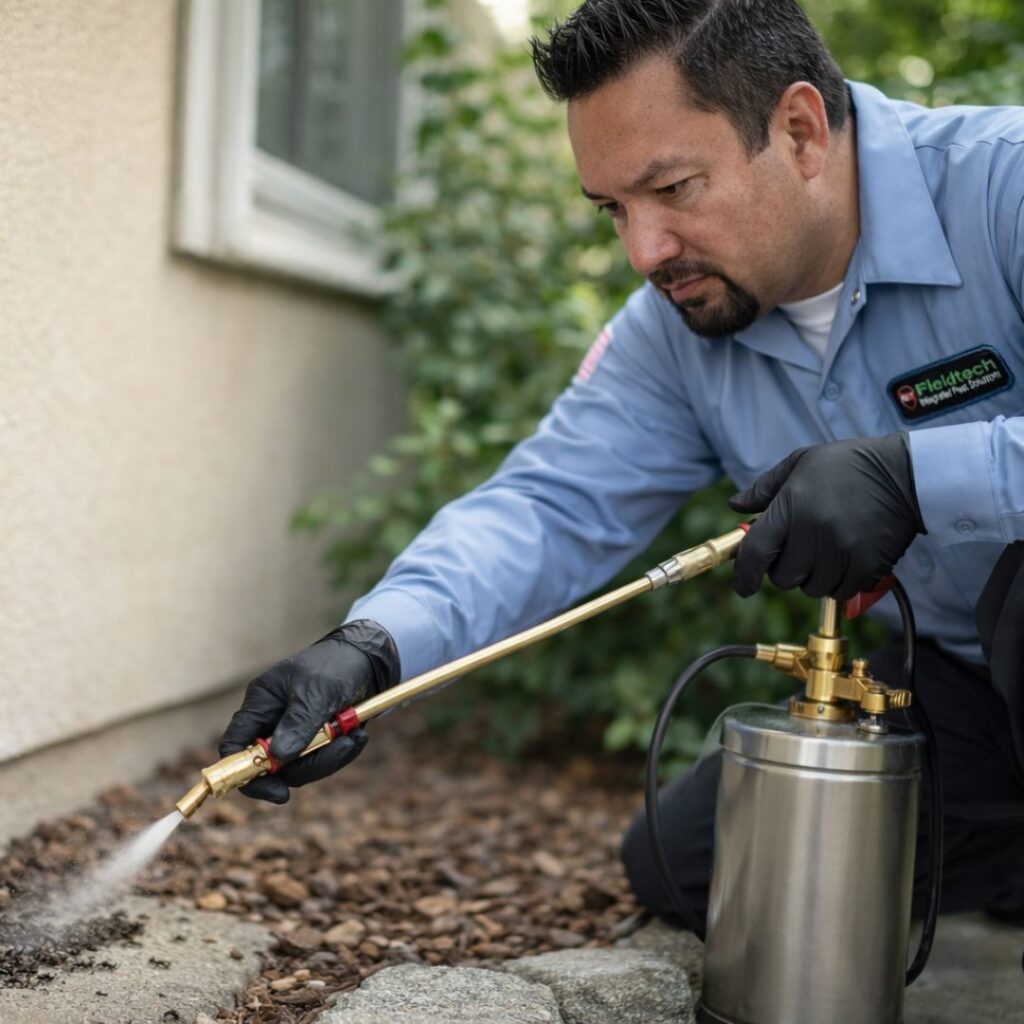
Most infestations actually begin outdoors. Woodpiles, rock walls, and debris piles are classic hideouts, along with the underside of outdoor furniture, grills, and eaves. Widows also nest in water meter boxes, along foundation gaps, and behind shrubs that touch the house. Because so much widow activity starts on the perimeter, that is where the pros focus their treatment.
Signs You Have a Black Widow Problem
Beyond spotting the spider itself, a few clues point to a growing black widow population:
- Irregular, tangled webs near ground level, often stronger and messier than typical cobwebs
- Round, papery egg sacs tucked into corners or crevices
- Frequent sightings in the same area, which suggests an established nest
- A high number of insects around your home, since these are the widow’s food source
If you are seeing these signs over and over, DIY measures may not be enough. A professional spider control treatment gets to the source rather than just the spiders you can see.
How a Black Widow Exterminator Treats an Infestation
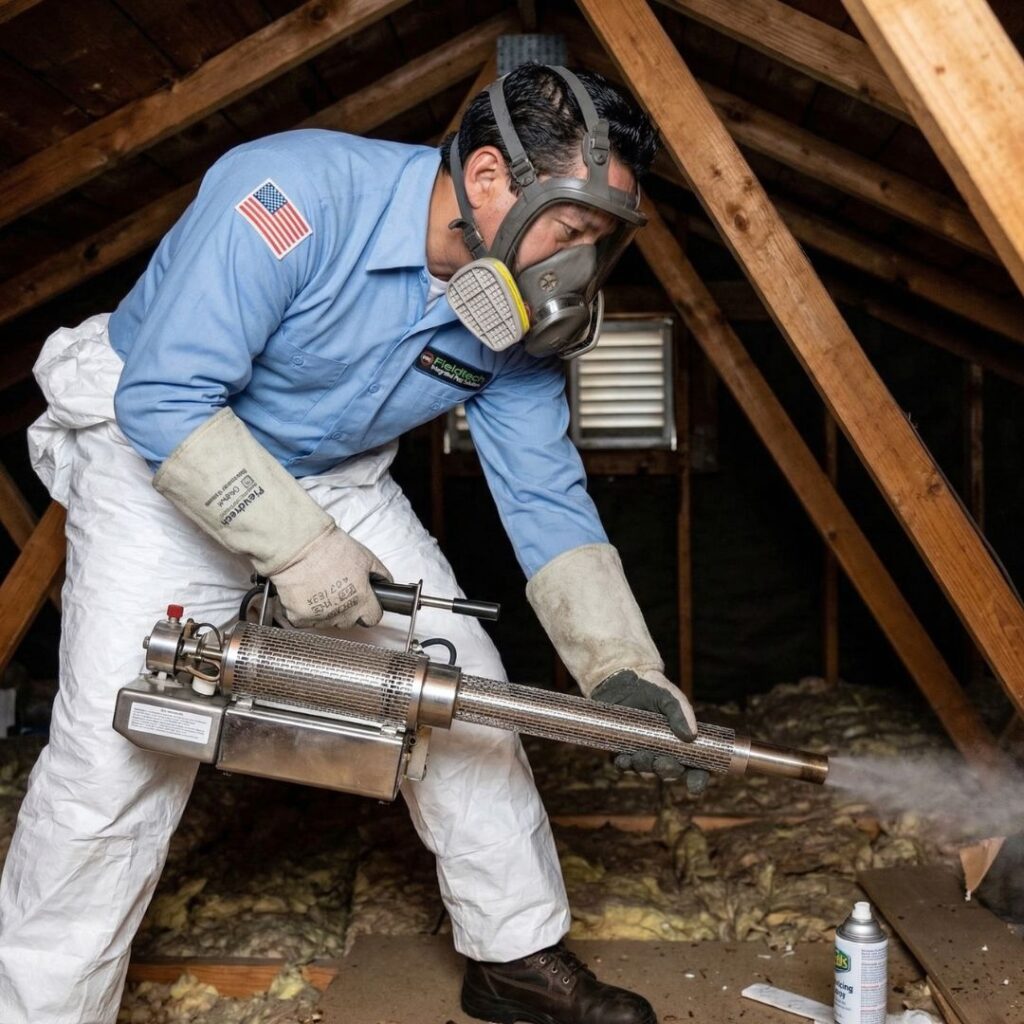
Professional treatment is more thorough than a can of spray from the hardware store. A qualified black widow exterminator combines inspection, targeted product application, and physical removal to break the infestation cycle. Here is what that looks like with a company like Fieldtech.
Inspection
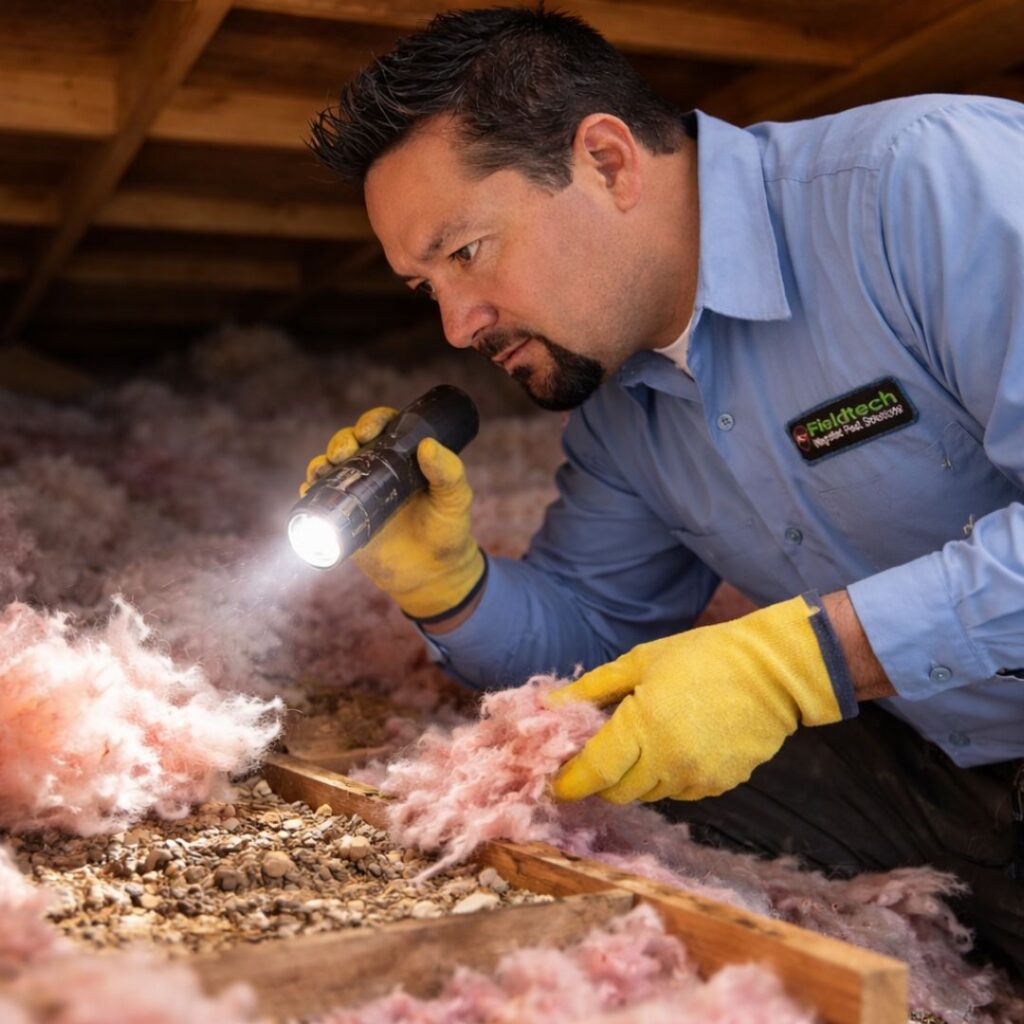
Every effective treatment starts with a detailed inspection. The technician identifies where widows are active, locates egg sacs, and pinpoints the entry points and conditions drawing them in. Fieldtech provides free detailed inspections, so you know exactly what you are dealing with before any work begins.
Targeted Treatment
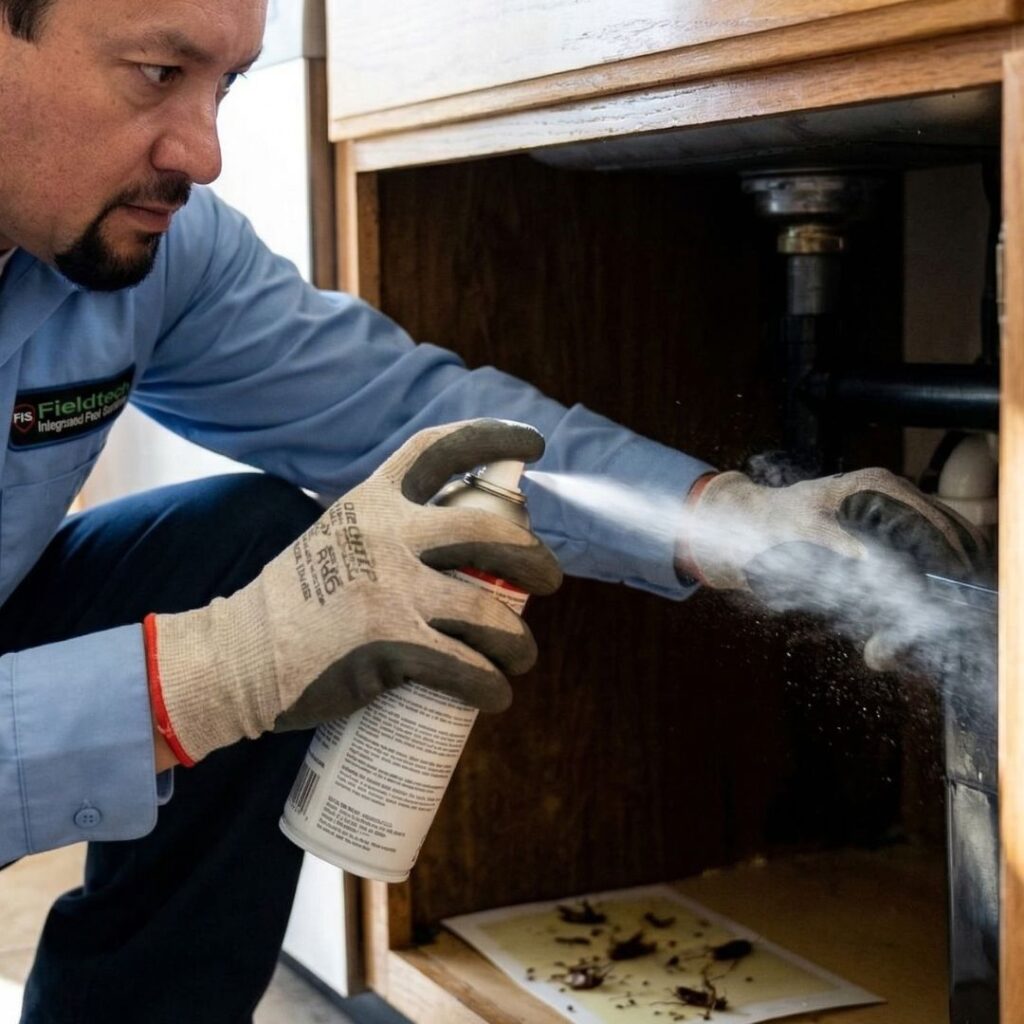
Rather than blanketing your home in chemicals, a good technician applies products precisely where widows live and travel: the foundation perimeter, cracks and crevices, wall voids, and outdoor harborage areas. A residual barrier around the home keeps working for weeks after the visit. This targeted approach is safer for your family and pets and far more effective at reaching spiders in their hiding spots.
Egg Sac and Web Removal
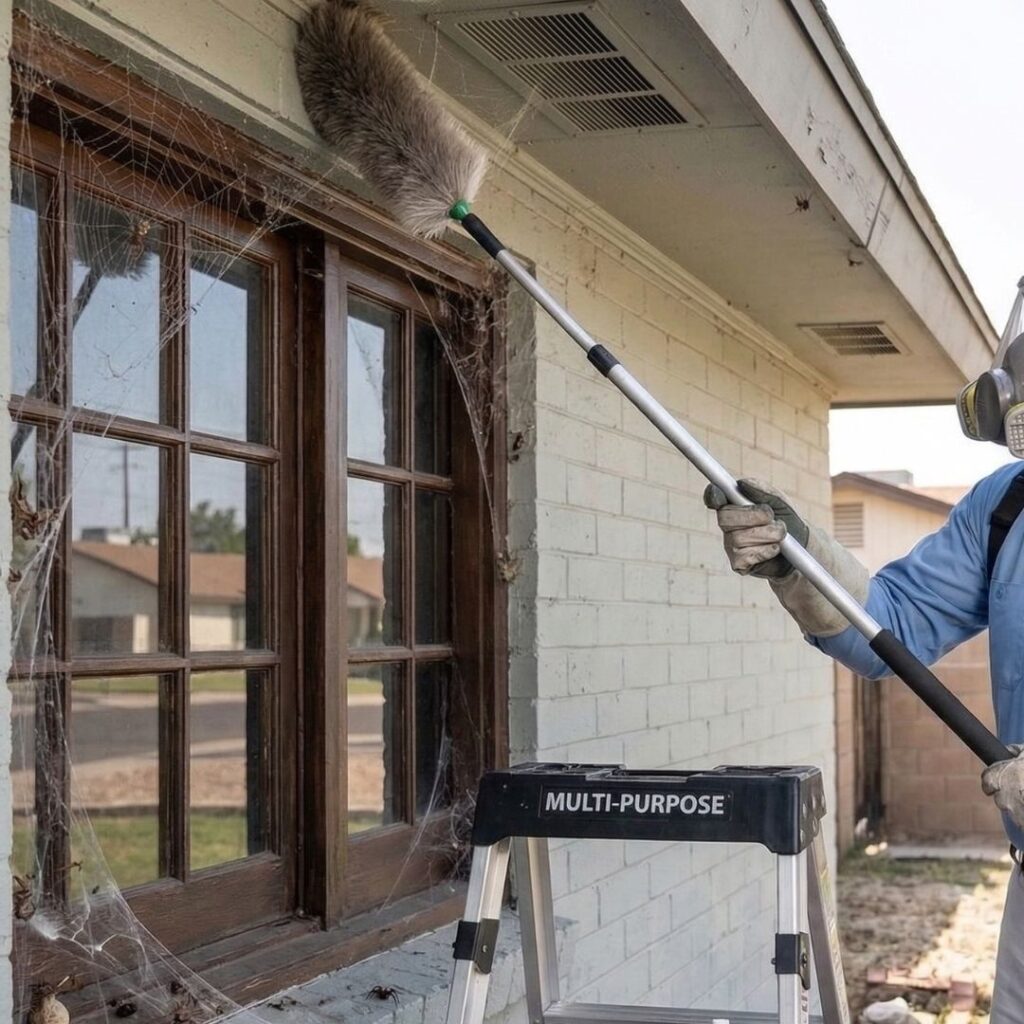
Chemicals alone will not solve the problem if egg sacs remain. A thorough technician physically removes webs and egg sacs during treatment, cutting off the next generation before it hatches. This step is what separates a lasting fix from a temporary one.
How to Keep Black Widows From Coming Back
Treatment clears the current problem. Prevention keeps it from returning. These steps make your property far less inviting to black widows.
Seal Entry Points
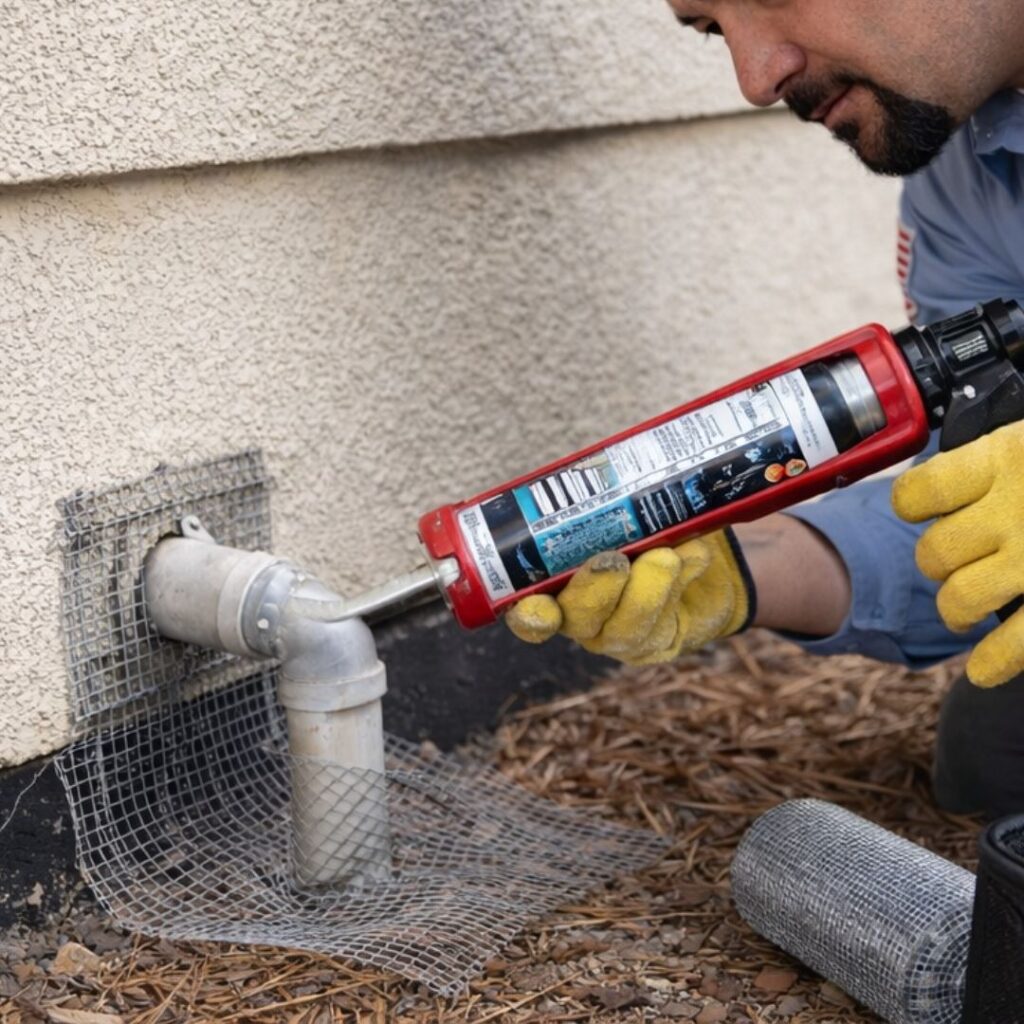
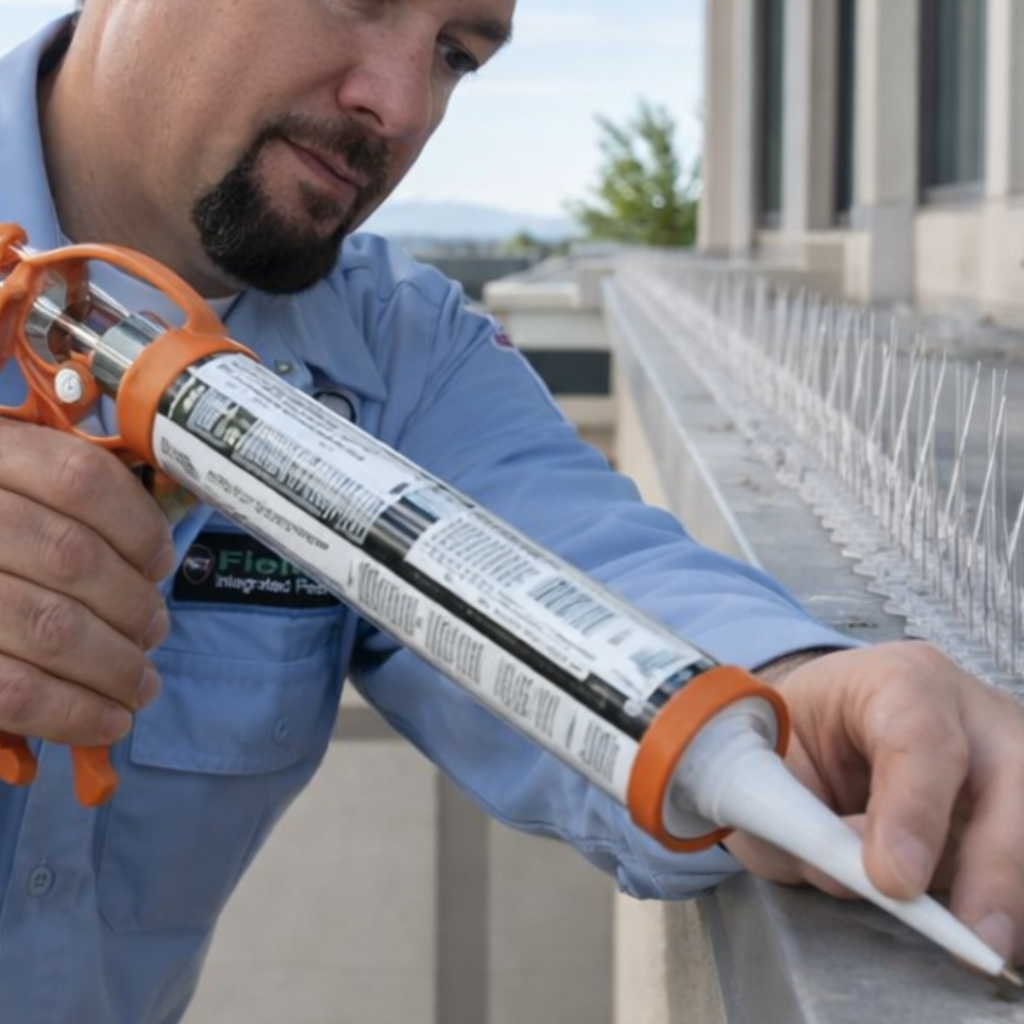
Black widows slip in through small gaps around doors, windows, vents, and utility lines. Sealing these openings with caulk and adding door sweeps and screens keeps spiders and their insect prey out. Professional entry point sealing closes the gaps you are likely to miss.
Declutter Storage Areas
Since widows love undisturbed clutter, clearing out garages, basements, and closets removes their favorite hiding places. Store items in sealed plastic bins rather than cardboard boxes, and keep them off the floor and away from walls.
Maintain Your Yard
Because most infestations start outside, yard care matters. Move woodpiles away from the house, clear debris and leaf litter, trim vegetation back from the foundation, and keep the grass short. Reducing the insects around your home, which you can address with regular insect control, also removes the widow’s food supply.
When to Call a Professional Black Widow Exterminator
Handling a single spider is one thing. An established infestation is another. It is time to call a professional if you are finding multiple spiders, spotting egg sacs, seeing widows return after DIY treatment, or dealing with widows in a home with young children or pets. The risk simply is not worth the gamble.
A professional brings the right products, the training to apply them safely, and the experience to find nests you would never spot on your own. Fieldtech backs its work with guaranteed solutions, a 1-hour callback guarantee, and 5-star rated service across the High Desert and surrounding communities. New customers receive a 5% discount, with 10% off for military, seniors, and first responders.
Black widows earn their fearsome reputation, but with the right approach they are very manageable. Correct identification, smart prevention, and professional treatment when needed will keep these venomous spiders out of your living spaces. If black widows have moved into your garage, yard, or home, do not take unnecessary risks. Reach out to Fieldtech Integrated Pest Solutions for a free inspection and a guaranteed solution that keeps your family safe.
Frequently Asked Questions
How much does black widow extermination cost?
Cost depends on the size of your property and the severity of the infestation. Because black widow work often involves both perimeter treatment and egg sac removal, most companies quote after an inspection. Fieldtech offers free detailed inspections, so you get an accurate price with no surprises.
Can I get rid of black widows myself?
You can remove a single spider with a vacuum and reduce their numbers by decluttering and sealing gaps. But established infestations with egg sacs usually return after DIY treatment. Professional service reaches the nests and leaves a lasting barrier behind.
How long does black widow treatment take to work?
You will typically see a sharp drop in activity within a few days as spiders contact the treated surfaces. The residual barrier keeps working for weeks, and egg sac removal during the visit prevents a new wave from hatching.
Are black widows common in Southern California?
Yes. The western black widow is widespread across California, including the High Desert, and the brown widow has become common as well. Warm, dry conditions and plenty of outdoor harborage make the region ideal for them.
What attracts black widows to my home?
Black widows are drawn to dark, cluttered, undisturbed areas and to homes with plenty of insects to feed on. Woodpiles, debris, outdoor lighting that attracts bugs, and gaps in the foundation all make a property more inviting.