If you have swallows nesting on your property, you may be wondering whether you can legally remove them or their nests. The short answer is: it depends on the time of year, but you need to tread carefully. Swallows are among the most legally protected birds in the United States, and California takes these protections seriously. Violations can result in fines of up to $15,000 and up to six months in jail. Before you knock anything down, it pays to understand the rules.
The concern is well-founded. North American bird populations have declined by an estimated 3 billion since 1970, according to the U.S. Department of the Interior, with many migratory species continuing to fall. Barn swallows specifically have lost around two in five of their population, according to Cornell Lab of Ornithology research cited by the U.S. Fish and Wildlife Service. Laws like the Migratory Bird Treaty Act exist precisely because of trends like these.
At Fieldtech Integrated Pest Solutions, we get a lot of calls from homeowners and business owners across the Inland Empire and High Desert who are frustrated by swallow droppings, damaged eaves, and mud nests piling up on their structures. We understand the frustration. This guide covers what the law actually says, which swallow species are affected, and what your real options are. Our bird control services are designed to work within the law, not around it.
Are Swallows Protected?
Yes. All swallows found in the United States are protected under the Migratory Bird Treaty Act of 1918 (MBTA), a federal law that makes it illegal to kill, injure, capture, sell, or disturb any migratory bird or its nest, eggs, or young without a permit from the U.S. Fish and Wildlife Service.
Under this law, it is illegal for any person to take, possess, transport, sell, or purchase swallows or their parts, such as feathers, nests, or eggs, without a permit. This applies whether the nest is occupied, under construction, or even abandoned during the protected season.
The MBTA covers over 1,000 species of birds. Swallows fall under the category of migratory insectivorous birds, meaning birds that migrate and eat insects. This classification is part of why they are so strongly protected: they play a key ecological role in controlling insect populations, including flies, mosquitoes, and gnats.
Why Are Swallows Protected?
Swallows are protected for two main reasons: their ecological importance and their declining population numbers.
As insectivores, swallows consume enormous quantities of flying insects every day. A single barn swallow can eat hundreds of insects per hour during peak feeding. Entire colonies of cliff swallows can consume millions of insects over a nesting season. This makes them a natural pest control asset, particularly for agricultural land, parks, and open spaces.
At the same time, swallow populations have been falling. Barn swallows are listed as a species of conservation concern, and bank swallows hold a “threatened” designation under the California Endangered Species Act, in addition to their federal protections under the MBTA. The California Department of Fish and Wildlife (CDFW) is the state enforcement agency for the MBTA in California, and they take violations seriously.
The MBTA itself was originally created in 1918 to stop the commercial hunting of birds, which had pushed several species to near-extinction. Over the past century it has evolved into a broad conservation framework, and swallows are among the many species that rely on it for survival.
Are Barn Swallows Protected?
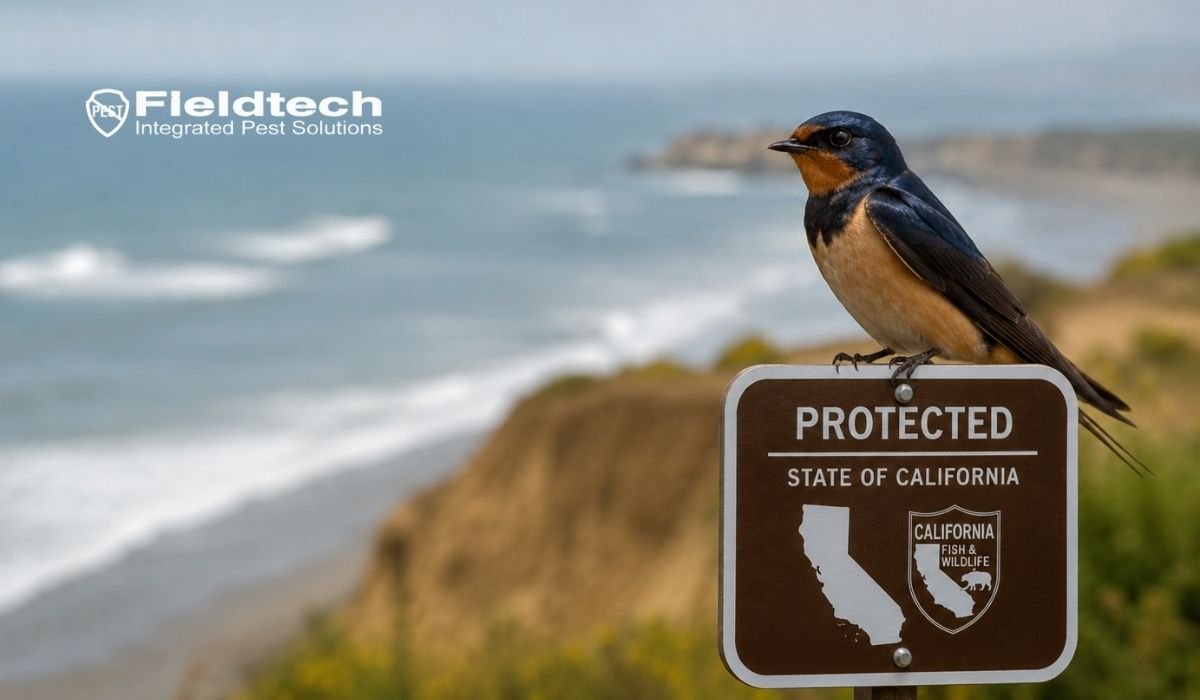
Yes, barn swallows are fully protected under the MBTA and California state law. They are one of the most commonly encountered swallow species on residential and commercial properties in Southern California, recognizable by their deeply forked tail and rust-colored underparts.
Barn swallows typically build cup-shaped mud nests on beams, eaves, porch ceilings, and the undersides of bridges or overhangs. They tend to nest in smaller groups than cliff swallows but can still cause significant accumulation of droppings and nest debris. And like all swallows, their nests are protected once active.
In California, barn swallows are also protected under state regulations that align with the MBTA. It is a violation of both state and federal law to disturb, destroy, or remove an active barn swallow nest during the nesting season without a permit.
If you are dealing with barn swallows on your property, our team at Fieldtech can assess the situation and advise on lawful solutions. Visit our bird proofing page for more information on what we can do before nesting season begins.
California’s Swallow Nesting Season: Key Dates
The California Department of Fish and Wildlife defines the swallow nesting season as February 15 to September 1. During this window, active nests cannot be touched, disturbed, or destroyed without a depredation permit from the U.S. Fish and Wildlife Service.
Here is what the law allows and prohibits based on nest status:
- Active nest (adult present, or eggs or chicks inside): fully protected, cannot be touched under any circumstances without a permit
- Nest under construction with an adult present: protected
- Nest under construction with no adult, eggs, or young: may be removed without a permit
- Completed nest with no eggs, no adult, and no young: permitted removal varies by USFWS region; check with a professional
- Nest abandoned after the breeding season (outside February 15 – September 1): can be removed without a permit
Permits are extremely rare. The USFWS only issues them in exceptional circumstances, such as a nesting colony at an airport where aircraft safety is genuinely at risk. A nest on your eaves causing mess or damage does not qualify.
What Happens If You Remove a Swallow Nest Illegally?
The penalties under the MBTA are serious. Knowingly violating the act can result in up to six months in prison and fines up to $15,000. Equipment used in the process can also be seized.
Enforcement does happen. The CDFW and USFWS actively investigate reports of nest disturbance, and complaints from neighbors or passersby can trigger an investigation. Even if no one witnesses the act directly, disturbed or destroyed nests during the protected season can be evidence of a violation.
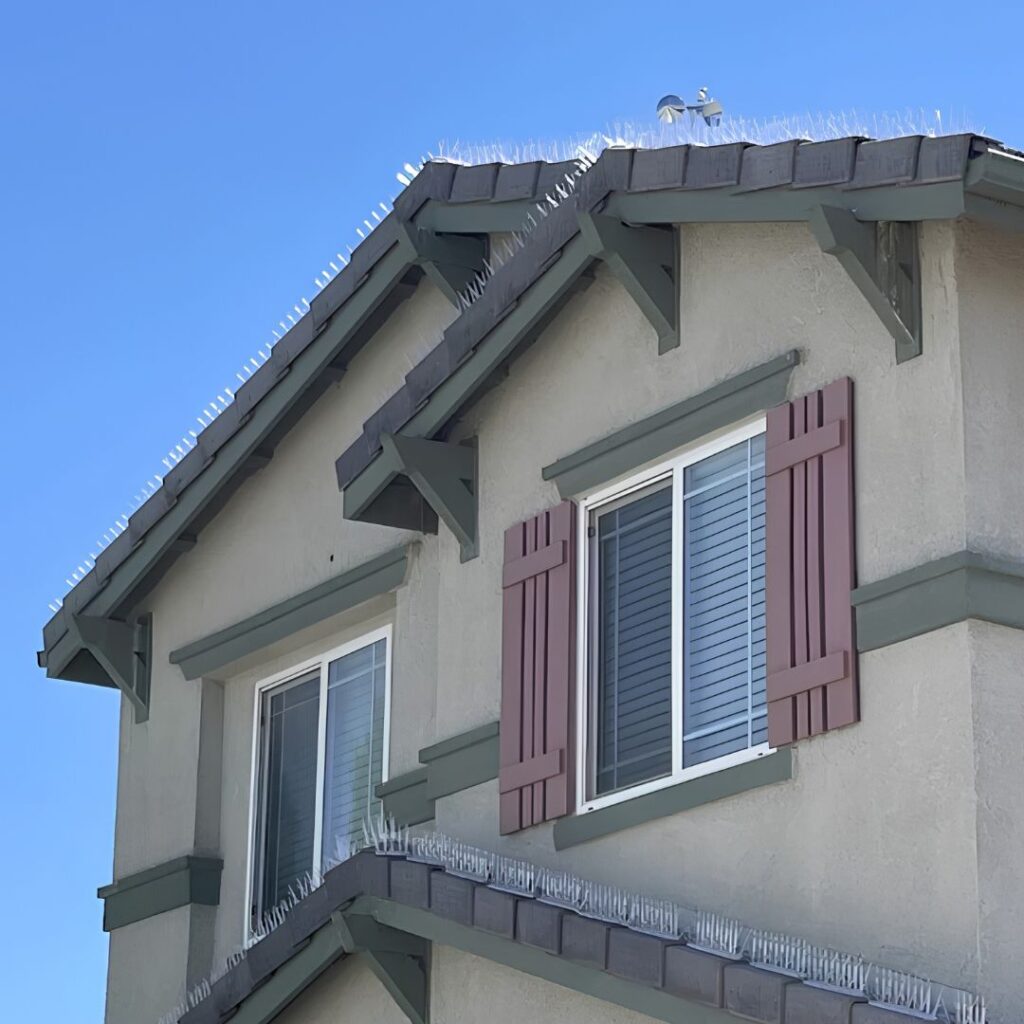
The safest and most practical approach is prevention. If you act before February 15, you can legally exclude swallows from nesting on your property using physical barriers and deterrents. Once nesting season starts, your options become very limited.
Legal Ways to Manage Swallows on Your Property
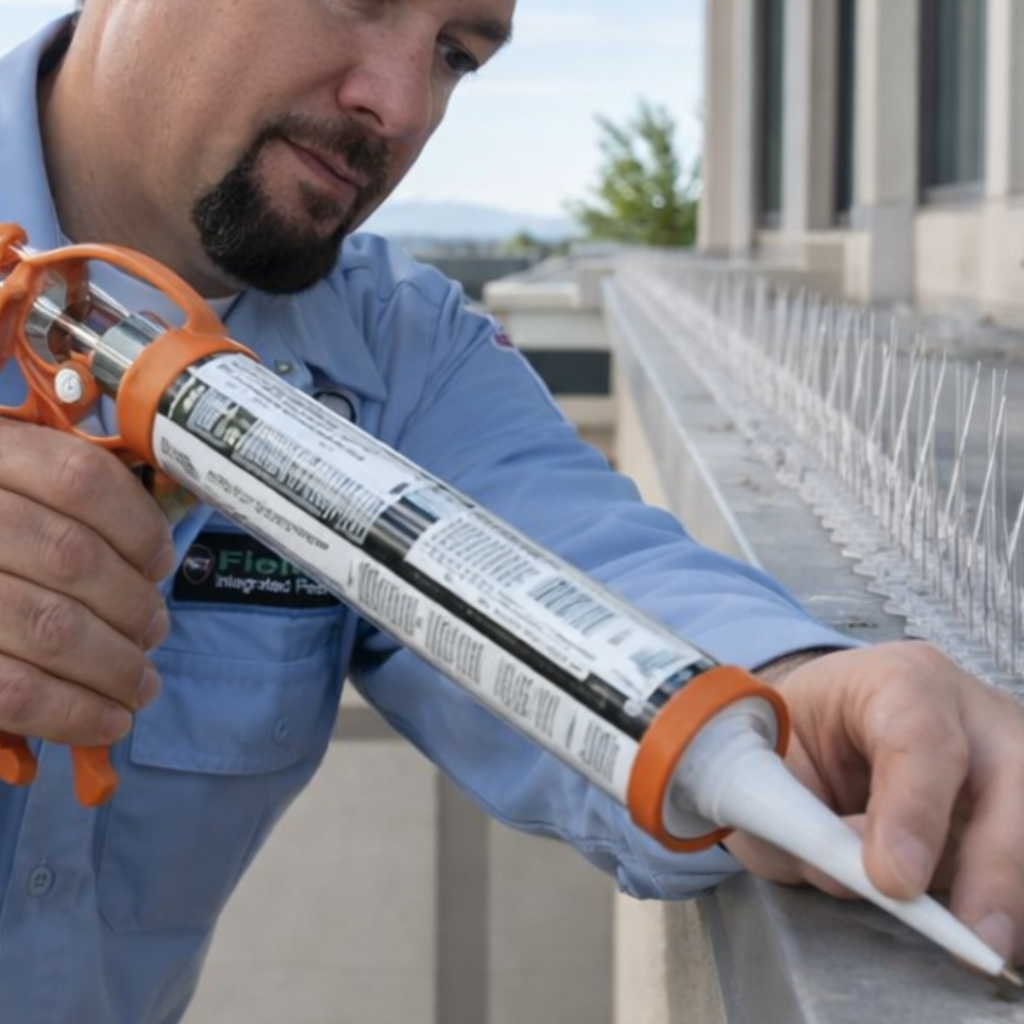
The most effective strategy is exclusion before the nesting season begins. California does not require a permit for exclusion methods, provided they are implemented before birds arrive or before eggs and young are present in the nest. Once birds settle in, your hands are tied until September.
Legal and effective methods include:
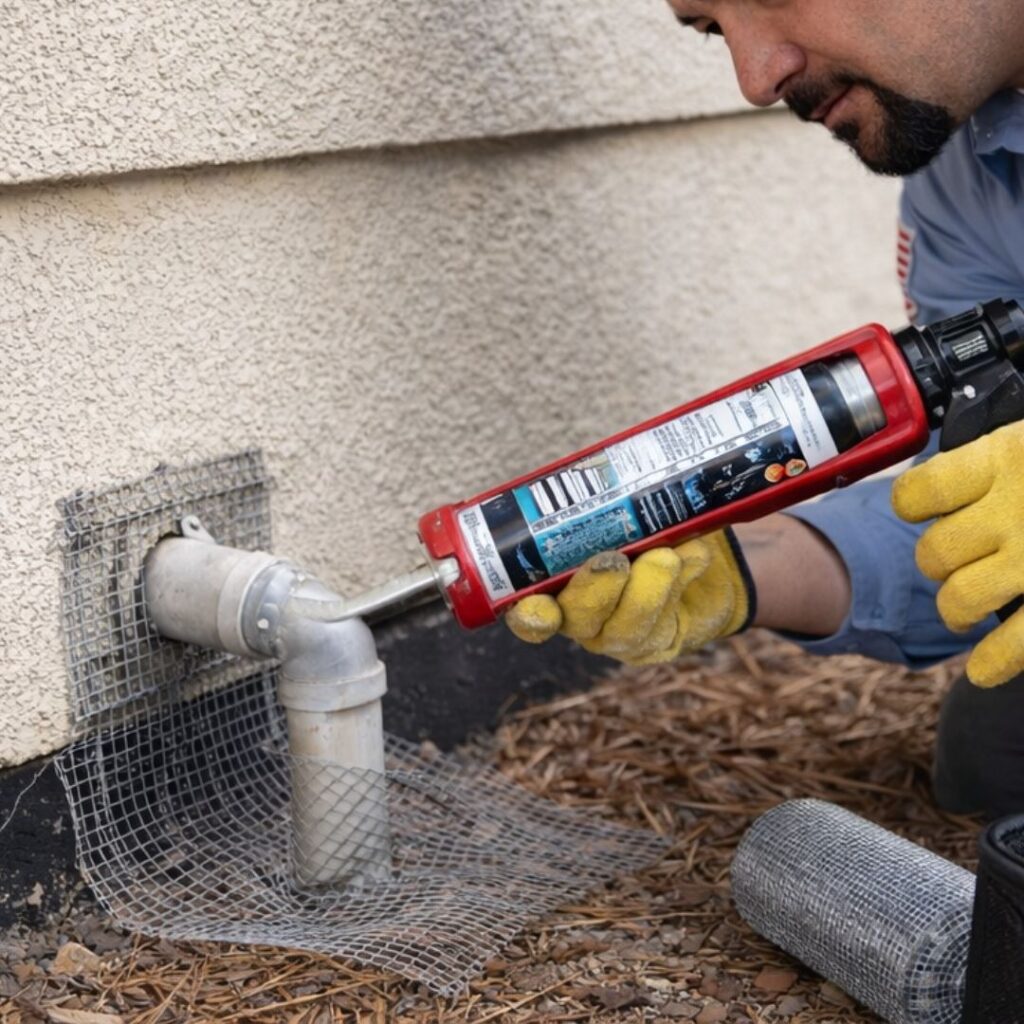
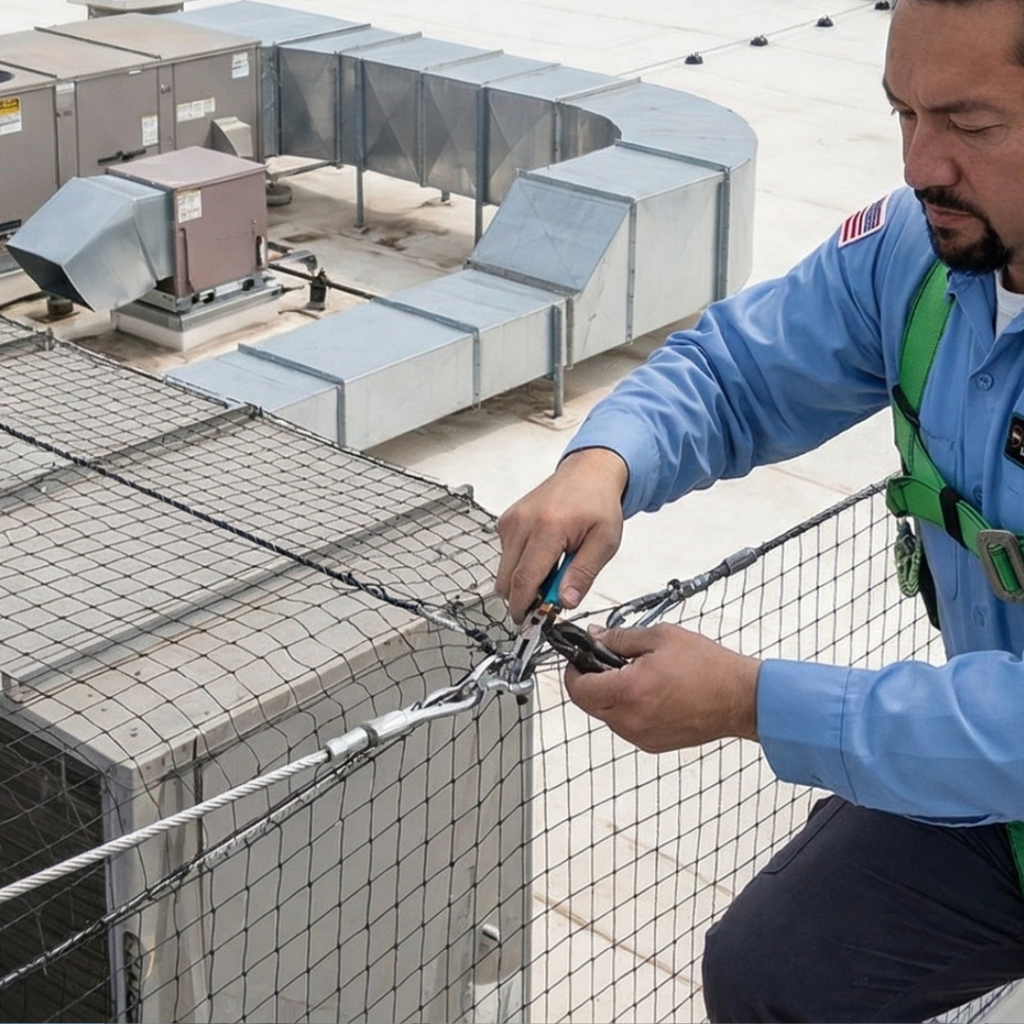
- Bird netting: physical mesh installed on eaves, overhangs, and ledges to deny access to nesting sites. When installed correctly, this is one of the most reliable long-term solutions. See our bird netting service for details.
- Surface modification: slick or angled surfaces discourage nest attachment. This works particularly well on flat undersides of eaves and beams.
- Visual deterrents: reflective tape, predator decoys, and moving objects can deter scouts early in the season before nesting begins. These are less reliable for established colonies but useful as a first line of defense.
- Bird repellents: sticky or gel repellents can be applied to ledges and surfaces. These are most useful as part of a broader exclusion strategy.
Note that trapping is not permitted, toxicants are not registered for use against swallows, and frightening devices are generally not effective once cliff or barn swallows have committed to a nesting site.
If swallows have already nested on your property and the season is underway, the right move is to wait. Once they depart after September 1, remove the nests immediately and put exclusion measures in place before February 15. Swallows are homing birds and will return to the same location next year if access is not blocked.
Conclusion: Know the Law, Act Early
Swallows are fully protected in California under both federal and state law. Removing or disturbing an active nest between February 15 and September 1 without a permit is illegal and carries significant penalties. The only legal pathway during nesting season is to leave active nests alone and wait.
The good news is that effective, lawful solutions exist if you plan ahead. Exclusion before the nesting season is the single best investment you can make to keep swallows off your structure for years to come.
If you are in the Inland Empire or High Desert and want to get ahead of swallow season, contact Fieldtech Integrated Pest Solutions. We offer free detailed inspections and can advise you on the right exclusion strategy for your property. Explore our full bird control services or check if we service your area.
Frequently Asked Questions
Can I remove a swallow nest if there are no eggs in it?
It depends. If the nest is under construction and there is no adult present and no eggs or young, you may be able to remove it without a permit. However, if any adult bird is occupying the nest, even a partially built one, it is protected. If you are unsure, contact a professional before acting.
Are cliff swallows and barn swallows both protected in California?
Yes. All swallow species are protected under the Migratory Bird Treaty Act, including cliff swallows, barn swallows, bank swallows, and others found in California. Bank swallows carry additional protection as a state-threatened species under the California Endangered Species Act.
Can I get a permit to remove swallow nests?
Permits are issued by the U.S. Fish and Wildlife Service and are only granted in extreme cases, such as a nesting colony posing a genuine safety hazard at an airport. In the vast majority of residential and commercial situations, a permit will not be issued. Prevention through exclusion is the practical alternative.
When can I knock down swallow nests?
You can remove abandoned nests outside of the nesting season, which runs from February 15 to September 1 in California. Once swallows have departed in late summer or fall, remove nests promptly and install exclusion measures before February 15 to prevent them from returning.
Do swallows come back to the same spot every year?
Yes. Swallows are homing birds with a strong instinct to return to the same nesting sites year after year. If you do not block access after one nesting season, they will almost certainly be back the following spring. Permanent exclusion installed before February 15 is the only reliable long-term solution.