If you have heard scratching above your ceiling at night or found droppings in the garage, you are not imagining it. Roof rats are one of the most common rodent problems across California, and they are remarkably good at moving into homes unnoticed. The Centers for Disease Control and Prevention notes that rats and mice can spread many diseases to people, while the National Pest Management Association estimates that rodents invade roughly 21 million U.S. homes every winter. That makes a roof rat sighting something worth acting on quickly, not waiting out.
This guide covers what roof rats are, how they differ from Norway rats and mice, whether they are dangerous, the signs to look for, and the steps that actually get rid of them. Here in the High Desert and across the Inland Empire, warm conditions and mature landscaping give these climbers plenty of opportunity, so knowing what you are dealing with is half the battle.
Fieldtech Integrated Pest Solutions has spent more than 15 years helping local homeowners take their homes back from rodents. When you want a professional set of eyes on the problem, our rodent control and exclusion team offers free, detailed inspections so you know exactly what is happening before any work begins.
What Are Roof Rats?
Roof rats (Rattus rattus) are also called black rats, palm rats, or ship rats. They are sleeker and more agile than the heavier Norway rat, with large ears, a pointed nose, and a tail that is longer than their head and body combined. Their color ranges from gray to nearly black, and an adult typically weighs between 5 and 10 ounces.
True to their name, roof rats prefer to live up high. They nest in attics, wall voids, ceiling spaces, and dense outdoor vegetation like ivy, palm fronds, and fruit trees. They are excellent climbers and will travel along utility lines, fence tops, and tree branches to reach a roofline. According to the University of California Statewide IPM Program, roof rats can range up to 300 feet from their nest in search of food, which means the rat in your attic may be feeding two yards over.
Norway Rats vs Roof Rats
California is home to two common rats, and telling them apart matters because it changes how you control them. The two species cannot interbreed, and they behave very differently.
- Roof rats: Sleek and agile, with a tail longer than the body. They nest high up in attics, trees, and vines, and prefer fruits, nuts, and berries.
- Norway rats: Larger and stockier, with a shorter tail and blunt nose. They burrow at ground level along foundations, under woodpiles, and in basements, and they tend to eat grains, meats, and whatever is readily available.
A simple field test: if the rat is nesting in your attic or running along the power lines, it is almost certainly a roof rat. If you are finding burrows in the yard or activity in a crawl space or basement, you are probably dealing with a Norway rat. Knowing which one you have tells a technician where to place traps and where to seal.
Roof Rats vs Mice
It is easy to confuse a young roof rat with a house mouse, but the difference affects how serious the problem is. House mice are small, usually around an inch or two in body length with a thin tail, large ears, and tiny droppings about the size of a grain of rice. Roof rats are considerably bigger, with thicker bodies, heavier tails, and droppings closer to half an inch long.
Mice are curious and will investigate new objects, including traps, fairly quickly. Roof rats are cautious and tend to avoid anything new in their environment for several days, which is one reason do-it-yourself trapping so often fails. If your “mouse” is leaving large droppings and making noise up in the ceiling rather than down in the pantry, you are likely looking at roof rats.
Are Roof Rats Dangerous?
Yes, in two distinct ways: health and property. On the health side, rats can carry and transmit diseases through their droppings, urine, and saliva, and through the fleas and mites they carry. Contaminated insulation and droppings in an attic are not just unpleasant, they are a genuine hazard, which is why cleanup should be handled carefully rather than swept up casually.
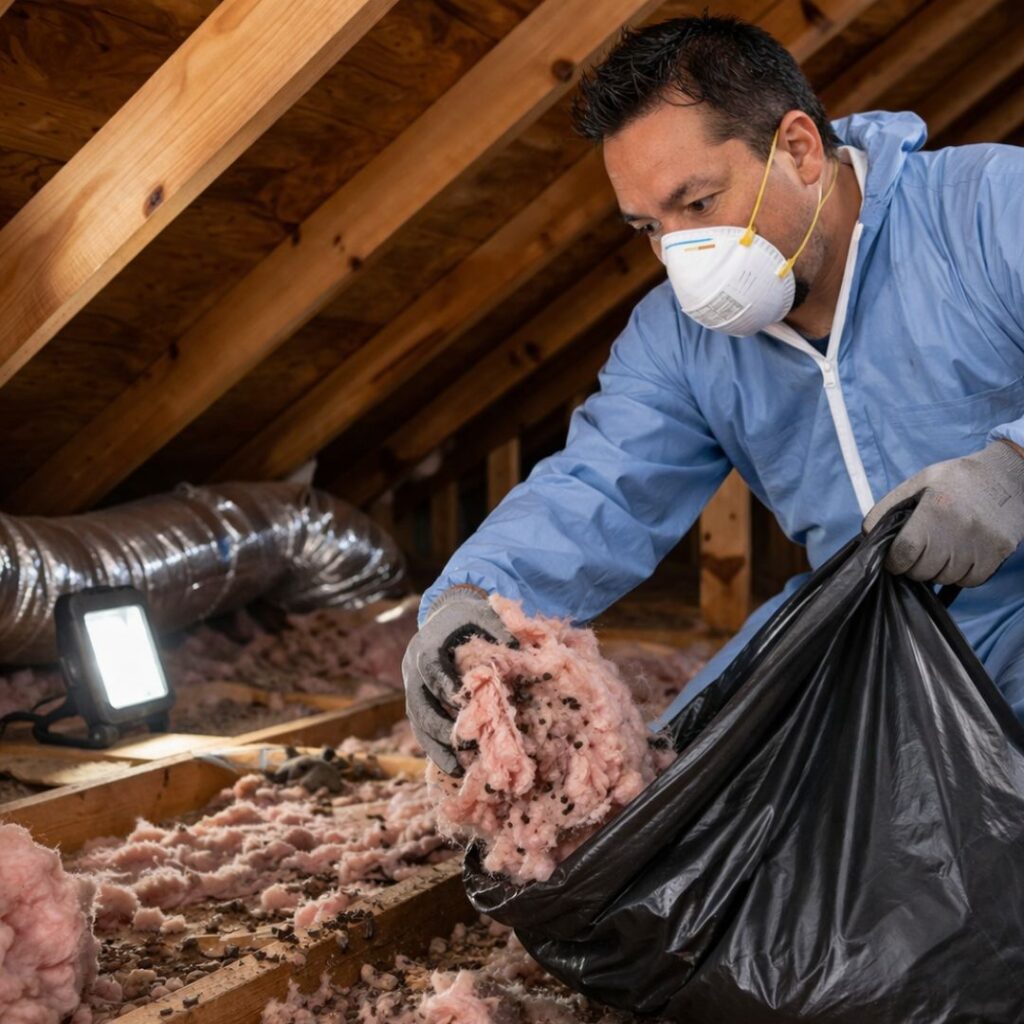
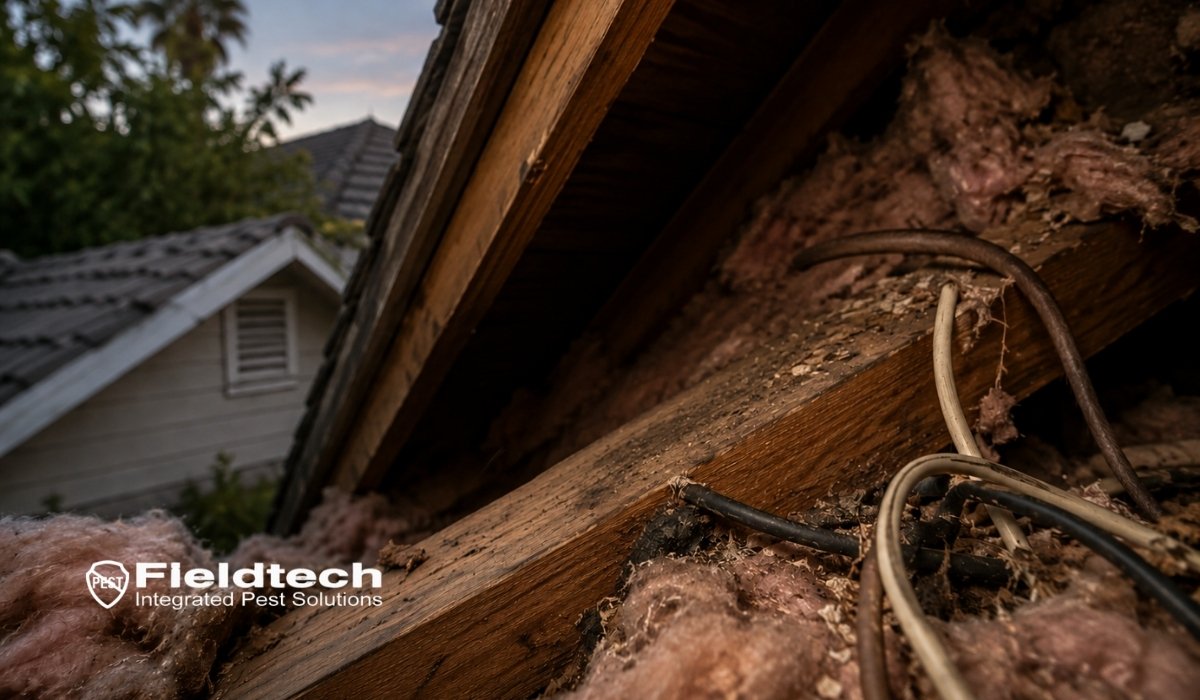
On the property side, roof rats gnaw constantly. They chew through wood, stored belongings, and, most dangerously, electrical wiring, which raises the risk of an electrical fire. They also shred insulation to build nests, reducing your attic’s efficiency and leaving behind a contaminated mess. If rodents have fouled your insulation, Fieldtech offers contaminated insulation removal along with attic sanitation and deodorizing to restore the space safely.
Signs of Roof Rats and Where They Nest
Because roof rats are nocturnal and stay hidden, most people notice the evidence before they ever see the animal. Watch for these signs:
- Night noises: Scratching, scurrying, or thumping sounds in the ceiling or attic after dark.
- Droppings: Dark, half-inch droppings in the attic, garage, or along walls. Fresh ones are soft and dark; older ones look dry and gray.
- Gnaw marks: Chewed wood, wiring, or stored items, and small holes through fruit left hanging on citrus trees.
- Grease marks: Dark, smudgy rub marks along beams and entry points where rats travel the same routes repeatedly.
- Nests: Shredded insulation, fabric, or plant material tucked into attic corners, wall voids, or dense vegetation.
Roof rats favor attics, wall and ceiling voids, cabinets, and outdoor harborage like ivy, palm trees, and overgrown shrubs. In our area, older roofing and thick landscaping make ideal cover, so the yard is often where an infestation begins.
How Roof Rats Get Into Your Home
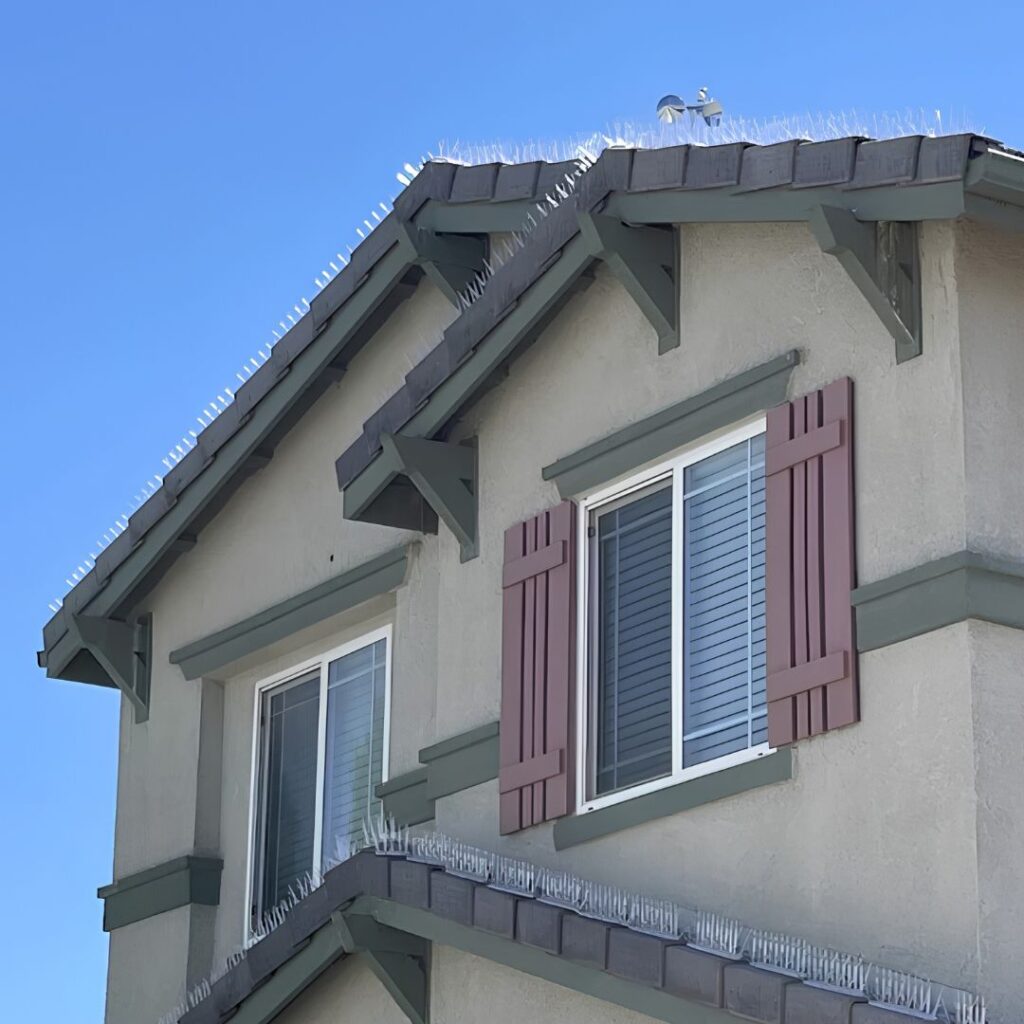
Roof rats can squeeze through a gap as small as a half inch, and as climbers they reach openings most homeowners never think to check. Common entry points include gaps around attic vents, soffits, and roof returns, spaces where utility lines and pipes enter the house, damaged roof edges, and uncapped chimneys.
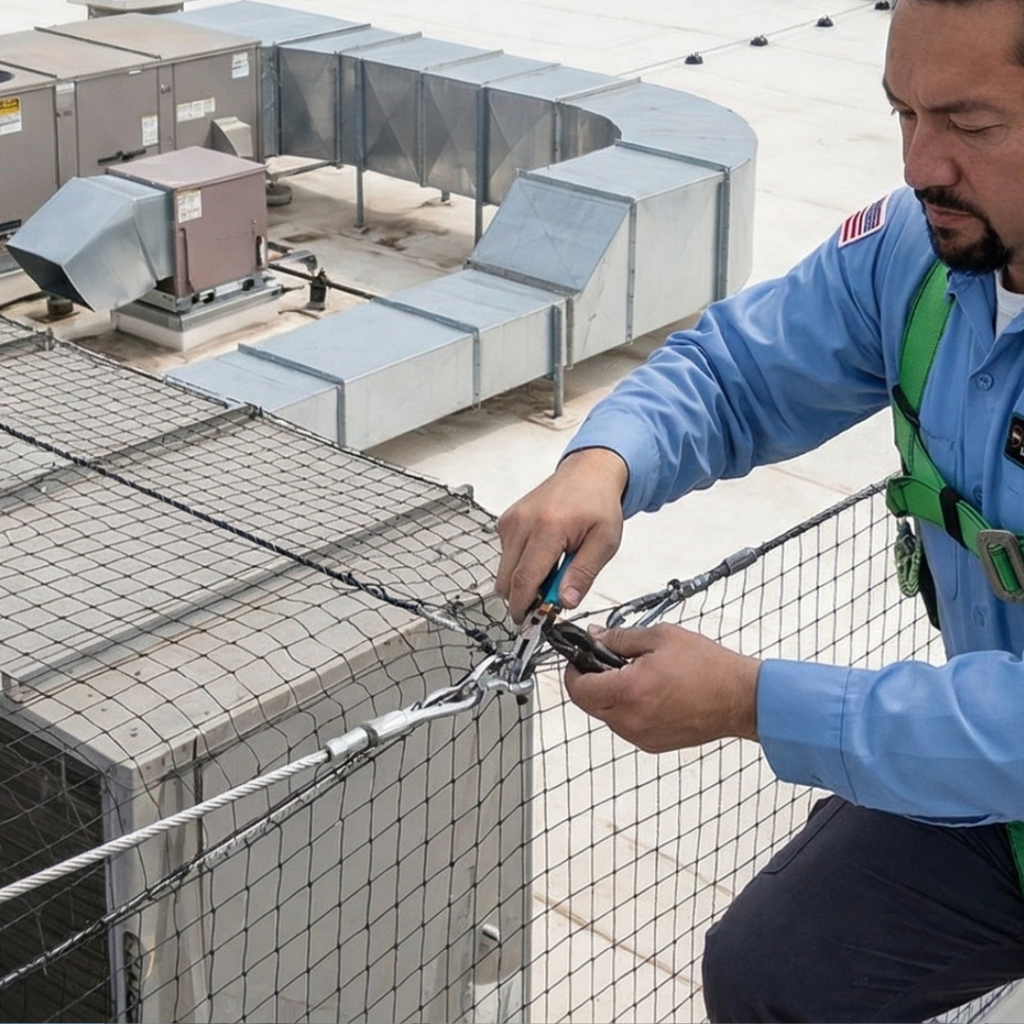
Landscaping does much of the work for them. Tree branches touching the roof, palm fronds, dense vines, and even gutter systems act as highways straight to the roofline. Trimming vegetation back at least three feet from the roof and sealing entry points are two of the most effective things you can do, and they are the heart of professional rodent proofing and entry point sealing.
How to Get Rid of Roof Rats
Getting rid of roof rats works best as a sequence rather than a single tactic. The proven approach combines sanitation, trapping, and exclusion:
- Remove food and water. Pick up fallen fruit, secure pet food and garbage, fix leaks, and store pantry items in sealed containers.
- Trim and declutter. Cut back branches and vines, thin dense shrubs, and clear yard debris and woodpiles that offer shelter.
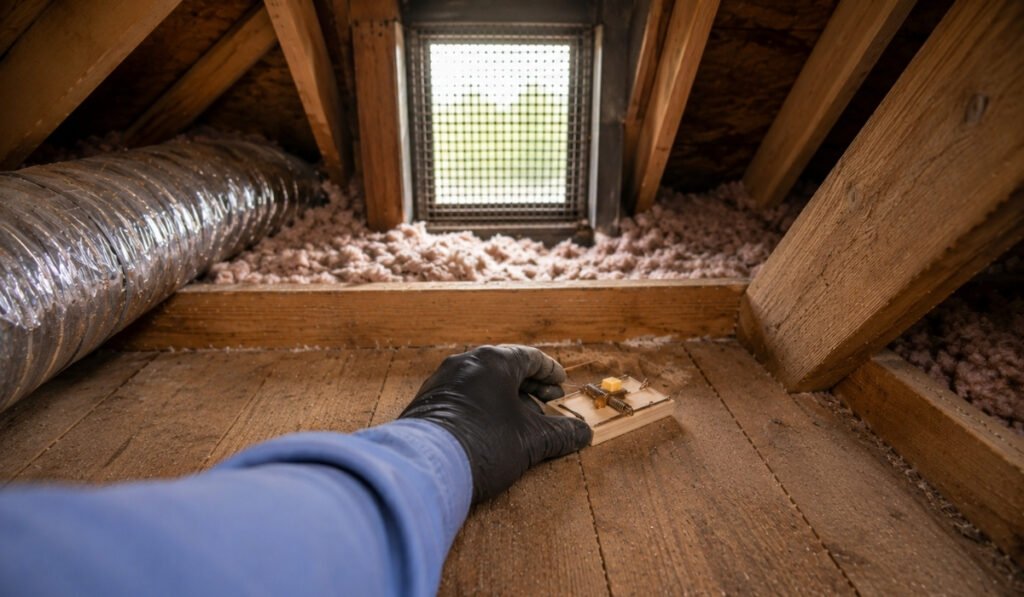
- Trap, do not poison. Snap traps placed up high on beams, ledges, and rafters are the safest and most effective tool. Poison bait can leave a rat to die inside a wall, creating an odor problem.
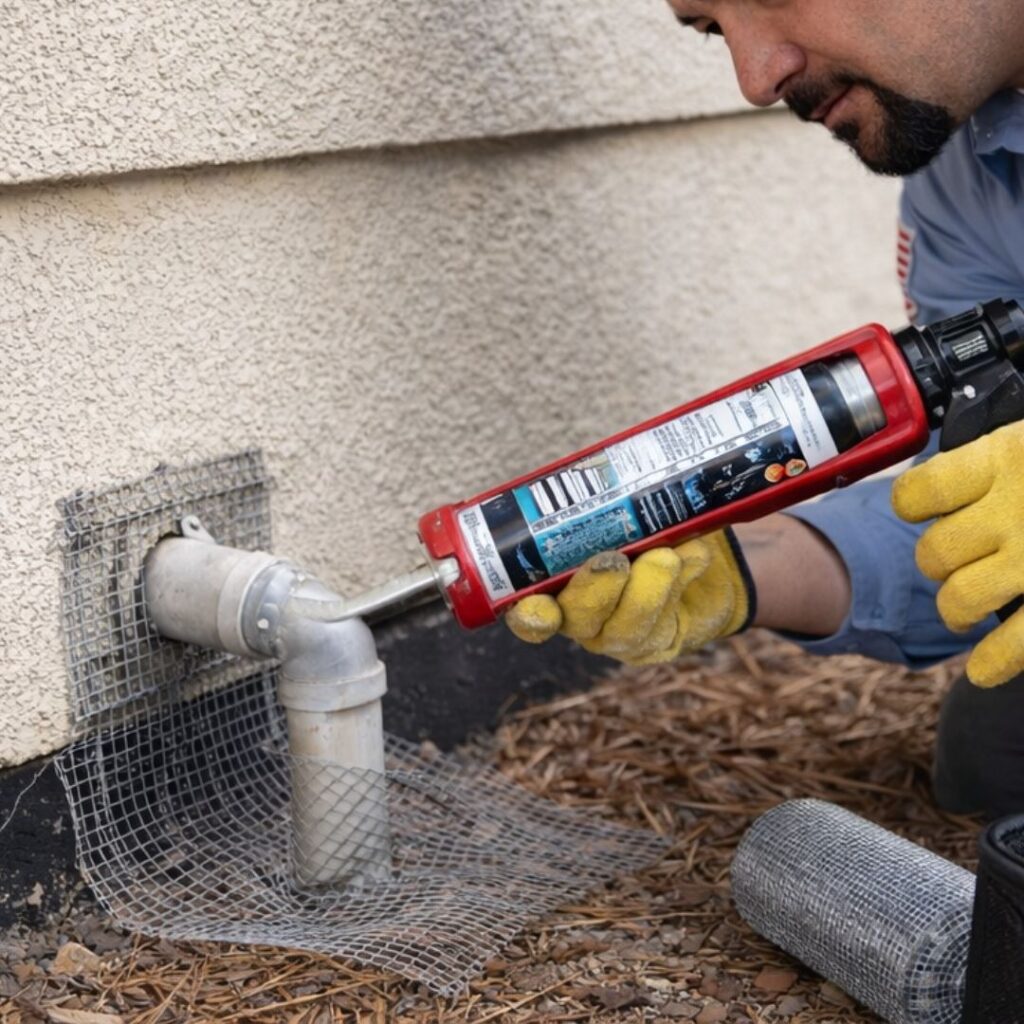
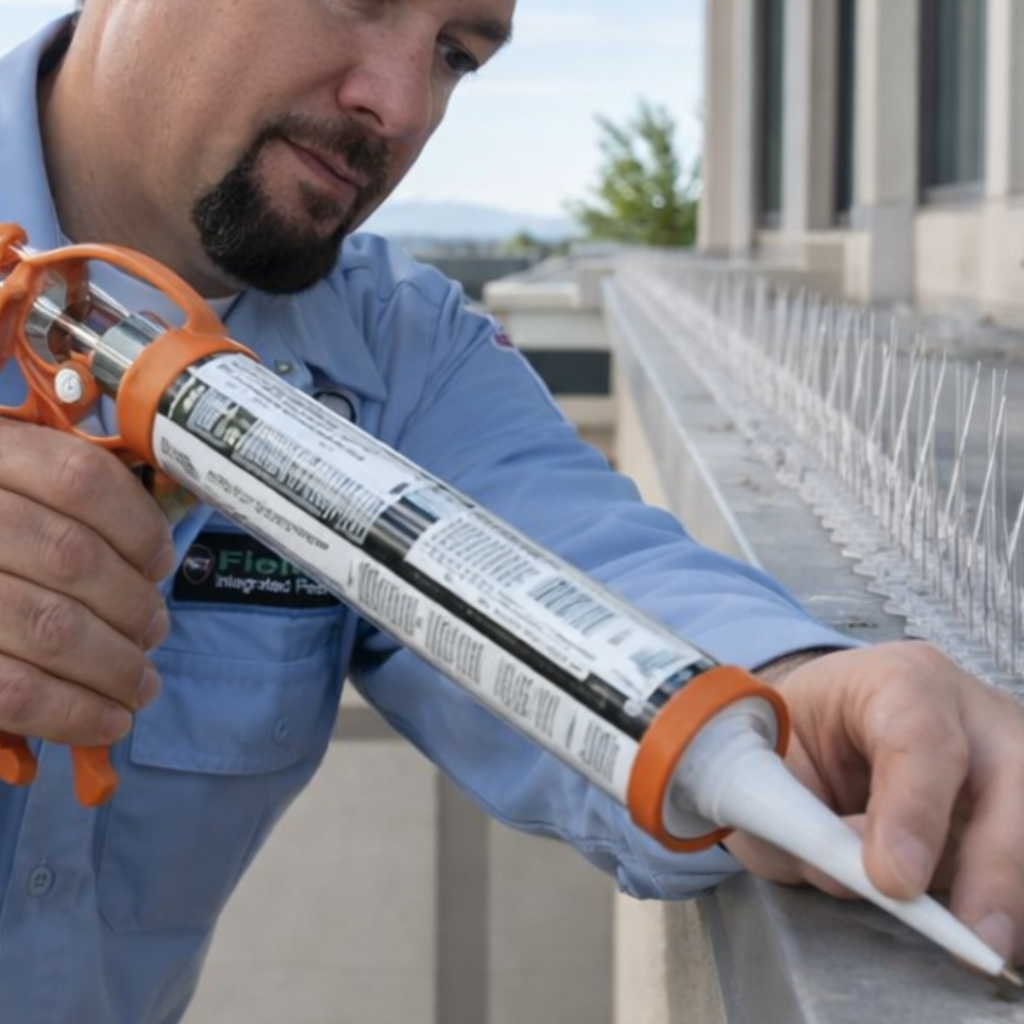
- Seal the entry points. Close gaps larger than a quarter inch with steel wool, hardware cloth, or sheet metal. Rats chew through foam, plastic, and caulk, so the material matters.
- Clean up safely. Remove contaminated insulation and sanitize affected areas to eliminate odors and health risks.
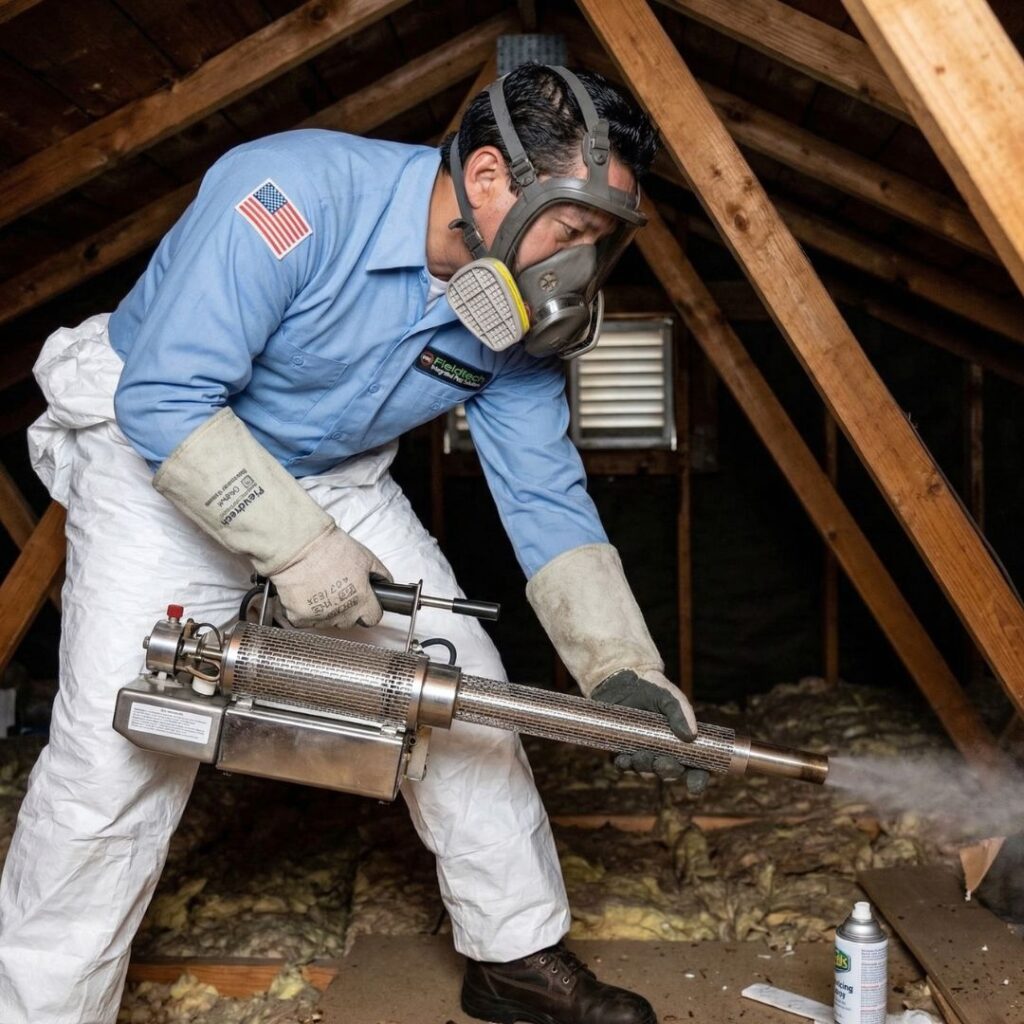
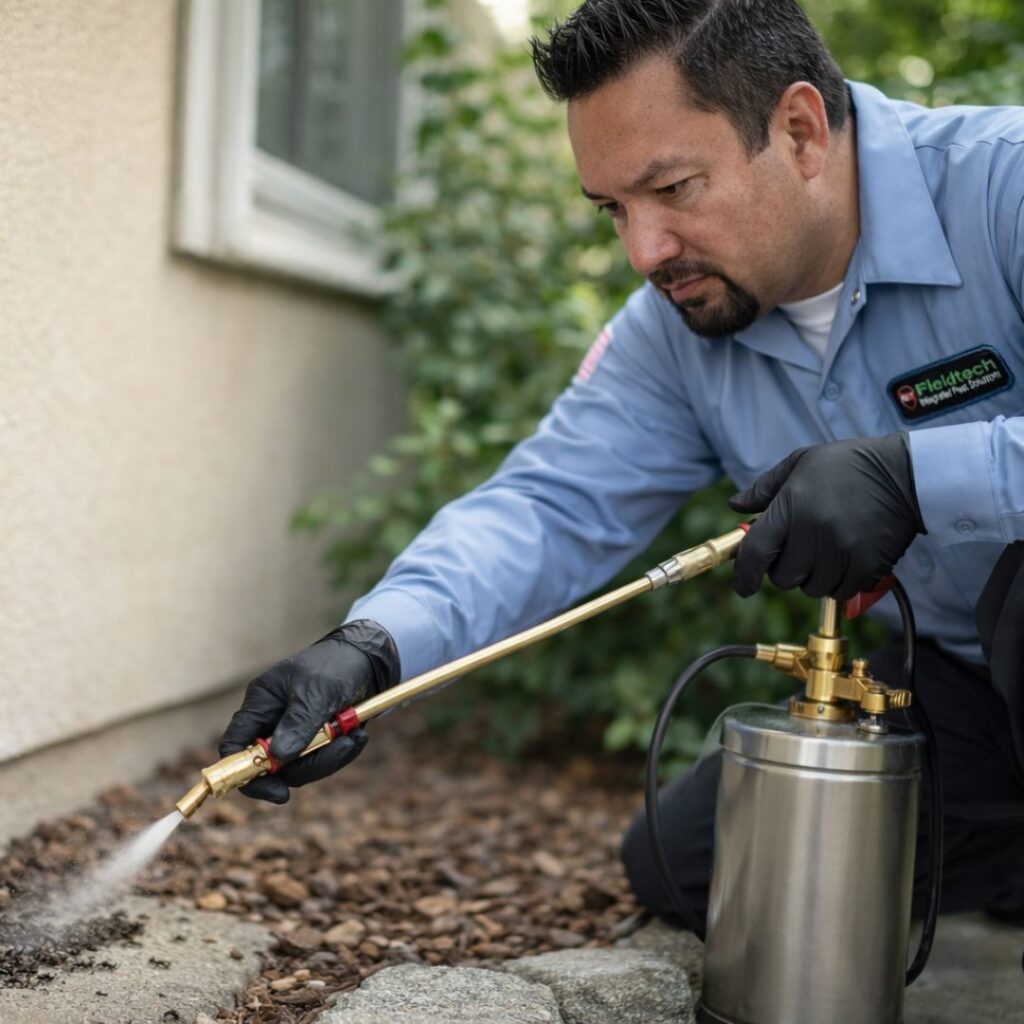
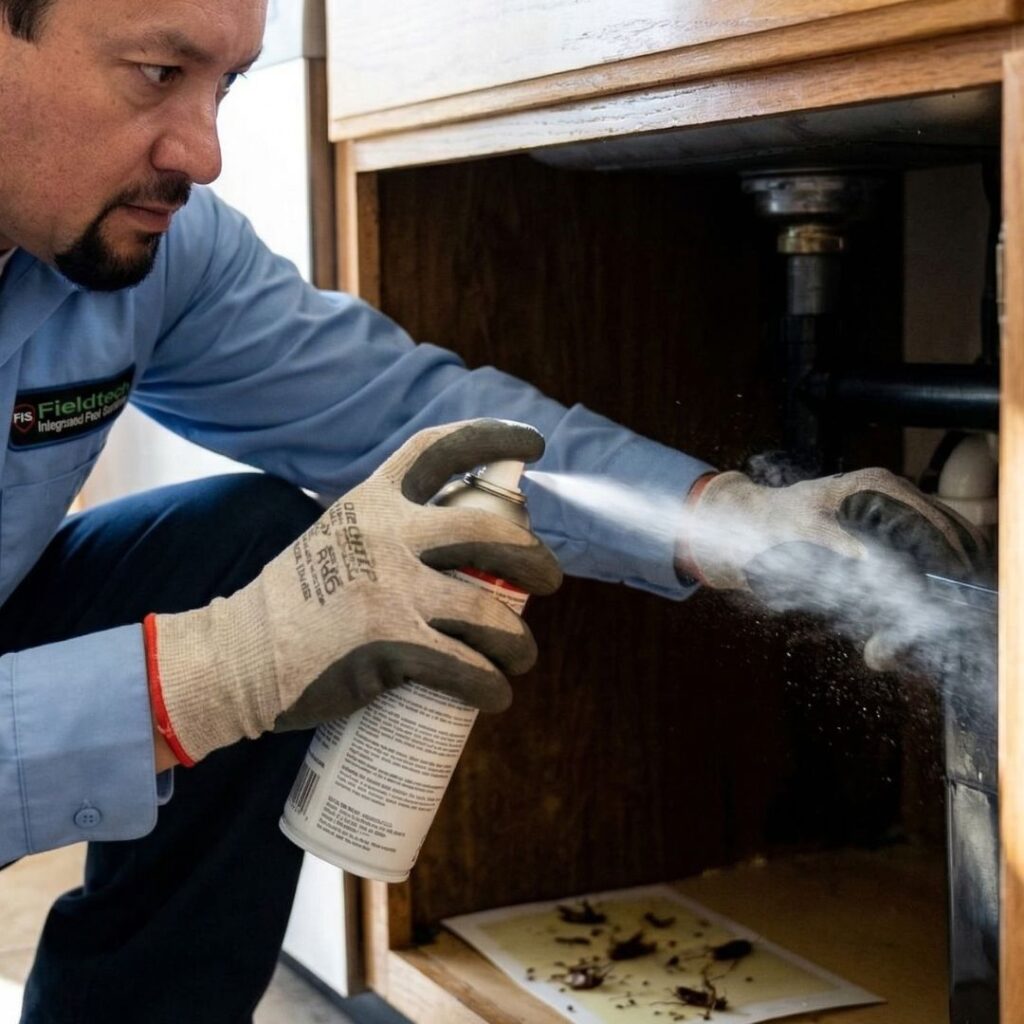
This is also where a professional makes the biggest difference. Store-bought traps often sit untouched because roof rats are wary of new objects, and sealing only the obvious gaps leaves the rest open. Fieldtech’s rodent control service handles the full cycle, from inspection through trapping and exclusion, with guaranteed solutions.
How to Keep Roof Rats Away for Good
Removing the current rats is only half the job. Keeping new ones out comes down to ongoing maintenance:
- Keep tree branches and vines trimmed back from the roof and walls.
- Store pet food, bird seed, and garbage in sealed, rodent-proof containers.
- Pick up fallen fruit and nuts regularly, since citrus is a magnet for roof rats.
- Inspect vents, soffits, and roof returns a few times a year and reseal any new gaps.
- Reduce clutter in the garage, attic, and yard to remove nesting sites.
Homeowners across Apple Valley and the surrounding High Desert deal with steady rodent pressure thanks to the climate, so a little routine vigilance goes a long way. If you would rather have it handled, our team serves Apple Valley and the wider Victor Valley, with a one-hour callback guarantee.
The Bottom Line on Roof Rats
Roof rats are a year-round reality in California, but they are manageable once you understand them. Learn to tell them apart from Norway rats and mice, watch for the early signs, and act quickly with a combination of sanitation, trapping, and exclusion. Catching the problem early keeps a minor nuisance from turning into chewed wiring, ruined insulation, and a health hazard in your attic.
If you suspect roof rats in your home, the smartest first step is a professional inspection. Fieldtech offers free, detailed rodent inspections and guaranteed solutions, plus a 5% discount for new customers and a 10% discount for military, seniors, and first responders. Reach out and we will get back to you within the hour.
Frequently Asked Questions
How do I know if I have roof rats or Norway rats?
Location is the giveaway. Roof rats nest high up in attics, ceilings, and trees, and have a tail longer than their body. Norway rats are stockier, burrow at ground level, and have a shorter tail. If the activity is overhead, it is almost always roof rats.
Are roof rats dangerous to people or pets?
They can be. Roof rats can transmit diseases through their droppings, urine, and saliva, and through fleas and mites. They also gnaw electrical wiring, which creates a fire risk. Both reasons make prompt removal and careful cleanup worthwhile.
Why are roof rats so hard to trap myself?
Roof rats are naturally cautious and avoid new objects in their environment for several days, so traps frequently go untouched at first. They also nest in hard-to-reach high spaces. Professional placement and exclusion typically work faster than DIY attempts.
What attracts roof rats to a home?
Food, water, and shelter. Fallen fruit, pet food, open garbage, leaky faucets, and dense landscaping all draw them in, while overgrown trees and vines give them a path to the roof. Removing these attractants is the foundation of long-term control.
How quickly do roof rats multiply?
Quickly. A female roof rat averages 3 to 5 litters a year with up to 8 young per litter, so a small problem can become a serious infestation in a matter of months. That is why early action matters so much.